
Idea 1
The Portfolio Life: Designing a Resilient, Multifaceted Life
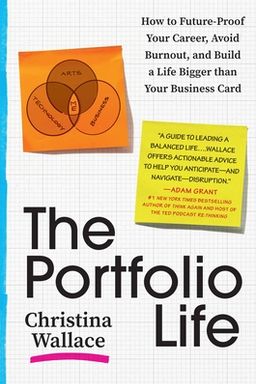
What if you stopped viewing your career as a single ladder you climb and started seeing it as a portfolio you build? Christina Wallace’s The Portfolio Life: How to Future-Proof Your Career, Avoid Burnout, and Build a Life Bigger Than Your Business Card offers a new blueprint for living and working in the twenty-first century. She argues that the traditional, linear approach to career and identity—one job, one company, one neat label—is broken. The world is too volatile, markets too unstable, and humans too multifaceted to fit into one narrow slot. Instead, Wallace invites you to construct a diversified, flexible, purpose-driven “portfolio life” that reflects who you really are and evolves as you do.
A New Model for Modern Work
Wallace opens with sobering generational truths: the economic security her grandparents found on GM’s factory line has evaporated, replaced by gig contracts, layoffs, and wage stagnation. Millennials and Gen Z face stagnant wages, student debt, unaffordable housing, and a collapsing social contract. But amid this chaos lies opportunity—the chance to reinvent how we design our lives. Wallace’s “portfolio life” borrows from the logic of investment portfolios: diversification, rebalancing, and risk management. Instead of putting all your livelihood, identity, and purpose into one asset (a single job or employer), you build a balanced collection of endeavors—some income-focused, others joyful or creative, still others rooted in family, community, or rest.
This model is not about hustling harder or juggling more; it’s about redefining success. As Wallace writes, “The point of all of this is to design a life that serves you—not the other way around.”
The Four Pillars of a Portfolio Life
Throughout the book, Wallace introduces four foundational pillars: identity, optionality, diversification, and flexibility. Each helps you replace outdated ideas of linear progression with resilience and fulfillment. You learn to separate your identity from your job title; to remain open to multiple possible paths; to de-risk your livelihood through variety; and to shift your commitments as your needs change.
She reminds readers that this philosophy isn’t new—it’s a return to pre-industrial models of life, when artisans, farmers, and families blended multiple skills to meet their needs. But where industrial-era capitalism demanded specialization, modern disruptions demand reintegration. With globalization, automation, and pandemics regularly reshaping industries, the new security lies in adaptability, not tenure.
How the Book is Structured
Wallace divides the book into three sections: “Why,” “What,” and “How.” The first grounds readers in the socioeconomic shifts that shattered the old employment contract. The middle section walks through the self-reflective mapping process: defining your identity beyond a business card, identifying your strengths (your “Venn diagram”), and designing a business model for your life. The final section, echoing a CEO’s leadership toolkit, turns strategy into operations. Readers learn to manage their time, tell their story, build supportive networks, and keep one eye on the horizon—like a chief strategy officer steering through constant change.
Wallace roots these ideas in vivid case studies: a NASA physicist who became an origami artist, a Broadway singer who turned into a software engineer, a teacher who became a doctor, and an astronaut applicant who also pursued acting. Each story demonstrates what a diversified, nonlinear life looks like in practice. These models show that “failure,” “zigzags,” and reinvention are not detours—they are the path itself.
Why It Matters Now
The book’s urgency stems from the collapse of our inherited definitions of success. Workism—a term popularized by journalist Derek Thompson—convinced Americans to treat jobs as religious callings. Wallace dismantles that narrative with compassion and clarity. Your job, she insists, is not your identity. Nor is it your only source of meaning. Building a portfolio—a mix of paid work, personal growth, hobbies, family, and service—grants you autonomy and resilience in a volatile world. It’s not about doing everything at once but designing a life that can bend without breaking.
“Disruption may have gotten us here,” Wallace writes, “but we get to decide how to go forward. The Portfolio Life puts you back in the driver’s seat.”
Ultimately, this book is part cultural critique, part practical manual, and part pep talk for anyone whose life no longer fits neatly into one box. It’s about building a multifaceted identity strong enough to thrive through constant change. By the end, readers don’t merely understand how to future-proof their careers; they learn how to expand their entire definition of what a good, worthy, and sustainable life can be.