
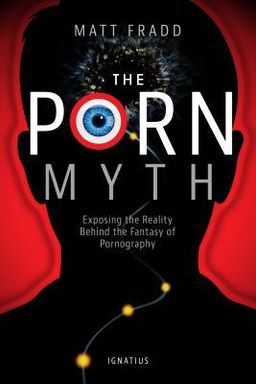
The Porn Myth cover

The Porn Myth

by Matt Fradd

The Porn Myth delves into the scientific realities of pornography’s effects on the brain and relationships. Through insights from neuroscience and psychology, it challenges misconceptions, exposes harmful impacts, and equips readers with practical strategies for overcoming addiction and fostering genuine intimacy.

The Porn Myth and the Search for Real Love

Are we really free in our modern sexual landscape—or are we quietly enslaved to pixels and illusions? In The Porn Myth, Matt Fradd challenges the widespread belief that pornography is a harmless source of adult entertainment. He argues that far from promoting liberation or sophistication, porn rewires the brain, corrodes intimacy, and cheapens our understanding of love itself. The book’s central contention is simple but explosive: pornography doesn’t just reflect human desire, it reshapes it—and nearly always for the worse.

Drawing from neuroscience, psychology, and thousands of testimonies, Fradd invites readers to see pornography not as an issue of religious moralism, but as a public health and cultural crisis. He contends that we are living in an era of “synthetic pheromones,” where endless sexual stimulation desensitizes our innate ability to bond and find authentic pleasure. Porn, he suggests, is the gypsy moth of our generation—overstimulating, multiplying, and leaving desolation in its wake.

Porn as a Cultural Myth

Fradd structures his argument around the many myths society tells itself to justify pornography. These myths span cultural, industrial, physiological, relational, and personal dimensions—from “Porn is just adult entertainment” to “Porn helps prevent rape” to “I’ll always be addicted anyway.” Each chapter dismantles these illusions with scientific evidence, moving testimonials, and moral reflection, leading readers beyond guilt or shame toward clarity and freedom.

One of his most striking metaphors compares the porn-saturated culture to a civilization that sells people themselves. We have industrialized sex, he says, much like we industrialized agriculture—mass-producing pleasure at the cost of human dignity. And when sex becomes a commodity, connection and empathy die. This idea is reinforced throughout, connecting science to the soul: when dopamine spikes from endless novelty, bonding hormones like oxytocin lose their potency. Relationships crumble under the weight of comparison and unrealistic expectations.

A Nonreligious Case against Porn

An important distinction in The Porn Myth is that Fradd deliberately avoids religious arguments. While he is Catholic, his approach is secular and evidence-driven. This makes his case accessible to nonbelievers who might traditionally dismiss morality debates. He quotes neuroscientists, psychiatrists, and feminist thinkers to show pornography’s harms not just on spiritual values but on relationships, mental health, and neurological structure. For example, researchers have found frontal lobe shrinkage similar to that observed in cocaine addicts, illustrating how porn acts as a visual drug.

The movement Fradd represents—alongside groups like “Fight the New Drug”—is part of a growing effort to treat pornography not as private immorality but as a social epidemic. He cites activists like Clay Olsen, Gail Dines, and Gary Wilson, who connect porn use with rising sexual dysfunction, exploitation in the industry, and emotional detachment.

Love as the Antidote

Ultimately, this book isn’t about condemnation; it’s about recovery and renewal. Fradd defines love as the only proper response to the human person—contrasted sharply with the objectification inherent in pornography. He believes that sexuality, used according to its nature (for pair bonding and mutual self-gift), leads to flourishing. When we use sex as consumption rather than communion, we destroy the very joy we sought.

“The problem with pornography,” Fradd writes, “is not that it shows too much—but that it shows too little of the human person.”

That phrase becomes his philosophical heartbeat. Porn focuses on bodies without souls; sex without love; pleasure without relationship.

In the pages ahead, you’ll learn how porn manipulates industry and neuroscience, how it deceives women and men alike, and how it damages the possibility of authentic intimacy. Fradd’s message is not prudish—it’s profoundly human. He invites us to reclaim real love: love that requires vulnerability, sacrifice, and the courage to leave fantasy behind. The choice before us is not between repression and indulgence—it’s between commodified desire and true connection.


Porn as a Synthetic Pleasure

Matt Fradd opens his argument with a vivid biological analogy. He describes how scientists eradicated gypsy moth populations using synthetic pheromones. The male moths, overwhelmed by fake signals, lost all interest in actual females. In the same way, pornography floods our senses with exaggerated sexual cues, confusing and desensitizing our natural drive for real intimacy. The body’s chemical reactions—dopamine spikes and oxytocin bonding—get hijacked by fantasy instead of connection.

Neuroscience of Desire

Pornography’s power lies in its ability to exploit how your brain works. Dopamine, the neurotransmitter associated with motivation and reward, lights up during sexual arousal. Normally, this helps forge long-term bonds between lovers. But when sexual stimulation repeatedly comes from pixels, the brain attaches those dopamine-fueled memories to screens, not people. Neuroscientists like Donald Hilton and William Struthers have described porn as a “100-billion-dollar brain drug” that rewires neural circuits.

Fradd emphasizes that porn use mimics other addictions: overstimulation leads to desensitization, requiring increasing novelty, extremity, or quantity to trigger the same response. This is why users spiral from “soft-core” imagery into violent or fetish content. The pursuit of novelty becomes the only remaining thrill—similar to gambling or drug escalation (a pattern also documented by Eric Nestler in Nature Neuroscience).

Pleasure without Personhood

Fradd draws from philosopher Roger Scruton, who calls porn an “instrumentalized conception of sex.” Instead of mutual self-gift, sex becomes self-gratification—a one-dimensional act divorcing the mind from empathy. Over time, performers become abstractions, commodities served to an ever-hungrier market. The viewer’s brain bonds not to a lover but to luminous pixels. This “bonding to the image” phenomenon means that pleasure is divorced from personhood.

He contrasts this with the neurochemistry of real intimacy. During sex with a loved one, oxytocin and vasopressin build long-lasting attachment and trust. Couples release these hormones slowly, strengthening pair bonds and emotional resilience. Porn short-circuits that process: it provides the neurological pleasure but strips it of relational meaning.

Cultural Consequences

The metaphor of synthetic pheromones expands beyond biology into culture. Just as the moths failed to reproduce, pornography sabotages our ability to create enduring love or family. Fradd cites global data showing plummeting sexual satisfaction, rising impotence among young men, and widespread alienation in romantic relationships. When sex is detached from love, he warns, the result is a civilization that “sells people”—a culture of human commercialization where vulnerability is replaced by consumption.

Porn doesn’t make pleasure deeper—it makes it shallower. You can’t bond with pixels. You can only train your mind to expect more pixels.

In this way, Fradd reframes porn as not just immoral or exploitative—it’s biologically anti-human. It replaces authentic eroticism with simulated stimulation. The result is not freedom but fragmentation: people whose bodies respond to fantasy while their hearts grow numb to reality.


Myths that Justify Porn

Fradd’s book is structured around dismantling 24 pervasive myths about pornography. These myths fall into categories: cultural excuses (“It’s just adult entertainment”), industry illusions (“Actors choose freely”), sexual distortions (“Porn prevents violence”), relational deceits (“Marriage cures addiction”), and personal defeats (“I’ll always be trapped”). Each myth represents a rationalization used to neutralize moral discomfort.

Myth 1: Porn Is Adult Entertainment

Fradd begins by debunking the most common defense: that porn is mature pleasure for consenting adults. Neuroscience proves otherwise. He shows that viewing porn degrades the prefrontal cortex—the part of the brain that manages impulse control and decision-making. In this sense, “adult entertainment” actually makes adults more juvenile, rewiring their brains to crave constant novelty and instant gratification.

Myth 2: Anti-Porn = Anti-Sex

Sex-positive feminists like Belle Knox argue that to oppose porn is to oppose sexual freedom. Fradd flips this claim: pornography doesn’t celebrate sex—it industrializes it. Comparing it to gluttony’s relationship to food, he writes that porn is not a feast but a binge. Real sex, rooted in mutual love and agency, is lost to commodification.

Myth 3: Porn Empowers Women

Through testimonies of performers like Jenna Jameson and Belle Knox, Fradd exposes the paradox of “empowerment.” Women may feel control in performing—but they feed a system that objectifies and exploits female sexuality as a product. Feminist scholars like Gail Dines call this “the new face of porn PR”—individual empowerment masking systemic oppression.

Myth 4: Porn Is Harmless Fantasy

Fradd backs his critique with disturbing statistics: violent acts dominate mainstream porn scenes, yet women on screen smile through aggression. This normalizes abuse and confuses consent. Studies show porn users become more accepting of rape myths—believing women secretly want violence or that resistance is part of foreplay. As Andrea Dworkin predicted in the 1980s, porn’s premise is always control.

“Pornography is used in rape—to plan it, to execute it, to choreograph it.” – Andrea Dworkin (Attorney General’s Commission on Pornography, 1986)

By systematically unpacking these myths, Fradd urges you to see pornography not as liberation but as learned helplessness—an industry that thrives on distortion and self-deception. Each myth cracked open reveals the same truth: porn makes people believe what they wish were harmless is deeply harmful.


The Porn Industry’s Hidden Exploitation

Behind the glossy images and billion-dollar profits lies an industry built on exploitation. Fradd dives into the world of porn production to expose the physical, psychological, and economic abuses endured by performers. He recounts stories of brutal filming practices, coercion, and substance abuse, revealing a stark disconnect between the public image of glamour and the grim reality of self-destruction.

Unsafe and Dehumanizing Conditions

Performers describe gonzo pornography—a genre of relentless body-punishing sex—as their worst experiences. Belladonna recalls needing enemas, fasting, and painkillers before filming. Others speak of physical injuries: torn muscles, bruising, and lasting sexual trauma. These details dismantle the illusion that the industry protects its stars. Dr. Sharon Mitchell, founder of the Adult Industry Health Foundation, reported that two-thirds of porn actors have herpes, and most rely on heavy drug use to endure filming.

Consent or Coercion?

Even where participation seems voluntary, Fradd points out the coercive circumstances—poverty, past abuse, and addiction—that make “choice” a loaded term. Catharine MacKinnon notes that many porn performers “consent” only because they lack alternatives. Their agreement is survival, not empowerment. Fradd likens the rhetoric of “choice” to the defense used by traffickers who claim their victims chose prostitution freely.

Psychological Toll

The psychological damage is as severe as the physical. Ex-performers like Jersey Jaxin and Emily Eve describe chronic depression and suicidal thoughts. Jenna Jameson, the industry’s most famous icon, confessed in her autobiography to a deep sense of unworthiness despite fame and wealth. “I go on faking that I am whole, proud, and strong,” she wrote, “all the while my soul goes on with sickness.” This confession undercuts every claim that porn is empowering.

Porn’s champions speak of autonomy; its survivors speak of trauma.

By exposing the human cost behind each scene, Fradd reframes the conversation from one of free choice to one of systemic exploitation. He reminds readers that behind every pixel is a person—and that the industry’s success depends on your willingness to forget that fact.


How Porn Reshapes Relationships

Porn doesn’t just affect individuals—it quietly infiltrates homes and marriages. Fradd devotes significant focus to the relational fallout of porn addiction, offering stories of couples torn apart and empirical studies linking porn to decreased intimacy, trust, and satisfaction.

Erosion of Trust

Wives discovering their spouse’s secret porn use often show symptoms of post-traumatic stress—fear, hypervigilance, and depression. They describe it not as infidelity of body but of soul. The longing for exclusivity is shattered when one partner turns to pixels for pleasure. Fradd quotes therapist Doug Weiss’s principle: “Believe behavior.” Trust isn’t regained by promises but by consistent action—accountability software, transparency, and emotional rebuilding.

Distorted Expectations

For users, the psychological damage manifests as warped sexual expectations. Porn teaches performance, not intimacy. When real relationships fail to match on-demand fantasy, frustration replaces affection. Fradd tells of men whose libidos vanish with partners but surge online—a phenomenon confirmed by Cambridge University research showing 60% of habitual users experience erectile dysfunction only with real women.

Couples who watch porn “together” often think it enhances excitement. Studies show the opposite: lower communication, higher infidelity, and reduced emotional bonding. “It’s not intimacy,” Fradd writes. “It’s two people masturbating next to each other.”

Children and the Next Generation

Fradd warns that passive parenting enables the cycle to repeat. When teens are exposed to porn, they get an unfiltered education in aggression and objectification. He offers practical advice: filtering technology, open conversations, modeling respect, and teaching bodily dignity. Protecting youth requires not censorship, but connection—building trust so they tell you when temptation arrives.

Porn promises connection but delivers isolation. Real love requires effort, vulnerability, and presence—things porn can never teach.

The antidote, Fradd says, isn’t repression but rediscovery: rekindling empathy, conversation, and tenderness. When partners choose honesty over fantasy, they reclaim not just their relationships but their humanity.


Freedom and Recovery from Porn

In the book’s closing chapters, Fradd moves from critique to hope. He insists that addiction to pornography—while powerful—is not permanent. The human brain is plastic, capable of rewiring through sustained abstinence and accountability. Recovery begins by distinguishing two things: sexual desire is healthy; pornography is not.

Understanding the Addiction

Following neuroscientist Gary Wilson’s research, Fradd explains that porn users undergo an “activation sequence”: a trigger, emotional response, thought, chemical release, physiological arousal, internal battle, and finally viewing behavior. Recognizing this sequence allows users to make a U-turn—breaking the cycle before it peaks. He encourages self-awareness: naming triggers aloud engages the rational prefrontal cortex, regaining conscious control over impulses.

Strategies for Healing

Fradd lists practical strategies echoed by addiction psychology:

  • Educate yourself on what porn does to your brain and relationships.
  • Write motives and exit plans—both reasons to quit and concrete actions to take when tempted.
  • Replace fantasy with reality—seek community, communication, and hobbies that rebuild self-worth.
  • Use accountability software like Covenant Eyes and share reports with a mentor or spouse.
  • Celebrate small victories. Freedom is not an event; it’s a daily choice.

Beyond Shame

Fradd repeatedly warns against self-loathing. Shame feeds secrecy, which sustains addiction. Healing, he insists, is relational—it happens through vulnerability with others. Borrowing C. S. Lewis’s idea that masturbation keeps us locked in “a prison of self,” Fradd offers the alternative: love as self-gift. Recovery isn’t just quitting porn; it’s re-learning how to see people again.

“Freedom is not a destination,” Fradd concludes, “it is a lifetime of todays.”

By restoring integrity, accountability, and compassion, Fradd’s message transcends moralism. The Porn Myth ends not in despair but in transformation—a call to reclaim our nature as beings made for love, not consumption.

Dig Deeper

Get personalized prompts to apply these lessons to your life and deepen your understanding.

Go Deeper

Get the Full Experience

Download Insight Books for AI-powered reflections, quizzes, and more.