
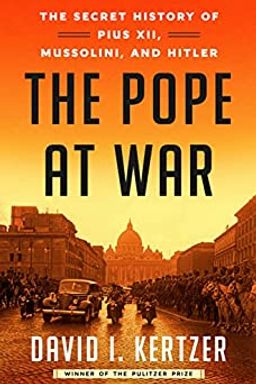
Idea 1
Pius XII and the Vatican’s War of Prudence
When you study Pius XII’s papacy during the Second World War, you are entering a moral and diplomatic labyrinth. From his election in March 1939 amid Europe’s looming war, Pius XII—formerly Cardinal Eugenio Pacelli—approaches leadership not as a prophet calling down thunder but as a diplomat trying to safeguard an institution under siege. His core bet is that discretion, neutrality, and private negotiation can achieve more protection than public confrontation. This strategy anchors every decision that follows, from secret contacts with Nazi officials to muted responses to Holocaust reports.
Balancing morality and survival
You must first grasp that Pius XII’s moral calculus stems from fear of retaliation against tens of millions of Catholics living inside Axis territories (over forty million in the Reich alone). His priority is institutional survival: avoid provoking regimes that could confiscate properties, close schools, and imprison clergy. In his eyes, every public utterance carries geopolitical weight, hence the preference for encoded communication and quiet intermediaries. That explains why statements such as Summi Pontificatus define compassion and peace without naming perpetrators—the pope sees general moral appeals as safer tools of influence than condemnations that might backfire.
Diplomacy as moral action
Pius XII’s restrained diplomacy is not passivity but a chosen method. He draws on veterans of the Vatican’s foreign service—Cardinal Luigi Maglione, Monsignor Domenico Tardini, and Jesuit intermediaries such as Pietro Tacchi Venturi—to maintain contact with both Axis and Allied sides. He believes the Vatican’s neutrality places it in a unique position to mediate peace (he attempts a 1939 international conference to avert war). Yet his mediating ambition clashes with political realities: Hitler’s aggression and Mussolini’s opportunism leave little room for moral persuasion. Neutrality that was meant to magnify influence instead constrains it.
A papacy in negotiation
The Vatican’s internal archives reveal an obsession with channels and secrecy. The pope meets the Nazi envoy Prince Philipp von Hessen and later welcomes Foreign Minister Joachim von Ribbentrop under hushed arrangements. The famous 'five points' memo of January 1940 lists limited, practical demands: stop anti-Church press, restore religious schooling, allow self-defense of Church rights. Such proposals seek to carve institutional breathing space, not ideological transformation. Pius XII’s diplomacy is tactical, hoping private concessions will preserve Catholic life beneath totalitarianism (a method contrasting with Churchill’s open moral campaigning).
A moral paradox in wartime
The core paradox emerges as reports of atrocities multiply. By 1942 the Vatican is flooded with evidence of mass murder—Polish and American envoys bring urgent dossiers—but papal advisers such as Giuseppe Dell’Acqua argue for restraint, warning that public verification might worsen reprisals. Consequently, papal statements refer only to 'non-Aryans' or 'innocent victims' without naming Jews. Inside Italy, Vatican envoys plead for baptized Jews' protection while the pope remains silent on racial laws targeting all Jews. This hierarchy of concern—protect the baptized first, avoid alienating Axis Catholics—illustrates institutional preservation at the cost of universal moral witness.
The Vatican caught between regimes
Meanwhile, the Vatican must manage its complex alliance with Fascist Italy. Mussolini exploits papal legitimacy for nationalist propaganda, while popes exploit the Lateran Accords for autonomy. Each side manipulates pageantry: ceremonial visits, shared headlines, and appearances of harmony camouflage deep unease. When Italy passes racial laws in 1938, the Vatican intervenes narrowly—Tacchi Venturi negotiates exemptions for baptized Jews, Buffarini Guidi falsifies baptismal certificates—but refrains from condemning antisemitism as a doctrine. The result is moral ambiguity tied to diplomacy’s pragmatism.
Occupation, rescue, and reputation
As war reaches Rome, prudence becomes a survival skill. During the German occupation and the October 1943 Jewish roundup, the Vatican shelters thousands in monasteries and convents while avoiding public denunciation. German ambassador Ernst von Weizsäcker—the so‑called 'good Nazi'—cultivates the Vatican’s trust and uses its neutrality for propaganda, assuring Berlin that the pope opposes unconditional surrender. Pius XII’s caution saves Vatican City from destruction and enables rescue operations but cements his reputation for silence. After 1945, both Church and Italian state recast this record as 'heroic neutrality,' sparking decades of historical controversy.
Core insight
Pius XII’s wartime papacy embodies the tension between diplomacy and moral witness: he preserved the Church as an institution but at a cost to its prophetic voice. His methods of secrecy, mediation, and image-building reveal faith in prudence as power—but they also expose how prudence under tyranny can become indistinguishable from silence.