
Idea 1
Turning Time Into an Ally: The Power of the Pomodoro Technique
Have you ever felt overwhelmed by time—like it’s something you’re constantly chasing, never catching? That ticking clock on your desk or the notification on your phone becomes a source of anxiety instead of motivation. Francesco Cirillo’s The Pomodoro Technique flips that narrative entirely. Instead of seeing time as an enemy, Cirillo invites you to treat it as an ally—a partner in your concentration, creativity, and self-improvement.
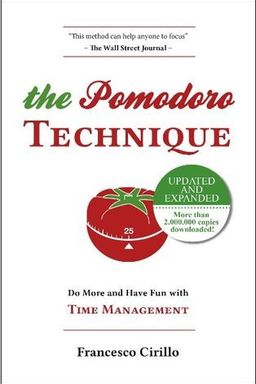
At its heart, the Pomodoro Technique is a deceptively simple time-management system built around one small but powerful unit: the Pomodoro—25 minutes of focused work followed by a 5-minute break. Cirillo created this method out of his own frustration as a student in the late 1980s, armed with nothing more than a tomato-shaped kitchen timer. Decades later, it has become a global productivity phenomenon used by students, professionals, and teams across industries.
The Problem with Time as an Enemy
The book begins with a challenge that feels universal: our conflicted relationship with time. Whether you’re procrastinating on a project, feeling guilty about wasted hours, or overwhelmed by multitasking, Cirillo argues that it’s because we perceive time as scarce, fleeting, and external. This mindset breeds anxiety and ultimately dulls our focus. Drawing from philosophers like Henri Bergson and psychologists such as Abraham Maslow, Cirillo reframes time not as an adversary but as something that can be controlled through structure and awareness.
From Anxiety to Awareness: The Essence of the Technique
The Pomodoro Technique is more than a productivity hack—it’s a mindfulness exercise disguised as time management. The simple act of winding a timer and committing to 25 minutes of uninterrupted work turns time into a measurable, finite, and friendly partner. Each Pomodoro becomes a chance to practice focus and to learn about your own rhythms of effort, energy, and distraction. By tracking how many Pomodoros you spend on different tasks, you turn abstract effort into concrete progress.
A Structured Path of Improvement
Cirillo structures the book as a progressive system with six core objectives. You start by discovering how much effort a task requires. Then you tackle interruptions—both internal (self-imposed distractions) and external (others breaking your flow). Once you can maintain focus, you move to estimating how many Pomodoros a task will take, refining those estimations over time. Later objectives include making your Pomodoros more effective, setting up realistic timetables, and eventually defining your own long-term personal improvement metrics.
Rather than adding complexity, Cirillo continually insists on simplicity: pen, paper, and a kitchen timer are all you need. Digital tools and apps can come later, but the initial magic lies in your awareness—not in technology. Every 25-minute session is an experiment in focus. Every tick of the timer is feedback. And every recorded Pomodoro is a data point in your journey to improvement.
Individual and Team Mastery
One of the book’s strengths is how it scales from the personal to the collective. After laying the groundwork for solo use, Cirillo explores how teams can use the Pomodoro Technique to reduce friction, manage interruptions, and coordinate work. Through practices like “Pomodoro Rotations” and “The Practice of the Ram,” he shows how teams can shift from chaos to cohesion. Each method helps teams handle complexity without burning out—especially when managing multiple goals and overlapping schedules.
The Deeper Philosophy of Pomodoros
Beyond its practicality, the Pomodoro Technique offers a quiet philosophical promise: by dividing your day into focused intervals, you can reclaim your agency over time itself. You stop seeing productivity as an endless race and start seeing it as a rhythm—a sustainable cadence of effort and rest. Cirillo calls this discovering your “sustainable pace,” a personal equilibrium that lets you create and rest without guilt.
Why It Matters Now
In today’s hyperconnected, notification-driven world, the struggle against distraction has only grown. Cirillo anticipated this long before smartphones made interruptions constant. The Pomodoro Technique teaches you to manage that internal battle with structure and kindness, using time as a guide rather than a threat. It’s not about doing more—it’s about doing better, stress-free.
Core Promise
Every 25 minutes, you can change how you relate to time, to your work, and even to yourself. The Pomodoro Technique isn’t just about managing tasks—it’s about mastering attention and awareness one tick at a time.
By the end of the book, you realize that success isn’t found in the number of Pomodoros you log, but in the habit of self-observation they cultivate. And as Cirillo reminds us throughout: “The next Pomodoro will go better.”