
Idea 1
The Polymathic Mind
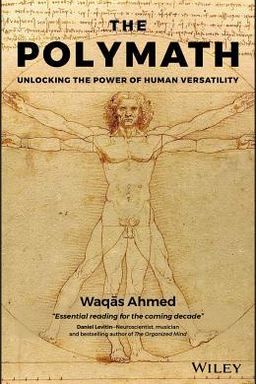
What does it mean to be fully human in an age of narrow specialization? The Polymath by Waqas Ahmed proposes that the answer lies in rediscovering polymathy—the pursuit of meaningful accomplishment across multiple domains and the ability to synthesize them into original insight. While the word evokes Renaissance figures like Leonardo da Vinci, Ahmed reframes polymathy not as a museum piece of genius, but as a practical philosophy of living. It is both a mindset and a method for thriving amid complexity, automation, and cultural fragmentation.
A polymath, as the book defines, is not simply multitalented. The distinction lies in depth and connection. The true polymath earns recognized mastery in several unrelated fields and fuses them creatively. Maya Angelou’s career—poet, playwright, actor, journalist, polyglot—exemplifies this; Casanova’s colorful life, lacking substantial achievement across fields, does not. You are reminded that polymathy demands both proficiency and synthesis: know how things work deeply, and then know how they relate broadly.
From Ancient Survival to Modern Neglect
Ahmed argues that polymathy is the human norm. In hunter-gatherer societies, each person had to be botanist, architect, and storyteller. This many-sided adaptability shaped evolution itself. Figures like Imhotep, the Egyptian vizier who mastered architecture, medicine, astronomy and governance, demonstrate how entire civilizations once trusted the polymathic mindset. Patronage systems—royal courts, guilds, religious institutions—gave thinkers like Leonardo and Leibniz the freedom to cross boundaries. Yet modernity slowly dismantled this freedom. The Enlightenment’s drive toward classification, the rise of universities with rigid departments, and the industrial division of labor created the ‘cult of specialization’ that dominates education and employment today.
The Rise of the Specialist
The book diagnoses specialization as not merely pragmatic but ideological. E.O. Wilson and Iain McGilchrist’s research on brain asymmetry shows how humans naturally lean toward narrow, sequential thinking—a trait amplified by modern schooling and bureaucracy. Education systems reward conformity and credentialism, while corporations and digital platforms pigeonhole you into niches. Ahmed calls this compression of human potential an ethical failure, one that alienates workers and creatives alike. Recognizing the pattern is the first step toward reconditioning your mind to resist it.
Polymathy for the Future
In the 21st century, polymathy becomes a survival skill. When machines dominate routine tasks, human value shifts to synthesis—the ability to connect ideas across sciences, arts, and social systems. Edgar Morin and Rand Spiro call this capacity “complexity competence.” Ahmed translates it into practical advice: cultivate multiple careers, learn from diverse disciplines, and train yourself to switch cognitive gears. Think of flexibility as insurance against obsolescence; like a raccoon compared to a koala, the adaptable thrives when the environment changes. AI cannot replicate moral judgment or creative synthesis—skills that define the polymathic edge.
Practical Reconditioning
Ahmed’s program to revive polymathy centers on six interlocking mind skills: individuality (self-understanding and autonomy), curiosity (perpetual learning), intelligence (plural forms of reasoning), versatility (capacity to switch contexts), creativity (synthesis of ideas), and unity (seeing connections behind apparent opposites). Together they operate as a framework for transformation. Historical polymaths from Al-Biruni to Goethe exemplify these traits; modern polymaths like Steve Jobs and Nathan Myhrvold show their relevance in innovation today.
Toward Integration and Renewal
Ultimately, The Polymath invites you to rethink identity. It charges you to resist being reduced to a single function. Ahmed’s final challenge is both moral and practical: treat your life as an interdisciplinary project. Rebuild education to emphasize connections rather than fragments. Design careers that encourage hybrid skill sets. Above all, rediscover human unity—the ability to see that science, art, philosophy and civic life form a single conversation about meaning and survival.
Ahmed’s call is revolutionary in simplicity: a polymathic mind is the antidote to fragmentation and the blueprint for future human flourishing.