
Idea 1
The Politics of Promotion: Why Meritocracy Isn’t Enough
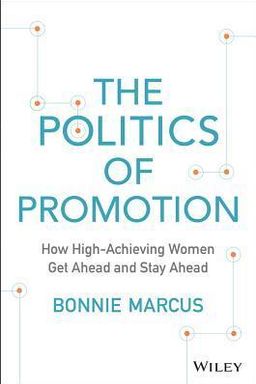
Have you ever felt blindsided at work—doing everything right, working hard, earning praise, yet watching someone far less qualified get the promotion? In The Politics of Promotion: How High-Achieving Women Get Ahead and Stay Ahead, leadership coach Bonnie Marcus argues that talent and diligence alone don’t guarantee success. In today’s organizations, understanding and embracing workplace politics is not a dirty game to avoid—it’s a critical skill to master.
Marcus contends that women are especially vulnerable to the naïve belief that meritocracy rules the workplace. Conditioned from childhood to equate hard work with reward, high-performing women enter corporations expecting recognition to follow results. Instead, they find decisions shaped by relationships, visibility, and unwritten laws of influence. Her message is clear: if you ignore politics, you handicap your career; if you engage it strategically, you empower it.
From Hard Work to Political Savvy
Marcus opens with a powerful confession—her own professional blindside. Despite eight years of stellar performance at a healthcare company, she was passed over for a vice president role. The lesson that emerged formed her lifelong mission: workplace decisions hinge on relationships, alliances, and political awareness. This experience became the foundation for her concept of a “Political Toolkit,” a collection of strategies any woman can use to climb efficiently while staying true to her principles.
Why Politics Matter More for Women
Marcus describes workplaces as highly nuanced ecosystems of alliances, gatekeepers, and subtle bias. Women, excluded from dominant “old boys’ clubs,” must acquire insider access creatively. She draws on stories like Sallie Krawcheck’s ouster from Bank of America and Cathie Black’s public downfall as NYC Schools Chancellor to illustrate that powerful women often fail not for lack of competence, but for lack of influence within informal networks. Even stars with political skill can stumble if placed outside the power grid.
Gender bias further complicates the game. Decades of overt discrimination have morphed into subtler “second-generation bias”—unconscious assumptions that shape whom leaders trust, mentor, or promote. Women can be penalized for assertiveness or assumed to lack ambition after motherhood. Political savvy, Marcus insists, is the override switch: it lets women see these obstacles clearly, discern allies and foes, and build alliances that protect their interests.
Reframing Politics as Positive Relationships
For Marcus, politics isn’t manipulation or “schmoozing.” It’s relational intelligence—the ability to see what drives people, what they value, and how decisions evolve socially, not formally. Politically skilled individuals shape perceptions by being authentic, strategic, and generous. They adopt the radar of great primatologists (Marcus quotes Frans de Waal’s chimpanzee research on coalition-building) to observe and adapt continuously.
This reframing is central to Marcus’s approach. By viewing politics as constructive collaboration rather than self-serving trickery, women can participate ethically and effectively. As executive coach Lois Frankel notes (author of Nice Girls Don’t Get the Corner Office), success depends on understanding “quid pro quo”—offering value for value. Marcus extends this: political mastery also means balancing assertiveness with empathy, ambition with contribution.
The Political Toolkit: A Step-by-Step Map
The book’s heart lies in Marcus’s five tools—the Mirror, Magnifying Glass, Pass Go Card, Get Out of Jail Free Card, and GPS. Each metaphor represents a practical competency: know your value (Mirror), decode your environment (Magnifying Glass), build strategic networks (Pass Go Card), secure sponsorship (Get Out of Jail Free Card), and use coaching for direction (GPS). These tools evolve alongside the reader’s career—helping a newcomer get grounded and a seasoned leader stay relevant amid political turbulence.
Why This Book Matters Now
Despite women’s educational achievements—holding over half of U.S. graduate degrees—representation in executive suites remains under 6%. Marcus argues that the missing ingredient isn’t talent but tactical understanding. By teaching women how to navigate informal systems of power with clarity and integrity, The Politics of Promotion becomes both a survival guide and an empowerment manual. Its message resonates with works by Sheryl Sandberg (Lean In) and Herminia Ibarra’s research on leadership identity: ambition alone doesn’t guarantee progress—visibility, advocacy, and savvy relationships do. In an age when “meritocracy” is more myth than reality, Marcus invites women to stop waiting for fairness and start playing to win—smartly, confidently, and politically.