
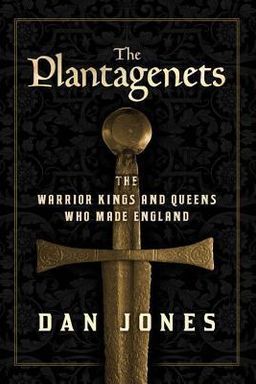
Idea 1
Forging England Across Dynasties and Crisis
You begin with a paradox: the Plantagenets create the foundations of England—its law, institutions, and monarchy—while ruling a realm that is never purely English. From their origins in Anjou to the end of Richard II’s reign, you witness seven generations who merge feudal family politics with emerging statecraft. This book tells how individual ambition, continental war, and symbolic invention combine to produce the modern kingdom.
The accidental dynasty
The dynasty begins almost by accident. Geoffrey of Anjou’s broom sprig—planta genista—becomes the badge of a family whose power stretches from Scotland to Aquitaine. His marriage to Matilda, daughter of Henry I, fuses Norman legitimacy with Angevin ambition. When his son Henry II gains the throne in 1154, the emblematic broom blossom crowns a continental empire rather than a simple kingdom. You see here how symbols and marriages become acts of state—their union blending cultures of chivalry, law, and mobility.
(Note: many historians emphasize this hybrid identity; the Plantagenets are never strictly English until late in the lineage—an insight that clarifies their recurrent conflicts with France.)
From chaos to reconstruction
The early twelfth century sets the dynastic pattern: instability followed by reform. The sinking of the White Ship (1120) kills Henry I’s heir and triggers the Anarchy (1135–1153). Rival courts, civil war, and divided loyalties test England’s cohesion. Yet the treaty that ends it—Stephen accepting Matilda’s son Henry as heir—lays the groundwork for the strong monarchy that Henry II builds. The lesson is simple: catastrophe forces innovation. Henry’s reign invents the king’s justice, assizes, royal writs, and a mobile bureaucracy that still defines governance today.
Law, Church, and the power to rule
You then watch Henry II’s administrative genius collide with moral authority in the Becket crisis. Becket, once his chancellor, becomes his archbishop and adversary—refusing secular jurisdiction over clergy. The quarrel ends in murder (1170) and martyrdom, revealing that medieval kingship operates within spiritual limits. Royal sovereignty expands through law but must continually negotiate with conscience and clerical independence.
Militarism and myth
Under Richard I, you confront the spectacle of martial kingship. His crusades, capture, and ransom embody both glory and strain: the king becomes continental fighter first, administrator second. John inherits debt and distrust, losing Normandy in 1204 and alienating barons with taxes and cruelty. Yet John's failures indirectly birth England’s constitutional myth—Magna Carta (1215)—the document that transforms grievance into principle. Its clauses on justice and consent echo across centuries and become the moral spine of English governance.
From charter to parliament
Henry III’s minority and adult reign reissue the charters and entrench bargaining between revenue and rights. Simon de Montfort’s rebellion (1258–1265) brings the first representative parliament, proving that even armed opposition can institutionalize reform. Edward I then stabilizes rule through conquest and law: subduing Wales and Scotland, codifying statutes, and linking taxation with parliamentary consent. The Plantagenet world, now insular, begins to define itself through law rather than lineage.
Crisis, recovery, and transformation
Edward III recasts monarchy through chivalry and enterprise. He establishes the Order of the Garter, revives knighthood as ritual, and wages audacious wars in France (Sluys, Crécy). These campaigns rewrite military practice—archers and disciplined infantry replacing the feudal charge. But the cost produces new dependencies: parliament gains leverage through taxation, and fiscal oversight evolves into political power. The Black Death (1348–51) intensifies the transformation, eroding serfdom and forcing governments to legislate labor conditions.
Majesty and collapse
Finally, Richard II turns kingship into theater—pageants, sanctified imagery, and ruthless exclusion of dissent. His confiscations, lavish court, and alienation of magnates culminate in deposition (1399). The act exposes monarchy’s fragility: when symbolic sanctity outweighs collaboration, royal authority dissolves. The Plantagenet line closes in contradiction—a dynasty that invents England’s law and language while undone by its own absolutist instincts.
Central idea
Across three centuries you learn that English governance rises from the tension between personal monarchy and institutional constraint. Each ruler—Henry II’s reform, John’s humiliation, Edward I’s conquest, Edward III’s chivalric state, Richard II’s pageantry—tests how authority adapts. The Plantagenet legacy is thus dual: the enduring systems of law and parliament, and the perpetual risk that power without consensus destroys itself.