
Idea 1
The Plant-Based Performance Revolution
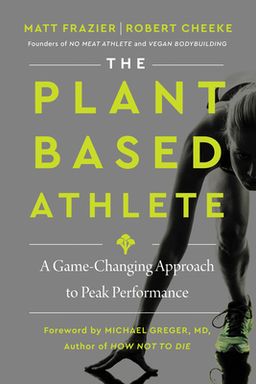
Can eating more plants make you a better athlete? In The Plant-Based Athlete, Matt Frazier and Robert Cheeke argue that a plant-centered diet doesn’t just support performance—it can be a competitive advantage. Drawing insights from elite competitors across sports and scientific evidence, the authors show that plant-based nutrition improves endurance, recovery, and long-term health while offering practical guidance for applying these principles to daily life.
The book brings together hundreds of athlete case studies—from Novak Djokovic’s Wimbledon success and Alex Morgan’s performance in soccer to Scott Jurek’s ultrarunning dominance—to make a simple but powerful point: plants can fuel world-class results. Across every sport, athletes report faster recovery, less inflammation, and more consistent energy after moving toward whole-food plant eating. (Note: This mirrors patterns documented in Dr. Michael Greger’s research, where nutrients in greens such as nitrates enhance blood flow and endurance.)
What Makes Plant-Based Diets Work
Plants lower chronic inflammation, improve oxygen transport, and supply antioxidants and fiber that stabilize energy and mood. Unlike meat-heavy diets that can slow recovery, plant foods provide micronutrients that accelerate repair—polyphenols, carotenoids, and phytochemicals strengthen your body against oxidative stress. Athletes like Venus Williams and Rebecca Soni credit plant foods for keeping pain low and energy high. Physiologically, the benefits stem from improved endothelial function (thanks to nitrates in greens), less metabolic acidity, and reduced inflammatory markers. You train harder because you recover faster.
Science Meets Practice
Research matches testimony. Studies comparing vegan and omnivore athletes show equal or better scores for VO2 max and submaximal endurance, confirming that plant-based diets meet all nutrient requirements when planned well. To make this practical, the book teaches how to balance macronutrients (carbohydrates, protein, fat), manage calorie density, and build “plates, not macros”—visual templates you can customize for sport type or goal. The authors position carbohydrates as predominant fuel, protein as essential but plentiful in plants, and fats as supportive yet secondary for most performance tasks.
From Elite Example to Everyday Experiment
Readers are encouraged to apply these ideas experimentally for 4–12 weeks—nothing dogmatic, just data-driven exploration. Track recovery, soreness, and energy output; identify whether plants give tangible improvement, like they did for Matt Frazier’s marathon gains and Scott Jurek’s multi-day races. The authors show how templates, grocery systems, and simple formulas turn lofty nutritional ideals into concrete daily habits—replacing reliance on supplements or processed convenience with real foods that fuel high performance.
Beyond Food: Lifestyle and Mindset
Nutrition is only one part of the equation. The book emphasizes integrated recovery—hydration, sleep, stretching, and mental discipline—as catalysts for turning nutrition into results. Combined with an ethical or environmental “why,” these habits make plant-based performance sustainable. Sonya Looney’s ultracycling endurance, Robbie Balenger’s transcontinental run, and Korin Sutton’s bodybuilding career exemplify how mindset and food intertwine: clarity of purpose multiplies physical capability.
Core argument
This isn’t a vegan manifesto—it’s a guide to optimizing human performance through nutrient density, ethical awareness, and recovery science. Eat more plants, reduce processed pitfalls, and experiment until you find your formula. The result is a diet that supports not just the next event, but an athletic life built for longevity.
In short, the authors merge story, science, and system: how elite athletes thrive on plants, how you can replicate their success, and how plant foods can redefine what it means to be strong, fast, and enduring for life.