
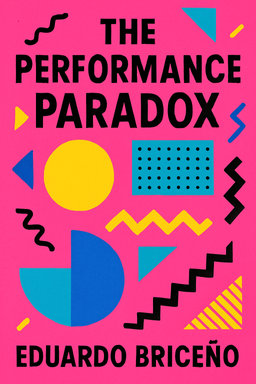
The Performance Paradox cover

The Performance Paradox

by Eduardo Briceno

The Performance Paradox provides a groundbreaking approach to career satisfaction by combining learning with performance. Eduardo Briceno guides you through breaking the cycle of high effort with low reward, offering strategies for growth, innovation, and lasting success.

Escaping the Performance Paradox

Escaping the Performance Paradox

Why do hard-working people stagnate even as they deliver results? Eduardo Briceño argues that most of us live inside the performance paradox: we spend nearly all our energy trying to perform well, which paradoxically keeps us from improving. This book, The Performance Paradox, reveals that true progress depends on alternating between two mental zones—learning and performance—and designing personal and organizational systems that make learning routine rather than reactive.

The trap of chronic performance

Briceño introduces characters like Anjali, Gino Barbaro, and Douglas Franco to show how chronic performers look excellent but stay stuck. They avoid feedback, shun experimentation, and react to challenges by working harder. This mirrors how companies under pressure pursue flawless execution at the cost of adaptability. His rip-current metaphor—swimming harder against the current instead of angling out—illustrates that doing more of the same will not help you learn faster or escape stagnation.

Two zones and the art of switching

Briceño defines two distinct states of operation: the Learning Zone, where you experiment, practice, and invite mistakes of discovery; and the Performance Zone, where you deliver with existing skill. Progress demands conscious movement between them. Too much learning without performance produces ideas but no results; too much performing leads to comfort and decline. This shifting mindset explains why disciplined athletes (like Serena Williams) spend more time in structured practice than in tournaments.

Learning while doing and everyday experiments

Few have time for long retreats, so Briceño stresses learning while doing—embedding reflection, feedback, and experimentation into real work. At Ipsy, Simon Tisminezky tested small social sharing incentives that reshaped growth. The company treated every project as a micro-lab. By pairing the experiential learning cycle—hypothesis, action, observation, reflection—teams evolve faster even amid deadlines. Traca Savadogo at Starbucks improved error rates by writing orders on cups; that small test produced broad organizational refinement.

Mistakes as the fuel of learning

Briceño reframes mistakes as tuition, not shame. He sorts them into sloppy, aha-moment, stretch, and high-stakes categories. Neuroscience reinforces his point: failing within tolerance zones triggers attention and neuroplasticity, preparing the brain for growth. Engineers Without Borders turned their water project failures into open documentation that lifted the entire sector. The key is designing environments where people analyze errors promptly and safely so organizations can grow through structured failure rather than crisis.

Building cultures and leaders who learn

The second half of the book expands from individuals to teams and organizations. Briceño shows how leaders like Francesca Lenci at Siemens and Satya Nadella at Microsoft model curiosity and vulnerability to normalize continuous learning. Design thinking, psychological safety, and clear rituals help transform groups from defensive execution units into creative laboratories. Systems—routines, debriefs, and feedback loops—make improvement habitual rather than heroic.

The growth propeller and beyond

Briceño’s “growth propeller” ties together purpose, beliefs, habits, and community. Identity and purpose form the hub; beliefs (about competence and agency), habits (deliberate growth rituals), and communities (sources of feedback and support) drive motion. This model underpins leaders like Linda Rabbitt and Lizzie Dipp Metzger, who built organizations that learn cyclically and perform sustainably. Finally, Briceño connects personal learning to global impact—showing projects like Laboratoria and America in One Room as examples of collective learning shaping economies and societies.

Core takeaway

If you want lasting excellence, don’t just work harder—learn smarter, design systems that reward experimentation, and move intentionally between performing and improving. Sustainable success depends on making learning your default mode of operation.

Briceño’s message is both philosophical and practical: learning is not an interlude between performances—it is the means through which performance rises. Whether you lead yourself, your team, or a global organization, alternating between execution and reflection unlocks lasting capability and impact.


Chronic Performance and Its Costs

In chronic performance mode, you measure success by output and mistake avoidance. You may look dependable, yet beneath the surface your growth stalls. Briceño exposes how anxiety and social pressures keep people trapped in perfect-execution cycles. Anjali equated feedback with threat, Gino worked nonstop to prevent errors, and Briceño himself developed physical pain from constant strain. These stories humanize how performance obsession harms well-being and innovation alike.

The behavioral forces

Present bias (favoring immediate visible results) and social signaling (wanting to appear competent) drive chronic performance. Organizations amplify these tendencies through short-term metrics, fear-based cultures, or punishment of imperfection. When companies demand flawless output, they unintentionally block the experiments that lead to better ways. Competitors who learn faster inevitably overtake them.

The rip-current metaphor revisited

Briceño’s rip-current story offers a mental reframe. Fighting the current—working harder at the same failing approach—deepens exhaustion. Angling out represents shifting focus to learning activities: deliberate reflection, feedback, and recalibration. If you can’t name a skill you’re developing, you’re likely stuck on the performance treadmill. Escaping begins by identifying a learning target and spending time improving it, not just delivering it.

Insight

High performers plateau when effort replaces reflection. Progress requires moving from effortful doing to intentional improvement—even small learning actions can reverse stagnation.

By diagnosing chronic performance, you uncover how well-meaning productivity habits undermine learning. Recognizing and counteracting those forces lays the groundwork for sustainable excellence.


Mastering the Learning and Performance Zones

Briceño’s two-zone model clarifies when to learn and when to deliver. The Learning Zone centers on experimentation, feedback, and risk-taking; the Performance Zone centers on reliability, mastery, and impact. Each has distinct energy and outcomes. Understanding and toggling between them gives you control over your own growth curve.

Shifting criteria and states of mind

Zones are mental, not physical spaces. Your focus—on progress or perfection—determines which you inhabit. Cirque du Soleil performers rehearse in nets (Learning Zone) but perform live (Performance Zone). Athletes, teachers, and creatives prosper when they alternate between safe practice and high-stakes execution. Similarly, leaders should declare the mode before every meeting: Are we learning or performing right now?

Why repetition isn’t enough

Research cited by Briceño (Ericsson, Brucks) shows that repetition without focus leads to stagnation. The Williams sisters progressed because their father emphasized deliberate practice rather than endless competition. In chess or business meetings, repeating tasks without building subskills creates plateaus. The Learning Zone demands structured feedback; the Performance Zone harvests its benefits.

Practical use

  • Allocate daily blocks for deliberate learning activities.
  • Treat deadlines and presentations as Performance Zone; identify rehearsal and debriefs as Learning Zone.
  • Move intentionally between modes rather than drifting reactively.

Reminder

Excellence emerges from balance. Constant learning without performance produces confusion; constant performance without learning produces decline.

When you manage these zones deliberately, you transform daily work into an engine of ongoing development.


Six Strategies for Faster Growth

Briceño distills six strategies that make the Learning Zone deliberate and efficient. They span from micro-skills to life purpose, helping you upgrade competence across domains.

1. Practice deliberately

Target skills just beyond current ability; collect feedback; repeat thoughtfully. Nandi Bushell progressed by mastering chunks, not entire songs, before speeding up. Deliberate practice demands structure and patience.

2. Experiment small to learn big

Scale learning through micro-tests. iEduca ran 70 low-cost pilots that doubled revenue. General Mills lost millions launching early but succeeded later by testing small first. Small experiments protect resources and multiply insights.

3. Work smarter, not harder

Efficiency stems from curiosity. Tom Brady curated what worked; at Sonatype, employees refined onboarding processes to save days of work. The lesson: challenge habits, integrate automation, and keep your mental energy for creative tasks.

4. Build pattern intuition (“air sense”)

Experience plus reflection produces “air sense” (Polson). Record surprises, review expert cases, and store situational cues so patterns guide you under stress. It’s how skilled pilots or entrepreneurs make fast, sound decisions.

5. Balance effort and recovery

Bulldozing destroys learning quality. Ericsson’s research shows elite performers interleave rest to consolidate gains. Use deep work blocks and deliberate rest rituals to sustain learning energy.

6. Ask “why”

Constantly connect tactics to purpose. “Why” clarifies what improvement serves. It transforms random tweaking into meaningful evolution. Briceño suggests reviewing your current goals weekly and confirming they still align with your deeper mission.

Application tip

Pick one strategy and run it for four weeks—evaluate, reflect, and repeat. Compound results come from small consistent cycles.

Together, these strategies turn everyday pressure into traction. They’re not add-ons but replacements for outdated busyness—turning effort into improvement that lasts.


Learning Teams and Safe Cultures

To scale learning, you must design teams that think, test, and adapt together. Briceño draws from design thinking, psychology research, and real companies to show how culture builds sustained curiosity.

Design thinking as a learning engine

The Embrace founders—engineers and business students—used divergent and convergent modes to design a life-saving infant warmer. By alternating between exploration (“yes, and”) and focus (“how might we”), they advanced rapidly. Briceño urges leaders to make one teammate a facilitator, set clear stage norms, and prototype quickly.

Building trust and psychological safety

Teams learn only when they feel safe enough to be candid. Amy Edmondson’s research shows error-reporting teams outperform secretive ones. Embrace eventually restored cohesion through open retreats; Bridgewater uses radical transparency with coaching. You can model vulnerability—soliciting feedback publicly—and anchor norms such as speaking one at a time and deferring judgment.

Feedback as routine practice

Jenny Radenberg’s team at General Mills improved dramatically after monthly feedback meetings. Asking for feedback, rather than waiting for it, shifts power and normalizes learning conversations. When leaders make it habitual, fear recedes and improvement accelerates.

Essential pattern

Trust enables truth; truth enables learning; learning enables performance. Skip any step, and progress collapses.

Learning cultures combine empathy with experimentation. These environments turn feedback and failure into fuel, enabling rapid innovation without fear.


Leaders and Systems that Scale Learning

Leadership drives whether learning survives beyond slogans. Briceño portrays leaders who embody curiosity, model feedback-seeking, and install operational systems that make growth standard practice.

Leading through trust and framing

Mike Stevenson’s foreman and Francesca Lenci at Siemens show how trust unlocks competence. Ian MacGregor at Skratch Labs distinguishes risk zones—above the waterline (experiment freely) vs. below (protect core). This framing balances courage and safety. Leaders who clarify these expectations make experimentation predictable, not perilous.

Modeling learning visibly

Melinda Gates invited staff to share candid feedback about her leadership and read it publicly, demonstrating courage. Employees then reciprocated honesty. Visible learning signals permission for others to do the same. But competence must anchor vulnerability; otherwise, it appears weak rather than growth-oriented.

Embedding learning in systems

Skratch Labs holds quarterly reflection rituals; LinkedIn and General Mills route learning into regular meetings and dashboards. Automation frees attention for creativity, and standardized debrief templates turn reflection into default behavior rather than emergency response. After-action reviews and postmortems convert setbacks into organizational intelligence.

Learning as infrastructure

When reflection and feedback are built into calendars, metrics, and rituals, learning becomes the company’s operating system—not a side project.

Briceño’s pragmatic vision of leadership replaces micromanagement with care, clarity, and system design—the components that keep learning alive under real-world pressures.


From Learning to Global Impact

In Briceño’s final vision, the principles scale beyond personal success to societal transformation. Whether through education, entrepreneurship, or civic engagement, learning-powered performance reshapes communities.

Education and inclusion

Mariana Costa Checa’s Laboratoria trains Latin American women in coding through project-based programs that blend doing and reflection. Even amid global disruptions, this model expanded into rural areas, generating pathways out of poverty. Learning systems like these multiply capability far beyond individual gain.

Experimentation in policy

Esther Duflo and Abhijit Banerjee’s use of randomized trials revolutionized development economics. Their disciplined experiments separated good intentions from effective interventions—proof that the scientific Learning Zone works at scale.

Deliberative learning and social cohesion

America in One Room gathered citizens from opposing ideologies to learn and deliberate; polarization dropped dramatically. The process showed that inquiry and empathy can bridge divides when dialogue replaces defense. Individuals like Tiy Goddard demonstrate micro versions—study circles and civic discussions built on curiosity.

Purpose and ripple effect

Briceño closes by urging each reader to apply Learning Zone habits to their own mission—be it art, business, or policy. Purpose-directed learning turns local improvements into systemic change. Start with one problem, design an experiment, test, reflect, and iterate. The ripple extends further than expected.

Final message

You change the world by learning deliberately and performing compassionately. Scale begins with one learning habit sustained over time.

Through these examples, Briceño proves that when individuals and organizations master the two zones, their improvement radiates outward—from skill to leadership to society itself.

Dig Deeper

Get personalized prompts to apply these lessons to your life and deepen your understanding.

Go Deeper

Get the Full Experience

Download Insight Books for AI-powered reflections, quizzes, and more.