
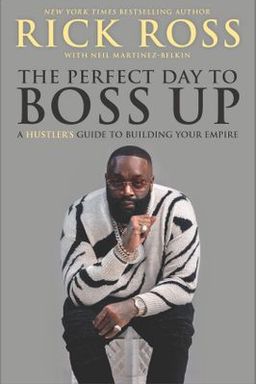
The Perfect Day to Boss Up cover

The Perfect Day to Boss Up

by Rick Ross, with Neil Martinez-Belkin

The Perfect Day to Boss Up provides an unfiltered guide to becoming the CEO of your life. With insights from hip-hop mogul Rick Ross, it reveals strategies for turning ambition into success, managing time and money, and building an empire while staying true to yourself.

Boss Up: Building an Empire from the Inside Out

What does it really mean to be a boss—not just in your career, but in your life? In The Perfect Day to Boss Up, Rick Ross, the self-proclaimed “Biggest Boss,” argues that real success has nothing to do with luck or privilege. It’s about discipline, vision, adaptability, and relentless self-belief. When the world went into lockdown during the pandemic, Ross lost millions in show money overnight. But instead of slowing down, he used the crisis as an opportunity to rethink his empire, diversify his income, and redefine what being a boss means. For Ross, the pandemic wasn’t a setback—it was a wake-up call.

Throughout the book, Ross uses vivid storytelling and hard-won business lessons to show how anyone can take control of their circumstances, no matter where they start. From mowing his massive Atlanta estate himself to turning his pitfalls into profit, Ross reminds readers that a boss isn’t someone who waits for stability—they create it.

From Survival to Strategy: The Promise Land Mindset

Ross’s journey begins at The Promise Land, his 235-acre estate in Georgia. During the pandemic, the property became a metaphor for his philosophy: the land represents potential, and the hustle represents cultivation. When touring his property by tractor, Ross isn’t just admiring what he owns—he’s evaluating how to turn every acre into a working investment. This mindset—seeing everything as an asset to maximize—is at the core of bossing up. Ross contrasts his approach with that of Evander Holyfield, the previous owner of the estate, who lost the property to foreclosure despite earning hundreds of millions as a boxing legend. The difference? Holyfield built a monument to success; Ross built a machine that produces it.

The Fungus Was Among Us: Converting Crisis into Creativity

Ross starts his story as the 2020 pandemic hits. Tours are canceled, income streams vanish, and what he calls “the fungus” infects every plan he’s made. But instead of panicking, he looks for angles: guest verses, new ventures, book deals. He uses what others see as downtime to build fresh momentum. The key principle here—echoing lessons from books like Ryan Holiday’s The Obstacle Is the Way—is that adversity isn’t a stop sign; it’s an invitation to innovate. Ross makes the powerful claim that every challenge can be re-engineered into opportunity, but only if you refuse to rely on sympathy or excuses.

The Blueprint: Lessons from the Streets and the Boardroom

Coming from Miami’s rough neighborhoods, Ross learned early that ambition had to be translated into structure. His motto “Everyday I’m Hustlin’” isn’t just a catchphrase—it’s a business strategy. The book builds around several boss commandments: determine your destination, master your trade before diversifying, value time more than money, and build a loyal team that eats with you, not off you. He teaches that show money and luxury cars are surface-level wins. The real victory comes from sustainability—using each hustle to feed the next.

From Worker to Empire Builder

Ross reminds you that every boss started as a worker. He speaks candidly about sleeping in cars, writing songs for others, and fighting discouragement before “Hustlin’” changed his life. His humility becomes a recurring theme: you may start under someone else’s direction, but real power comes from learning every rung of the ladder on your way up. This connects his philosophy to figures like Robert Greene, Napoleon Hill, and Master P—each emphasizing that mastery and patience are the foundation of long-term wealth.

Why These Lessons Matter

In an age that glorifies overnight success, The Perfect Day to Boss Up is a reminder that empires are not built off trends—they’re built off temperament. Ross invites readers to evaluate how they spend their time, whom they surround themselves with, and whether their daily habits align with their goals. His story—of reinvention, diversification, and defiance—reframes the meaning of success from “getting rich” to “staying rich in mind, health, and legacy.”

Ultimately, Ross’s guide is both motivational and strategic—a street-smart MBA grounded in life experience. His message is simple: the perfect day to boss up is today. No one else is coming to save you, so you might as well start saving yourself by thinking, acting, and living like a boss.


Determine Your Destination

In the first real step of Ross’s boss philosophy, he emphasizes clarity of vision. You can’t reach what you can’t imagine. When the pandemic stripped away his touring schedule, he retreated to his estate to reflect on his goals. For Ross, being still became a strategy. The Promise Land wasn’t just where he quarantined—it became his planning table for a lifelong empire.

Seeing the Bigger Picture

Ross describes driving his John Deere tractor around his property, exploring forgotten spaces, and discovering Holyfield’s abandoned boxing gym. This revelation—that he’d owned a potential production studio for six years without realizing it—served as a metaphor. Sometimes the resources you need are already within your reach; you just have to open your eyes and strategize. He resolved to turn the space into Maybach Films, an on-site content studio. The moment underscores his motto: don’t wait for your environment to inspire you—let your environment remind you what’s possible.

Tunnel Vision vs. Peripheral Awareness

Ross compares life to football: having tunnel vision can help you execute, but great quarterbacks see every opportunity across the field. During his career climb, he admits he’d temporarily sacrificed health and family in pursuit of his financial goals. The pandemic forced him to rebalance, showing that drive must coexist with awareness. (This balance mirrors what Stephen Covey calls “Sharpening the Saw” in The 7 Habits of Highly Effective People—keeping all aspects of life nourished to perform at your best.)

“Determine your destination” isn’t about a five-year plan. It’s about learning when to step back from work so that you can actually see where you’re heading. As Ross puts it, a boss is not someone who runs faster than everyone else—it’s someone who knows exactly where they’re running.


No Excuses: The Game Ain’t Based on Sympathy

Ross believes that excuses—no matter how valid—don’t pay the bills. In 2020, as COVID wiped his income, he could have paused. Instead, he doubled down on recording features, writing another book, and leveraging his brands. His message is blunt: nobody owes you success. If you’re waiting for perfect timing, you’ll wait forever.

The Myth of the Good Excuse

Ross challenges the belief that circumstances dictate destiny. He reminds readers that even the greats—Michael Jordan with the flu, Tiger Woods on a broken leg—earned their legend by showing up anyway. A legitimate excuse and a bad excuse are functionally the same: both justify inaction. The real differentiator is mindset.

Becoming a Creator, Not a Complainer

Instead of dwelling on canceled tours, Ross turned his downtime into creative capital. That decision birthed The Perfect Day to Boss Up itself. He reframes obstacles as blueprints—new arenas to flex the same hustle in fresh ways. This entrepreneurial response echoes the teachings of resiliency experts like Angela Duckworth’s concept of “grit”—perseverance married to passion over long-term goals.

In the end, Ross’s rule is universal: your goals don’t care about your excuses. Stop waiting for fairness and start making plays with what’s on your table. Winners adapt; victims explain.


Every Boss Started Out a Worker

Ross insists that before anyone can lead, they must first learn to follow. The social media generation glorifies the final result—luxury cars and private jets—without honoring the grind that made them possible. A true boss, Ross says, doesn’t rent the image of success; they earn it.

Learning by Doing

Ross recalls sleeping in his car during his early rap career and working as a ghostwriter for others. Even when broke, he carried himself with the confidence of a boss because he believed his time was coming. He emphasizes that performing humble work lays the foundation for authority. The boss mindset isn’t an upgrade you purchase—it’s a skill forged in obscurity.

Authenticity Over Optics

Ross calls out the false success culture—those who stage faux private jets for Instagram. These “fugazi hustlers,” as he calls them, are building houses of cards, not empires. True power grows from investing energy into competence, not appearances. The grind is the currency that funds credibility. (This echoes Cal Newport’s argument in So Good They Can’t Ignore You: mastery, not self-promotion, creates lasting success.)

The takeaway? Before you can sign checks, you need to clock in. Stop performing success; start preparing for it.


Empires Are Built Brick by Brick

Ross turns the cliché of overnight success on its head, stressing patience and grounded ambition. Every high-rise empire stands on invisible groundwork. You can’t jump to being a mogul without mastering one skill first.

The 10,000-Hour Hustle

Borrowing from Malcolm Gladwell’s “10,000-Hour Rule,” Ross reflects that it took ten years between leaving college and breaking through with “Hustlin’.” Those unseen years of practice were the crucible of his artistry. Early failures with labels like Suave House and Slip-N-Slide taught him to value learning before earning: before you can earn, you must learn.

The Value of Mentorship

Ross credits figures like Big Mike, J. Prince, and Puff Daddy for giving him game. Each mentor reminded him that you need “game to get work.” Knowledge precedes the come-up. These influences reflect the apprenticeship model celebrated by Robert Greene in Mastery: greatness isn’t invented; it’s absorbed through observation and repetition.

Empires grow brick by brick—commitment by commitment. Don’t chase every opportunity at once; focus on mastering your first craft until it finances your expansion into others.


Stack Your Paper and Protect Your Peace

Money, to Ross, is both shield and opportunity. He’s candid about his extravagance—watch collections, cars, luxury—but clarifies that his wealth is structured, not splurged. Every flashy asset pays for itself. His mansion doubles as a movie location; his cars generate rental income. The message is clear: build systems that make your money work while you sleep.

The Long Game

Ross associates saving with survival and respect. Early in his career, he treated his first million-dollar advance as untouchable, immersing himself in work instead of indulgence. It’s a classic entrepreneur’s restraint: delaying gratification to compound returns. He connects this mindset to surviving “hurricanes”—literal and financial—echoing Stoic resilience philosophies.

Financial Freedom as Inner Freedom

Ross argues that peace of mind is the best thing money can buy. Financial chaos breeds mental chaos. So rather than flaunting liquidity, he preaches liquidity for liberation—the ability to make choices independently. Once basic security is met, stacking paper becomes about peace, not pride.

Ultimately, Ross calls wealth “the grown-man version of self-defense.” It protects you from bad decisions, bad people, and bad times.


Make Your Bedroom Your Office

Ross blurs the lines between work and life, seeing every space as a workplace and every moment as a branding opportunity. His partnership with Wingstop exemplifies passion turned profit. He didn’t promote it because of a paycheck—he promoted it because he genuinely loved lemon pepper wings. This authenticity made the brand inseparable from his public identity.

Love the Work

Ross’s philosophy mirrors the mastery mindset: success follows obsession. He writes that even as a teenager washing cars, he imposed excellence on every task—alphabetizing customers’ CDs after cleaning. That same pride turned into multimillion-dollar business habits. “There’s no such thing as a halfway hustler,” he says. If your nine-to-five feels like a prison sentence, it’s time to align your work with your purpose.

Authentic Alignment

Ross criticizes hollow endorsements and stresses that your ventures must match your identity: a fighter should sell fitness; an eater should sell flavor. That’s why he invests only in brands he uses personally—from hair care to spirits. By contrast, he says, Evander Holyfield’s downfall came from chasing mismatched businesses. That contrast teaches the rule of alignment: stay consistent with who you are.

When you stop living for weekends and start living through your work, your bedroom truly becomes your office—and life itself becomes the enterprise.


Bosses Stay Students

Ross’s humility returns in his lesson on lifelong learning. No amount of wins grants immunity from irrelevance. He admits missing stock market booms and crypto surges, recognizing that ignorance costs money. Rather than defending mistakes, he studies them. His new ventures—Collins Ave Cannabis and partnerships with Cookies founder Berner—prove that curiosity, not certainty, is a boss’s greatest asset.

Beginner’s Mindset

Drawing from Robert Greene’s Mastery, Ross frames learning as permanence. To adapt is to survive. Whether experimenting with Lex Luger’s trap beats or launching Jetdoc, he keeps expanding. The “megalodon” warning—his term for extinct hustlers who can’t evolve—drives the point home: pride kills progress.

Evolution Is the New Hustle

Ross calls for “educating the entrepreneur.” That means studying tech, stocks, trends, psychology—whatever grows your game. Like Jay-Z’s move from rapper to billionaire investor, Ross believes reinvention is the real talent. Staying a student keeps you in the conversation long after trends fade.

A boss who stops learning becomes extinct. A boss who studies keeps eating forever.

Dig Deeper

Get personalized prompts to apply these lessons to your life and deepen your understanding.

Go Deeper

Get the Full Experience

Download Insight Books for AI-powered reflections, quizzes, and more.