
Idea 1
Food as Medicine and the Pegan Revolution
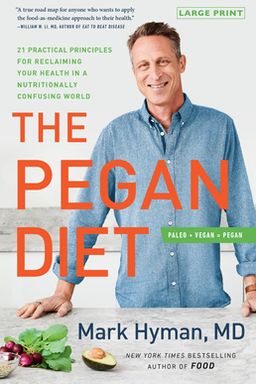
What if every single meal you ate could heal your body, sharpen your mind, and even help save the planet? That’s the question Dr. Mark Hyman poses in The Pegan Diet, a manifesto and practical guide that reframes how we think about food, health, and sustainability. Hyman—one of the leading voices in functional medicine—argues that food is far more than fuel or pleasure; it’s information that programs your biology with every bite. The way you eat not only determines your personal health but also impacts the health of the planet itself.
Hyman contends that the endless diet wars—Paleo versus vegan, keto versus plant-based—obscure what truly matters. Instead of polarization, he offers a bridge: the Pegan philosophy, a blend of the best aspects of Paleo and vegan ideals. Unlike many restrictive diet fads, the Pegan Diet is an inclusive framework focused on real, whole, high-quality foods that suit our biological individuality. His aim is not to hand you another rigid plan, but to help you create your own “operating manual” for health.
The Crisis of Modern Food
Modern industrial diets—what Hyman calls the Standard American Diet (SAD)—are literally making us sick. Processed foods made from wheat, corn, and soy, stripped of nutrients and loaded with chemicals, are now the world’s deadliest killers, contributing to heart disease, diabetes, obesity, cancer, and dementia. Globally, diet-driven chronic conditions kill more people than all infectious diseases combined. The costs, both human and economic, are staggering.
So, Hyman asks: If food is the source of disease, can it also be the cure? His answer is a resounding yes. He introduces the idea that food can act as medicine—a foundational principle of both the Pegan Diet and functional medicine, the system he’s practiced for decades. Functional medicine doesn’t treat symptoms; it treats systems. It views the body as an interconnected network where imbalances in one area ripple through the whole. Hyman believes that by removing “the bad stuff” (toxins, allergens, processed junk) and adding “the good stuff” (nutrients, phytochemicals, quality food), the body’s innate healing mechanisms can restore health remarkably fast.
The Four Foundations of the Pegan Diet
Hyman structures his philosophy around four foundations. First, food as medicine—the recognition that every bite sends biochemical instructions to your genes and cells, promoting either inflammation and disease or healing and balance. Second, food as function—the understanding, rooted in functional medicine, that real food regulates all core bodily systems: digestion, immunity, hormones, energy metabolism, and brain chemistry. Third, food as planet care—the truth that nutrition is an agricultural and ecological act. And finally, food as lifestyle—the idea that sustainable health requires joy, flexibility, and consistency, not deprivation or guilt.
These cornerstones lead into twenty-one practical “Pegan Principles,” from colorful plant-based eating and mindful meat consumption to detoxification, personalized nutrition, and even how to involve your kids. Each principle builds on the idea that we can self-heal through food while aligning with natural systems that support life.
From Paleo and Vegan to Pegan
The “Pegan” concept was born out of humor when Hyman once joked, during a panel with a vegan cardiologist and a Paleo doctor, that if they combined forces, he’d be “Pegan.” But the more he thought about it, the more it made sense. Both camps agree on 90 percent of the fundamentals: eat real, unprocessed food; avoid sugar and refined carbs; eliminate factory-farmed meat and dairy; and embrace good fats. The only real disagreement lies in protein sources—whether they should come from animals or plants. Hyman’s Pegan philosophy merges these shared values, drawing from science rather than ideology.
Hyman blends clinical experience with evolutionary biology, suggesting that our genes thrive on nutrient-dense whole foods rather than synthetic industrial diets. He emphasizes curiosity over dogma: try different foods, observe how your body feels, and adjust. Biology, he reminds readers, is personal, and the Pegan approach is flexible enough for vegans, omnivores, and everyone in between. The real enemy isn’t meat or grains—it’s ultra-processed food.
Why the Pegan Diet Matters Now
The urgency of Hyman’s message extends beyond personal health to the planet’s survival. Industrial agriculture is the number one driver of climate change, responsible for roughly half of all greenhouse gas emissions through soil degradation, fertilizer overuse, and animal feedlots. He calls for a new kind of eater: the regenetarian—someone whose food choices regenerate ecosystems instead of destroying them. Regenerative agriculture, he explains, restores topsoil, sequesters carbon, conserves water, and enhances biodiversity. It’s a practical, hopeful antidote to the global food crisis.
By adopting Pegan principles, Hyman argues, you don’t just transform your own physiology—you help repair the ecological web that supports all life. Each purchase, each home-cooked meal, becomes an act of medicine, activism, and self-respect.
A Joyful, Flexible Way to Eat for Life
Unlike rigid fad diets, the Pegan Diet is meant to be lived with grace and pleasure. Hyman encourages an 90/10 approach: eat nutrient-dense, real food most of the time and make space for treats occasionally. Whether that’s dark chocolate, a glass of wine, or a celebratory meal with friends, he argues that joy is part of nourishment. This focus on balance over perfection is what makes the Pegan philosophy sustainable. It’s not about purity or guilt—it’s about building habits that enhance well-being long-term.
“Eating well is not about restriction—it’s about liberation,” Hyman writes. “Liberation from disease, confusion, and disconnection from the food that sustains us and the planet that feeds us.”
Across hundreds of pages and twenty-one principles, The Pegan Diet builds a holistic roadmap for reclaiming your health in a nutritionally confusing world. It asks you to stop waging war on other dietary tribes, to transcend nutritional dogma, and to reconnect with both body and planet through something as simple and profound as real food.