
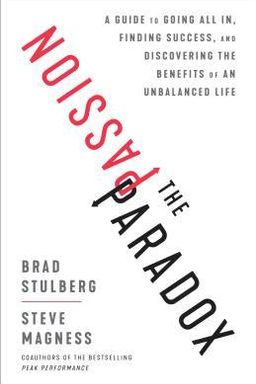
The Passion Paradox cover

The Passion Paradox

by Brad Stulberg and Steve Magness

The Passion Paradox reveals the science behind passion, guiding readers to pursue their dreams without falling into destructive patterns. Authors Brad Stulberg and Steve Magness provide insights on balancing passion with self-awareness for a more fulfilling, yet unbalanced, life.

The Paradox of Passion: Harnessing Fire Without Burning Out

Why do some people seem electrified by their passions while others get consumed, even destroyed, by them? In The Passion Paradox, Brad Stulberg and Steve Magness argue that passion is neither inherently good nor bad—it’s a neutral, powerful energy rooted in our biology and psychology. The difference between passion that fuels you and passion that ruins you lies in how you handle it. The authors reveal that while modern culture glorifies “following your passion,” it rarely equips you to live with it responsibly. True success, they contend, requires transforming obsessive, externally driven passion into harmonious passion—an inner fire that is guided by mindfulness, mastery, and self-awareness.

Stulberg and Magness draw on research from psychology, neuroscience, and philosophy as well as stories from Olympians, entrepreneurs, and artists to explore this duality. They show how history itself encoded this paradox: the word passion comes from the Latin passio, meaning to suffer. Over centuries, it evolved from connoting Christ’s suffering to symbolizing love, zeal, and devotion. Yet the seed of suffering remains. Passion still drives extraordinary human achievement—and remarkable self-destruction.

Why Passion Is a Double-Edged Sword

The authors open with examples of both extremes: Olympic champions who find peace in the process and executives or athletes whose obsession ends in collapse. Elon Musk calls passion “great highs, terrible lows, and unrelenting stress.” Enron’s Jeffrey Skilling, driven to endlessly outperform, epitomizes how passion for achievement can mutate into unethical behavior. In contrast, Olympic swimmer Katie Ledecky demonstrates harmonious passion—her devotion comes from within, and even after victories she returns to the pool to refine her technique, detached from external rewards.

These stories reveal the book’s essential message: passion is fragile and must be handled with care. Without guidance, it’s easy to chase external validation or to ground your self-worth in outcomes. The result is anxiety, burnout, or even moral compromise. But when approached deliberately—by nurturing intrinsic motivation, focusing on mastery, staying patient, and practicing self-awareness—passion can become the foundation of a meaningful, fulfilling life.

From Dopamine to Discipline

At its core, passion is chemical as much as spiritual. The authors show how dopamine, the brain’s motivation molecule, compels us to pursue rather than simply achieve. We are wired to crave the chase, not the reward itself. This explains why contentment so rarely follows success—and why passionate people perpetually push forward. Yet this same mechanism can spiral into addiction. The ambition that fuels scientists and athletes can also drive obsession, exhaustion, or unethical shortcuts. Stulberg and Magness argue that the biological impulse to strive must be balanced with awareness and recovery if it is to remain healthy.

Turning Passion from Obsession to Harmony

The authors introduce psychologist Robert Vallerand’s concept of harmonious passion—when you engage in something for the joy it brings, freely and without external pressure. In contrast, obsessive passion emerges when your identity becomes dependent on results or others’ approval. Harmonious passion feels like the flow of music where all elements align. It often leads to success as a by-product, not the goal. Cultivating it requires adopting the “mastery mindset”: focusing on process over outcome, learning from setbacks, and measuring progress against your past self rather than others.

Why Balance Is a Myth—And Self-Awareness Is the Solution

Contrary to pop wisdom about “work-life balance,” Stulberg and Magness assert that passionate people rarely live in equilibrium. To go deeply into one pursuit means letting other aspects temporarily recede. What matters is not constant balance but conscious choice. Self-awareness—achieved through reflection, mindfulness, and perspective—is what keeps passion from quietly overtaking your life. Without it, you risk waking up years later to find your success hollow.

How to Cultivate Lasting Passion

Throughout the book, practical frameworks guide readers from interest to passion to mastery—without collapse. You learn to treat “finding passion” not as discovering a mystical calling but as developing one through curiosity, patience, and consistent effort. You build motivation by satisfying the three fundamental psychological needs identified by self-determination theory: competence (improvement), autonomy (authenticity), and relatedness (connection). And when the time comes to move on—whether due to burnout, retirement, or shifting interests—you reauthor your personal story to integrate past passions into your identity instead of letting them define you.

In essence, The Passion Paradox offers both a cautionary tale and a blueprint. Passion, if unconscious, enslaves. But passion, when developed deliberately and paired with self-awareness, can elevate every area of your life. It’s not about keeping your fire small, but about learning how to channel it—so that it enlightens rather than engulfs you.


The Biology and Psychology of Passion

Passion isn’t just poetic—it’s biological. Stulberg and Magness trace it back to our evolutionary wiring. Dopamine, the brain chemical responsible for motivation, drives us to seek and strive. It’s released not when we achieve something, but when we pursue it. This explains the thrill of the chase and why contentment often fades soon after success. Our ancestors evolved this way because survival depended on continuous striving—never being satisfied with one kill or one harvest.

Dopamine: The Engine of Desire

Dopamine excites and focuses us, creating tunnel vision toward goals. But this drive comes with a cost: we can become trapped in endless pursuit. Because dopamine’s reward fades quickly, we chase the next hit—whether it’s a race win, a financial milestone, or the perfect partner. Ultramarathon legend Ann Trason, for instance, describes an unrelenting urge to push her limits. Her biological insensitivity to dopamine likely predisposed her to that craving for more. It’s this same wiring, Stulberg and Magness argue, that underlies both greatness and addiction.

Trauma and the Drive to Prove Yourself

The biological impulse intertwines with psychology. Many passionate people are shaped by insecurity or pain that they attempt to heal through achievement. Endurance athlete Rich Roll recalls his sense of not belonging as a child. Proving himself through swimming—and later ultramarathons—became a refuge for his fragile ego. Research from the University of Central Lancashire shows that top performers often experienced early-life adversity. “Talent needs trauma,” one study says. Emotional wounds become fuel for drive, but can also trap people in cycles of obsession if left unexamined.

(The authors connect this insight to thinkers like Freud, who described displaced internal pain manifesting as external ambition—a parallel echoed by modern sports psychology.)

When Passion Becomes Addiction

Addiction and passion share brain pathways. The same chemicals that drive meaningful mastery can just as easily drive self-destruction. Neuroscientist Marc Lewis, quoted in the book, describes dopamine repetition as building momentum: the more meaningful an experience feels, the more we crave it. This explains why some people channel their cravings into art or sport, while others turn to drugs or gambling. Passion and addiction differ not in chemistry but in context and control. Without awareness, the line is paper-thin.

Turning Biology Into Advantage

While the drive to pursue may be hardwired, how you direct it is a choice. The authors advocate using your biology wisely: accept that you’ll never feel permanently content and instead learn to enjoy striving itself. Replace the unhealthy chase for dopamine spikes—likes, money, medals—with consistent progress toward mastery. By understanding how craving works, you can stop mistaking temporary highs for meaning and instead use them as momentum toward deeper purpose.


Finding and Growing Your Passion

We’re told to “find our passion” as if it’s waiting out there like buried treasure. Stulberg and Magness dismantle this myth, arguing that passion is developed through curiosity and engagement, not discovered fully formed. Just as love grows through shared experience, so does passion—by exploring what interests you and investing effort until it takes root.

Forget Soulmates, Forget Perfect Fit

The authors compare two worldviews: those who pursue passion like finding a soulmate (“fit mindset”) and those who cultivate it over time (“development mindset”). People with a fit mindset expect to instantly feel purpose; when setbacks appear, they assume they’ve chosen wrong and quit. Those with a development mindset stay curious, treating early interest as an invitation rather than a verdict. Director James Cameron started making Titanic simply because he wanted to dive the actual wreck, not because he foresaw a future blockbuster. Philosopher Marissa Neuman followed intellectual curiosity from law to teaching because she stayed open to what intrigued her.

(The distinction mirrors psychologist Carol Dweck’s “growth mindset” principle: passion, like ability, expands through effort and patience.)

Satisfying the Three Core Needs

For passion to deepen, it must meet three psychological needs identified by Edward Deci and Richard Ryan’s Self-Determination Theory:

  • Competence: Feeling capable and seeing progress in your craft fuels motivation. If your work yields visible mastery, you’ll keep going.
  • Autonomy: Your activities must align with your core values and feel self-directed. You thrive when your work reflects who you are, not who others need you to be.
  • Relatedness: Passion grows when it connects you to others or a larger purpose. Humans crave contribution beyond the self, as seen in artists, teachers, or athletes who inspire communities.

Pursuing Passion Incrementally

Contrary to the “quit your job and follow your dream” mantra, the authors counsel an incremental approach. Their “barbell strategy” advises balancing stability with experimentation: keep your day job (the safe weight) while gradually devoting more time to your passion (the risky weight). Research from the Academy of Management Journal found hybrid entrepreneurs—those who nurtured a side project before quitting—were 33 percent less likely to fail than those who went all-in from day one. John Grisham wrote early mornings before work; Brad Stulberg wrote between consulting sessions. Over time, both shifted their balance as confidence grew.

Faith, the authors note, isn’t blind—it’s confidence born of consistent practice. When evidence suggests you’re ready, you can leap fully into your craft. Until then, passion doesn’t demand recklessness; it requires devotion tempered by patience.

By redefining passion as something you build rather than find, the authors free readers from the tyranny of “perfect purpose.” You don’t wait for the lightning strike—you spark the flame yourself, one act of curiosity at a time.


When Passion Turns Dark

What happens when devotion turns to destruction? Stulberg and Magness warn that passion easily morphs into obsession when driven by external rewards or fear of failure. The same fire that powers greatness can also burn everything around it. The authors illustrate this duality through modern tragedies like Enron’s Jeffrey Skilling, Theranos’s Elizabeth Holmes, and steroid-tainted athletes such as Barry Bonds and Alex Rodriguez.

Obsessive Passion: Chasing Validation

Obsessive passion occurs when your self-worth becomes tied to outcomes you can’t fully control—money, fame, rankings, or approval. The more you achieve, the more you need the next hit of recognition. Jeffrey Skilling’s hunger for success led to systemic fraud; Holmes’s obsession with being “the next Steve Jobs” resulted in deception when reality lagged behind ambition. The Stoic philosopher Epictetus warned against dependency on “externals,” arguing that anything beyond your control makes you a slave to circumstance. Psychologist Erich Fromm echoed this: “If I am what I have, and what I have is lost, then who am I?”

Fear-Driven Passion: Playing Not to Lose

The second dark path is rooted in fear rather than greed. Dominique Moceanu, a prodigy gymnast, trained obsessively not from joy but from terror—afraid of disappointing her harsh coaches and authoritarian father. Her Olympic win brought relief, not happiness, and burnout soon followed. Psychologist Jocelyn Bélanger’s experiments show that failure-fearing individuals can perform better briefly under threat but quickly exhaust themselves. Fear excites the body like a fight-or-flight response, useful in short bursts but toxic as a lifestyle. Anxiety replaces curiosity; pressure replaces progress.

The Cost of External Motivation

Both validation-seeking and fear-based passion share the same flaw: motivation comes from outside. Behavioral economists call this hedonic adaptation—the endless treadmill of wanting more. In Buddhist philosophy, it’s simply called suffering. The more your joy depends on outcomes, the more enslaved you become to them. Studies confirm that obsessively passionate individuals experience higher levels of anxiety, depression, and unethical behavior than their harmonious counterparts.

By recognizing the red flags early—when desire begins to feel desperate—you can pivot toward healthier motivation. The antidote isn’t less passion but a reorientation inward: focusing not on winning, but on the process of becoming better and the love of the craft itself.


The Mastery Mindset: Turning Passion into Purpose

The heart of The Passion Paradox is the six-part Mastery Mindset, the framework for transforming passion from obsession into harmony. People who live joyfully with passion, the authors argue, share one thing: they focus less on success and more on continual growth. Like Olympic swimmer Katie Ledecky or runner Brenda Martinez, their sense of purpose derives from process, not results.

1. Drive From Within

Internal motivation is more sustainable than external validation. Ledecky’s decision to turn down multimillion-dollar endorsements to continue collegiate swimming illustrates devotion born of love, not profit. The authors recommend the “twenty-four-hour rule”: after either victory or defeat, allow yourself a day to celebrate or grieve, then return to practice. This habit reanchors you to process over ego.

2. Focus on the Process

Brenda Martinez, after losing her main Olympic qualifying race due to bad luck, redirected her attention to preparing for a different event and succeeded. She didn’t fixate on the missed goal but on daily controllable actions. This mirrors neuroscience research showing that small “micro-successes” release dopamine and strengthen persistence.

3. Be the Best at Getting Better

Mastery isn’t about being the best once—it’s about getting better forever. When your identity shifts from “I run” to “I am a runner,” achievement becomes lifelong. Improvement becomes internal, not comparative. Aging athletes or professionals maintain passion by redefining “better” to include wisdom and depth, not just speed or accolades.

4. Embrace Acute Failure for Chronic Gains

Failure, the authors insist, is essential information. Like muscle fatigue signals growth, setbacks reveal where to adapt. Studies of elite performers show that “super champions” respond to challenge with curiosity, while “almost champions” grow bitter or defensive. Amazon’s Jeff Bezos summed it up: “Failure comes part and parcel with innovation.”

5. Practice Patience

In an instant-gratification world, patience is radical. The obsessive personality, described by Aikido master George Leonard, can’t tolerate plateaus and burns out chasing constant novelty. True mastery requires enduring long stretches of tedium. Reflecting often on your purpose—the “why” behind the work—replenishes endurance during these slow phases.

6. Be Here Now

Presence anchors passion. Philosopher Robert Pirsig likened quality work to musical harmony—complete unity between actor and act. Doing one thing fully, whether staring at a single brick or swimming a single lap, transforms monotony into meaning. Attention, the authors note, is what turns process into purpose. In the mastery mindset, passion becomes not just a pursuit but a practice—a way of life aligned with love, learning, and conscious living.


The Illusion of Balance and Rise of Self-Awareness

Forget balance. Stulberg and Magness argue that balance is the most overrated ideal in modern life. Passion and balance are often opposites: to master anything truly meaningful requires temporary imbalance. It’s not about juggling everything equally but about consciously choosing what matters most at a given time—and ensuring awareness of what you’re sacrificing.

Balance Is a Myth

History’s great achievers—from Warren Buffett to Gandhi—were far from “balanced.” Buffett devoted his life to investing so completely that his family sometimes felt like secondary beneficiaries. Gandhi gave his all to India’s independence but struggled in personal relationships. Such examples aren’t failures of character but proof that deep passion demands trade-offs.

Burnout and Recovery

Still, passion without rest leads to collapse. The authors revisit research from their earlier book Peak Performance: “Stress + rest = growth.” Even intrinsically motivated people burn out when they ignore recovery. Hemingway called rest his hardest work; Stephen King said, “Not working is the real work.” Rest isn’t separate from performance—it’s part of it. Intentional recovery protects your energy so you can sustain passion over decades, not months.

The Power of Self-Awareness

Instead of chasing elusive balance, the authors urge cultivating self-awareness—the ability to view your life from a zoomed-out perspective. Self-awareness lets you evaluate whether your current imbalance is intentional or destructive. Marathoner Shalane Flanagan describes alternating between periods of all-in training and equally intense recovery seasons: “I like to go all in on one extreme at a time.” This rhythmic awareness allows long-term harmony even in short-term imbalance.

Balance, then, isn’t a static state—it’s a dynamic awareness. When you consciously choose your focus, rest deliberately, and remain observant of your trade-offs, you no longer chase equilibrium—you create meaning.


Self-Awareness and the Power to Choose

Self-awareness, the authors declare, is the ultimate safeguard of passion. It’s what separates those who control their obsession from those consumed by it. Without reflection, passion’s inertia can blind you to the cost of your dedication. Developing awareness allows you to make deliberate choices instead of acting on autopilot.

Seeing Yourself Clearly

Research shows that we often misjudge ourselves; friends and even strangers sometimes see us more accurately. This blind spot widens when we’re emotionally invested in our work. Athletes with eating disorders or entrepreneurs deep in their ventures often can’t see burnout or tunnel vision. To regain perspective, Stulberg and Magness recommend practices that help you step outside yourself—a technique called self-distancing.

Three Tools for Self-Distancing

  • Give advice to yourself as a friend. Adventure racer Rebecca Rusch handles crises by asking, “What would I tell a teammate right now?” The shift from “me” to “you” opens empathy and perspective.
  • Write in the third person. Journaling “Maria felt overwhelmed” instead of “I felt overwhelmed” allows a cooler evaluation of emotion and decision-making.
  • Seek awe and perspective. Astronauts experience this through the “overview effect” when viewing Earth from space. We can find it on mountain trails, through art, or by contemplating acts of kindness. Awe dilutes ego and expands context.

Mindfulness and Mortality

Meditation, especially mindfulness, creates distance between your thoughts and your identity. It teaches you to observe impulses rather than obey them. The authors also advocate for “negative visualization”—briefly imagining your own mortality. Stoic philosophers used this exercise to focus on what truly matters. Realizing your time is finite, they argue, sharpens priorities more than any motivational quote ever could.

In short, passion thrives on awareness. When you regularly step outside yourself—through reflection, awe, or meditation—you gain back the freedom to choose. You can push harder or pull back, but each move becomes intentional, deliberate, and entirely your own.


Moving On: Writing the Next Chapter

All passions eventually end—or at least transform. Whether by choice or circumstance, moving on from something that once defined you can feel like losing your identity. Stulberg and Magness close their book by showing how to part from your passion with grace. They argue that the story you tell yourself about your transition determines whether you despair or grow.

When Passion Defines the Self

Retirement devastates many athletes not because the games stop, but because their sense of self does. Abby Wambach and Michael Phelps both spiraled into addiction and depression after stepping away from sport. Their struggle mirrored that of any person whose job, relationship, or art becomes their identity. When the structure vanishes, so does stability. The authors call this “the double loss” of purpose and outlet.

Taking Ownership of Your Story

Others, however, navigate transition with resilience. Runner Chris Lukezic retired at twenty-six not out of burnout but curiosity. He redirected his drive into tech, becoming one of Airbnb’s first employees. His secret? Authorship. He viewed his career as chapters in an ongoing story rather than a single identity. Psychological studies confirm that narrative reframing—changing how you explain your life—reduces depression and increases life satisfaction. You are the narrator, not the character trapped in your past plot.

Editing the Past

Humans are storytelling creatures. We can edit our memories, highlight meaning, and fade pain—an ability those with hyperthymesia (a condition of total recall) tragically lack. Like film directors, we have creative license in crafting our life’s narrative. The key isn’t to erase your passion but to weave it into new contexts. As Abby Wambach wrote, “Soccer is no longer what I do, but it will always be part of who I am.”

By integrating what your passion taught you—discipline, creativity, perseverance—into new pursuits, you move forward rather than merely moving on. The authors’ message is clear: the magic lies not in clinging to past successes but in creating “your own magic in the middle,” the space between what was and what comes next.

Dig Deeper

Get personalized prompts to apply these lessons to your life and deepen your understanding.

Go Deeper

Get the Full Experience

Download Insight Books for AI-powered reflections, quizzes, and more.