
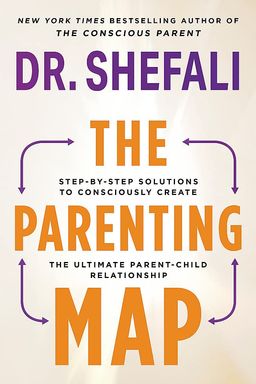
The Parenting Map cover

The Parenting Map

by Dr Shefali

The Parenting Map by Dr. Shefali Tsabary provides a transformative guide to adopting a mindful parenting approach. By unlearning toxic habits and embracing conscious parenting, readers will foster meaningful connections, nurture their child''s authentic self, and navigate developmental challenges with compassion and understanding.

The Conscious Parenting Revolution

Parenting, as redefined in The Parenting Map, is not a method for controlling children but a journey of self-transformation. The author argues that the greatest shift a parent can make is turning the mirror inward—recognizing that the so-called "problem child" often reveals unhealed parts of the parent. This radically compassionate model asks you to raise not just your child, but also your own inner self. Parenting thus becomes less about managing behavior and more about healing generational wounds.

Across its stages, the book guides you from focusing on outcomes and obedience to cultivating presence, authenticity, and self-awareness. The aim is not to "fix" children but to free them from inherited patterns of fear, control, and conditional love. Through relatable stories—like Diane’s breakdown at the park, Maia’s rebellion against rigid expectations, and Linda’s awakening during her daughter’s college crisis—the text maps how old ego defenses shape modern family dynamics.

From Control to Consciousness

You begin by noticing how cultural programming trains you to see your child as the source of conflict. When they misbehave, you assume the fix lies in discipline. The Parenting Map flips that script: your reaction, not the behavior, is the real flashpoint. Every outburst or defiance mirrors an inner story—often buried fear, shame, or the need for validation rooted in your childhood. Diane’s meltdown in the park, triggered by her toddler’s crying, wasn’t about parenting at all—it reawakened her own feeling of helplessness as a little girl. By processing these internal triggers, you replace control with curiosity.

Unmasking the Ego and Healing the Inner Child

At the book’s psychological core are the inner child—the wounded, vulnerable part of you—and the impostor ego—the mask built to survive rejection. Parenting triggers both. When your child resists, cries, or fails, your ego scrambles to maintain control through anger, fixing, or avoidance. Learning to identify these masks—the Fighter, Fixer, Feigner, Freezer, and Fleer—helps you stop the unconscious loops that repeat across generations. As you heal the inner child through awareness and compassion, you make space for a new voice inside—the Third I: the mindful observer who stays calm when triggered and guides you to respond consciously.

From Fantasy and Conditional Love to Authentic Connection

Parents often script their children’s lives before they are even born—imagining the athlete, scholar, or perfect family. These fantasies are prison walls disguised as dreams. When reality diverges, parents experience grief, anger, or control, mistaking disappointment in themselves for disappointment in the child. Letting go of those fantasies liberates both sides. Likewise, conditional love—the “If you behave, I love you” dynamic—teaches children to earn approval. Replacing this with unconditional regard means acknowledging feelings even when behavior disappoints. The mantra becomes: “I love you and will guide you, but your choices are your own.”

Presence Over Outcomes

Our culture trains parents to measure worth through success and happiness, but these metrics breed anxiety and distance. The book urges you to trade outcome obsession for lived presence. When you ask, “What did that feel like?” instead of “What grade did you get?”, your child learns resilience rather than perfectionism. Sonia’s family’s shift from forcing elite gymnastics to celebrating her creative exploration embodies this new ethos: fulfillment comes from being, not performing.

Reclaiming Partnership and Positive Discipline

Traditional punishment enforces compliance through fear. Conscious parenting replaces it with NBC: Negotiation, Boundaries, Consequences. Negotiation fosters respect, boundaries protect safety and sanity, and natural consequences teach accountability. You don’t control outcomes—you guide growth. Alongside this sits the VENT method (Validate, Empathize, Normalize, Transform), a practical emotional protocol for navigating meltdowns without power struggles.

The Final Shift: Presence as Healing

Ultimately, this map brings you full circle—to yourself. The goal is not perfect behavior but awakened presence. Each time you notice your triggers, soothe your inner child, and act from your Third I, you break a lineage of unconscious reactivity. Parenting becomes a spiritual apprenticeship in awareness, forgiveness, and love. The final message is clear: you cannot undo the past, but you can start now. Let go of guilt, stay present, and model growth. Your children don’t need perfect parents—they need conscious ones.


Turn the Mirror Inward

Conscious parenting starts when you realize your child is not the enemy—your reactions are. The book’s first stage asks you to switch focus from fixing your child to understanding yourself. Diane’s story shows this vividly: her panic at her toddler’s tantrum came from her own buried childhood fear, not bad behavior. The child is the mirror that exposes your wounds, not the cause of your pain.

Own Your Triggers

The fastest way to defuse conflict is to recognize when your inner alarm—the "flame"—is lit. Instead of lashing out or rescuing, pause and ask, “What in me is being fired up?” Diane’s tears on the 20-minute walk home were not failure but clarity. She began to see how shame and helplessness from her past shaped her reactions today.

Know Your Masks

You use ego masks to protect the inner child. The Fighter controls through rage, the Fixer solves to feel loved, the Feigners seek validation, the Freezers withdraw, and the Fleers disappear. These masks loop with your child’s reactions—anger feeds shame, shame feeds avoidance. Naming the mask breaks the spell, bringing awareness where defense used to be.

Practice the Pause

A practical exercise is to journal moments of conflict: where do you feel tightness, heat, or fear? Those body cues show where your old stories live. Pause, breathe, name the mask (“My Fighter’s awake”), and choose empathy. Over time, you learn that your child’s outburst is not an attack but an invitation to self-regulate.

When you own your triggers, your child no longer has to carry your anxiety. You become the calm they can trust.

This inward focus is the foundation of all later stages: without self-awareness, love turns manipulative and boundaries become control. Seeing yourself clearly is the true beginning of parenting.


Heal the Inner Child and Ego

Every conflict with your child awakens two inner forces: the wounded child and the impostor ego. The inner child holds unmet needs and fears; the impostor ego wears protective masks learned long ago. Parenting heals only when you soothe the former and disarm the latter. Monica’s story—shamed by her mother’s comments about her body—shows how inner wounds fossilize into adult habits of self-criticism and distance. Unless addressed, those patterns echo in your own parenting.

Meet the Two I's

The Inner Child arises between ages two and ten. When needs for validation, safety, or attention go unmet, a void forms. The Impostor Ego grows to defend that void through control, perfectionism, or withdrawal. They aren’t enemies—they’re survival mechanisms. The task is to integrate them through compassion rather than denial.

The Re-parenting Practice

Re-parenting means offering yourself the presence you once lacked. Name a painful memory, attend to how it feels, and speak from your Third I—your inner parent who can now say, “You are safe and loved.” With practice, that voice replaces the reactive ego. When Linda exploded at her daughter Tracy over college plans, her Third I later intervened: “I am okay, whatever she decides.” That single shift dissolved their power struggle.

From Reaction to Attunement

Step-by-step, you learn to notice your ego’s push (anger, fixing, detachment), pause, ask what your inner child needs, and respond with compassionate language. Whether you’re a Fighter saying, “There is nothing to control; you are safe,” or a Fixer telling yourself, “You don’t have to rescue to be worthy,” these phrases rewire your nervous system. Your child benefits doubly: they stop absorbing your anxiety and start learning self-compassion by modeling yours.

When you heal these two I’s, your children no longer have to fill your emptiness or soothe your fears. That is the heart of conscious parenting: you stop using your children to finish your story and start supporting them in writing their own.


Release Control and Conditional Love

Parents often mistake control for care. The Parenting Map argues that real love has no conditions—it doesn’t say “if you…” or “when you…” to qualify affection. When you tie worth to performance, you breed pleasers and perfectionists, not authentic humans. Relinquishing control is not neglect; it’s trust.

From Possession to Partnership

Being in charge ensures safety; being in control feeds ego. Marcia and David learned this when their daughter Sonia quit elite gymnastics. Their grief revealed that they weren’t mourning her lost potential but the collapse of their image as perfect parents. True love allows choice. Guiding from humility teaches confidence; commanding from fear teaches compliance.

Notice the Conditional Scripts

Listen for if‑then statements: “If you get an A, I’ll be proud.” Each one links approval to outcomes. Replace them with validation of being, not doing: “I love your curiosity.” Over time, your child internalizes this unconditional acceptance as intrinsic worth.

Practical Surrender

When control urges arise, pause and ask, “What am I protecting in myself?” Then guide gently: replace “You’d better” with “What do you think?” or “How can I help?” The difference sounds small but transforms energy from dominance to partnership. Relinquishing control teaches your child that love and freedom can coexist.

Ultimately, when you let go of coercion, you reclaim respect. You show that love is not a reward but the ground everything grows from.


Parent through Presence, Not Performance

Culture pressures you to chase your child’s happiness and success as measures of your worth. The book challenges that: happiness is fleeting, success unstable. Presence, however, endures. When you trade outcome fixation for attuned living, you break free from anxiety and competitiveness.

Why Outcomes Fail

Happiness and success are always moving targets; parenting that depends on them breeds exhaustion. Stacey’s overinvolvement in her son Josh’s life—tracking his moods and camp experiences—taught him to outsource emotional regulation. The antidote is witnessing, not managing. Ask, “How did that feel for you?” instead of “Did you win?”

Shift to Process and Presence

Presence honors growth through experience. This means allowing pain, failure, and ambiguity. Sonia’s post-gymnastics transformation proves that freedom fuels resilience. When parents release outcome obsession, children rediscover their essence and joy.

Practice Daily Attunement

  • Ask process questions (“What did you learn?”) instead of evaluative ones.
  • Let children fail safely; debrief gently instead of rescuing.
  • Regulate yourself before guiding them.

By modeling calm presence, you give your child the tools to face life’s chaos with composure. It’s the most practical definition of success there is.


See the Real Child

To raise a whole human, you must honor their essence—their unique temperament, rhythm, and emotional wiring. Children aren’t projects; they’re individuals seeking attunement. When you match your parenting to who they are rather than who you imagined, battles fade, and connection thrives.

Witness, Don’t Mold

The author maps six essence types: the Anxious Exploder, Hyperactive Explorer, Overpleaser, Dreamer-Recluse, Rebel Nonconformist, and Easy-Breezy. Each requires different attunement. Maia’s fierce independence—the Rebel type—forced her mother to abandon control and accept difference. Aneika’s compliant Overpleaser trait masked buried fear until rebellion exposed it. Seeing essence prevents such breakdowns.

WARM Approach

  • Witness: observe before speaking—body cues tell emotional truth.
  • Allowance: give safe space for emotional expression.
  • Reciprocal: respect your child’s voice, building self-trust.
  • Mirror: tune your tone and energy to theirs for attuned connection.

Using WARM transforms daily interactions from command to cooperation. Your child feels seen at their core, not shaped to fit your narrative. That is unconditional regard in practice.


Guide, Don’t Punish

Punishment isolates; guidance connects. The book’s NBC model—Negotiation, Boundaries, Consequences—replaces threat with respect. Instead of enforcing blind obedience, you teach responsibility through dialogue and natural feedback.

Negotiation Builds Trust

Children cooperate when they feel heard. Negotiating a teen’s party plan respects autonomy while maintaining safety. It signals, “I trust you to think.” Cooperation replaces rebellion.

Boundaries Protect, Not Control

Use stone boundaries for safety, sand boundaries for flexibility. Over-rigidity turns simple rules into battlegrounds—Maia’s early bedtime wars proved this. Flexibility nurtures joy.

Consequences Teach Reality

Natural consequences—missed homework, forgotten chores—teach far more than imposed punishment. Melissa’s parents learned this when their control over her career led to distress; releasing control helped her flourish. Let life be the teacher; you stay the compassionate observer.

NBC doesn’t remove discipline—it refines it. You still lead, but with empathy and respect as tools of authority.


VENT with Empathy

VENT—Validate, Empathize, Normalize, Transform—is your emotional emergency kit for family storms. It centers connection before correction, making empathy the bridge through which growth happens. When you replace instruction with understanding, children self‑regulate faster.

Validate First

Validation means meeting your child where they are: “You seem upset—tell me more.” Maia’s explosive moment with her mother could have de-escalated instantly with validation instead of dismissal. It communicates, “Your feelings make sense.”

Empathize Using DREAM

Detach, Recognize, Extinguish ego, Apologize, Mend. Detachment prevents defensive spirals; apology humanizes you. A parent who says, “I can see how my words hurt you,” teaches emotional intelligence through modeling.

Normalize and Transform

Showing that emotions are universal—“Everyone feels scared sometimes”—dismantles shame. Transformation happens last: praise growth (“You handled this better than before”). Over time, VENT becomes instinctive: you hear, feel, normalize, and guide forward.

This process isn’t indulgence—it’s skill-building. Emotional literacy grows only where safety exists, and VENT establishes that safety repeatedly.


End the Savior Complex

You are not your child’s savior; you are their guide. Believing otherwise feeds codependence and stunts autonomy. The book reframes your role not as rescuer but as companion walking beside your child’s path. It’s love based on respect, not ownership.

Spot the Savior Trap

If you constantly fix, rescue, or decide for your child, you are feeding your own need to feel indispensable. Helen’s endless rescue of her adult daughter Tina created dependency instead of strength. Real help is empowering, not enabling.

Walk Beside, Not Ahead

The author’s rule of thumb: move from leading to companionship. Ask “What’s your plan?” instead of dictating one. Allow failure with safety but without interference. Each time you withhold rescue, your child learns problem-solving and confidence.

Your eventual goal is joyful irrelevance—the child’s ability to stand alone while knowing love remains.

Letting go is not abandonment; it’s graduation. It proves you’ve succeeded as a guide rather than remained trapped as a rescuer.


Parent with Hope, Not Guilt

No matter how long you’ve parented unconsciously, you can begin now. The final message of The Parenting Map is freedom from guilt. Dwelling in regret keeps you away from your children in the present. Growth begins by letting the past teach rather than haunt.

Reframe Mistakes as Wisdom

Parenting errors aren’t failures but lessons in awareness. The parent who once yelled about grades can now model repair: “I used to do that, and I’m learning too.” That humility teaches resilience better than any lecture.

Stay in the Now

Practice mindfulness through breath checks or asking, “Is this moment actually terrible?” These micro-pauses return you from anxiety to presence. Children perceive energy instantly; your calm presence instantly becomes their anchor.

Repair Relationships

If guilt plagues you, repair instead: admit mistakes, apologize, and adjust behavior. Change models strength, not shame. New awareness may shift family dynamics but will also attract deeper connection.

Your child doesn’t need the parent you once were—only the person you’re becoming. Guilt binds; awareness frees. Start where you are, and let today be the first page of your conscious parenting story.

Dig Deeper

Get personalized prompts to apply these lessons to your life and deepen your understanding.

Go Deeper

Get the Full Experience

Download Insight Books for AI-powered reflections, quizzes, and more.