
Idea 1
Evolving Health: From Ancestry to Habitat Design
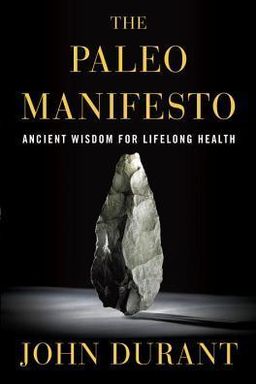
What if the key to modern health lies not in pills or willpower, but in understanding what kind of animal you are? John Durant’s book argues that to fix modern sickness, you must treat humans the same way zookeepers treat animals: as a species defined by its evolutionary habitat. From zoo science to personal experimentation, he weaves biology, history, and culture into a single principle: know thy species.
The Biological Premise
Durant begins with a deceptively simple insight borrowed from Dr. Jonas Salk: every species thrives best in the environment it evolved to live in. Health problems arise when a creature’s current habitat diverges from its ancestral one. The story of Mokolo and Bebac—the Cleveland Zoo gorillas who grew obese and anxious on processed pellets until switched to natural produce—serves as metaphor and proof. Once fed vegetables resembling their wild diet, they lost weight, calmed down, and regained vitality. You, Durant suggests, are no different. You inhabit an engineered zoo of offices, apartments, and screens—and your ailments reflect it.
Evolution as a Diagnostic Lens
The book tracks your lineage back to the Paleolithic, when human bodies evolved under open skies, variable diets, and diverse physical movement. At the Peabody Museum, skulls like Skhul V show signs of robust health—wide jaws, straight teeth, thick bones—contrasting sharply with those of later agricultural people with cavities and weaker skeletons. By studying early humans, Durant recovers constants of human adaptation: natural light, omnivorous diet, physical variety, communal living, and regular exposure to nature’s stressors—heat, cold, fasting, and exertion.
Culture as Fast Adaptation
When genes can’t keep pace, culture steps in. Durant’s chapter on Moses shows that ancient ritual laws served as a kind of epidemiology: quarantine, washing, burning, and burial protocols preserved tribes from the new diseases of agriculture. Similarly, industrial society reinvented hygiene—limes cured scurvy, vitamins cured rickets—but at the cost of new chronic mismatches: processed foods, artificial light, mechanized inactivity. Culture solves some problems yet generates others; your task is to align modern tools with ancient biology.
Technology, Data, and Experimentation
Durant doesn’t reject progress—he repurposes it. The Information Age allows you to measure physiology with unprecedented precision. He praises the biohacker ethos: test, record, and share. Whether tracking sleep rhythms or experimenting with intermittent fasting, you can use your own body as a small laboratory. But he warns against arrogance: evolution sets the ground rules, and personal tinkering must respect them. (Note: Durant cites Art De Vany, Mark Sisson, and the Quantified Self movement as practical exemplars.)
From Diagnosis to Design: Building Human Habitats
Durant ends where he started—with habitat design. Just as modern zoos replaced cages with naturalistic landscapes, humans must redesign cities, homes, and routines to elicit healthier behavior automatically. Standing desks, communal training grounds, and rituals of heat, cold, fasting, and play rebuild the environments that shaped human physiology. This is not nostalgia; it’s applied ecology. The goal is not to return to caves but to use design so that the modern environment speaks the language your biology understands.
“A species is best understood by the habitat it evolved to live in.”
Durant’s thesis reframes health as ecological design: understand your ancestral wiring, and build modern ecosystems that let it function properly.
In Durant’s synthesis, modern health science, history, and anthropology converge. Whether through movement, light, food, or ritual, the task is the same: bridge the gap between the world you evolved for and the one you inhabit now. Health becomes not a project of discipline, but of intelligent design.