
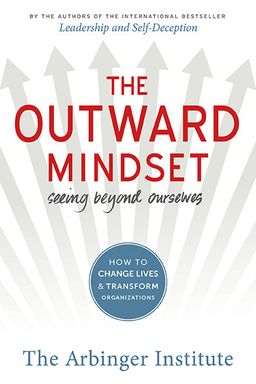
The Outward Mindset cover

The Outward Mindset

by The Arbinger Institute

The Outward Mindset explores how changing your perspective can lead to transformative personal and organizational success. By focusing on collective goals and others'' needs, this book offers practical strategies to improve cooperation, productivity, and positive social change.

Seeing Beyond Ourselves: The Power of the Outward Mindset

When was the last time you truly saw another person—not just as someone who could help or hinder you, but as a fellow human being with their own needs, fears, and hopes? The Outward Mindset by The Arbinger Institute begins with this deceptively simple question and builds an entire philosophy of leadership, collaboration, and personal change around it. The book’s premise is that most of us go through life with an inward mindset—we see others as objects, obstacles, or vehicles for our own goals. To transform our relationships, organizations, and society, the authors argue, we must learn to cultivate an outward mindset—a way of seeing in which we recognize that others matter as much as we do.

This isn’t merely a call for being nicer or more empathetic; it’s a radical proposal for rethinking how behavior, motivation, and success actually work. Most people, the Arbinger team explains, attempt change by adjusting behavior alone—by enforcing new habits, rules, or systems. But as one story after another reveals, behavioral changes rarely last unless they’re rooted in a deeper shift in perspective. True transformation comes not from what we do, but from how we see.

The Central Argument: Mindset Drives Everything

The core message of The Outward Mindset is captured in one revolutionary statement: mindset shapes behavior, and behavior shapes results. The authors illustrate this with vivid, real-world examples—from police officers to healthcare executives to corporate leaders—proving that sustainable performance and collaboration require a mindset shift first. When people adopt an outward mindset, they become attuned to others’ goals and challenges, and this awareness inspires spontaneous, creative, and responsible action. When mindsets turn inward, energy is spent on self-justification, blame, and protection.

Two Worlds: Inward vs. Outward

Imagine two teams facing the same problem. In the first, each person focuses on protecting their turf, proving their worth, and avoiding blame—the hallmark of an inward culture. In the second, members listen, collaborate, and ask, “What can I do to help others succeed?” That’s an outward-mindset team, and its outcomes are dramatically different. Using stories like Sergeant Chip Huth’s Kansas City SWAT squad—who went from being the department’s most complained-about unit to its most respected—the Arbinger Institute shows that when people see others as people, not problems, everything changes.

This shift doesn’t happen automatically. It begins with seeing truthfully—recognizing our own blind spots, our tendency to justify unhelpful behaviors, and our resistance to others’ humanity. It continues with consciously practicing the outward pattern summarized by the acronym SAM: See Others, Adjust Efforts, and Measure Impact. Each step helps individuals and organizations align actions with genuine awareness of how their behavior affects others.

Why This Matters Today

In a world where productivity, communication, and trust are often undermined by self-interest or bureaucracy, The Outward Mindset offers a practical framework for sustainable change. Its lessons are as useful for parents as for CEOs: whether you’re managing a team, resolving conflict, or raising a family, the question is the same—“Am I focused on my own needs, or am I aware of how I’m affecting others?”

The authors also emphasize that outwardness isn’t softness. It doesn’t mean avoiding hard conversations or letting others take advantage of you. On the contrary, leaders who operate with an outward mindset—like Alan Mulally at Ford—achieve “tough love” clarity: they hold people accountable, insist on the truth, and create psychological safety that fuels innovation and trust. This mindset doesn’t make people weak; it makes them wise and honest.

Where This Book Takes You

Over sixteen chapters, The Outward Mindset walks readers through a journey of human transformation. It starts with striking narratives—a SWAT team that mixes baby bottles mid-raid, a corporate leader who saves $100 million through collaboration, a boy whose father’s simple sentence (“If you’ll stop, I’ll stop”) ends a lifetime of violence. These stories aren’t just anecdotes; they’re illustrations of what becomes possible when people stop resisting and start seeing.

The second half of the book transforms these insights into a toolkit. You’ll explore how to apply the outward pattern (SAM), how to mobilize organizations around collective goals, how to collapse harmful power distinctions, and how to rewrite systems—from performance reviews to incentive structures—to reflect outward principles. In essence, Arbinger offers both the “why” and the “how” of mindset transformation.

A New Lens on Change

What makes this work profound is that it unites psychology, ethics, and practical leadership. Like Stephen Covey’s The 7 Habits of Highly Effective People or Carol Dweck’s Mindset, it reframes success not as a list of actions but as a way of being. Change, it insists, begins not with others but with you. As one story in the book concludes: “As far as I’m concerned, the problem is me.” This recognition—humbling, liberating, and deeply human—is the starting point for change that lasts.

By the end, you realize that an outward mindset isn’t only a management tool—it’s a moral awakening. It means living as if others’ lives, goals, and struggles matter as much as our own. And in that shift of sight lies the power to transform organizations, relationships, and even the world around us.


Mindset Shapes Behavior—and Behavior Shapes Results

The Arbinger Institute challenges one of the most common assumptions in business and personal development: that if you simply change what you do, you’ll change what you achieve. The truth, they argue, is more complex. Behavior without mindset is hollow. Real performance improvement requires a shift from the behavioral model—which says actions alone drive results—to the mindset model, which recognizes that your perceptions, assumptions, and motivations shape every behavior you choose.

From Behavior to Mindset

Consider Mia, a professional who learns new communication skills in a workshop—open questioning, active listening, and positive body language. She applies them with a colleague she dislikes, Carl. Yet her disdain leaks through regardless of the polished words. Carl senses the tension, wonders about her motives, and pulls back even more. What went wrong? The authors point out that Mia changed her behavior, but not her mindset. Because she still saw Carl as an obstacle, her “new skills” came across as manipulative rather than sincere.

This simple story highlights a universal truth: others can feel the mindset behind our actions. In organizations, leaders who introduce new policies or performance strategies without addressing mindset often see temporary compliance but no true commitment. Change that begins on the surface usually ends there too.

The Mindset Model in Action

The book contrasts two organizational patterns. In the first, leaders push employees to “act differently”—to collaborate, innovate, or give better service—without helping them see differently. This results in exhaustion, mistrust, and eventual regression. In the second, they start with mindset—helping people truly understand customers’ and colleagues’ challenges. From there, new behaviors naturally follow. When Kansas City SWAT leader Chip Huth began teaching his team to see suspects and community members as people rather than threats, behavior changed effortlessly. Officers no longer needed constant direction; they began thinking humanely and strategically in the moment. Complaints dropped to zero, arrests increased, and costs plummeted.

Why Mindset Change Is Four Times More Effective

According to research cited from McKinsey & Company, organizations that focus on shifting mindset at the outset are four times more likely to succeed in transformation efforts than those that focus solely on behavior. Why? Because mindset determines perception—and perception determines what even looks possible. When people see problems differently, they generate their own solutions instead of waiting for instruction.

"When you sufficiently improve mindset, behavior improves on its own. You don’t have to specify every action—they’ll invent better ones."

The lesson is clear: instead of pushing compliance, leaders should inspire clarity. As you shift from managing actions to nurturing awareness, you enable creativity, accountability, and empathy to flourish. Lasting success is not achieved by forcing behavior but by cultivating vision—by helping people see.


Two Mindsets: Inward and Outward

At the heart of Arbinger’s work lies a crucial distinction: the inward mindset versus the outward mindset. These aren’t mere attitudes but entire ways of experiencing the world. With an inward mindset, you focus on your own objectives—your success, your needs, your image—often seeing others as instruments to achieve them. With an outward mindset, you focus on collective goals, seeing others as people whose needs and challenges matter just as much as yours.

Louise Francesconi’s Transformation

When aerospace executive Louise Francesconi and her team were told to cut $100 million in costs in thirty days, initial meetings were tense. Each leader defended their department, suggesting others take the brunt. The turning point came when they began discussing who the layoffs would actually affect—workers, families, the community. For the first time, they began to see people behind the numbers. This awareness inspired a collaborative approach that not only met the target but doubled company performance over time. Their success came from aligning around a shared result rather than self-preservation.

How Mindsets Shape Culture

At an organizational level, mindsets are contagious. Most companies exist somewhere on a continuum from 0 (fully inward) to 10 (fully outward). Employees typically rate themselves higher than they rate their organizations—a sign of self-deception, a theme explored in Arbinger’s earlier book Leadership and Self-Deception. Moving up this continuum—shifting individuals and systems toward “seeing beyond themselves”—improves collaboration, accountability, and innovation dramatically.

Recognizing the Signs of Each Mindset

  • Inward Mindset: I focus on what others owe me. Others are obstacles or tools. I measure success by personal metrics and stay defensive about change.
  • Outward Mindset: I focus on what I owe others. Others are human beings with their own challenges and goals. I measure success by collective results and shared growth.

Understanding this duality is foundational. Every decision, conversation, or conflict reveals which side your mindset leans toward. The path to improvement begins when you catch yourself thinking inwardly and consciously reorient toward outwardness—toward seeing and serving others as people, not problems.


Seeing Others as People, Not Objects

Truly seeing others requires a kind of emotional courage. Most of us slip into seeing people as objects—vehicles that help us, obstacles that frustrate us, or irrelevancies we simply ignore. Arbinger calls this blindness the essence of the inward mindset. Recovery begins when we look honestly at our own perceptions and start noticing the humanity in those around us.

Unlocking Compassion Through Perspective

One moving story captures this transformation. In a healthcare facility newly acquired by a company practicing the outward mindset, staff struggled with an elderly Vietnamese woman named Ms. Tham. Unable to communicate, she grew upset, even violent. The initial reaction was to medicate or discharge her. Then one team member quietly asked, “What would it be like to be her?” That single outward question changed everything. The staff began buying familiar foods, connecting with local Vietnamese volunteers, and spending time listening. The result? Ms. Tham’s behavior calmed—and so did the staff’s frustration. What had been a problem turned into a shared act of care.

The Power of Seeing Truthfully

Another story—of Ivan Cornia and his abusive father, William—shows how seeing truthfully can lead to immediate transformation. After years of violence, William’s sudden recognition of the impact on his son led to one simple sentence: “Ivan, if you’ll stop, I’ll stop.” That moment of awareness ended a lifetime of abuse overnight. As Arbinger notes, change like this is possible because once we see another person as human, we cannot unsee them. The illusion of separation collapses.

“Once you realize others are people to be understood, not objects to be managed, your thinking and actions naturally transform.”

Seeing others as people doesn’t mean romanticizing or excusing harmful behavior. It means refusing to dehumanize. It’s a commitment to stay aware, curious, and compassionate in even the hardest situations—because that’s when true leadership begins.


Getting Out of Our Own Way

If outwardness is so powerful, why do we resist it? The Arbinger Institute’s answer is simple but unsettling: the biggest obstacle to an outward mindset is ourselves. We cling to justified resentment, self-pity, and blame because they protect our egos. Chapter 5 of the book peels back this layer with the painful story of Chris Wallace, a man who blamed his father for every misfortune until a teenage girl helped him realize the truth: “He ruined his life. You’re ruining yours.”

The Trap of Self-Justification

When Chris was sixteen, his father’s suicide left him bitter and self-righteous. He told others how much he had suffered, using his story to win sympathy. But a girl named Ann reframed his perspective. She suggested that his pain was self-inflicted—he couldn’t control his father’s actions, but he could control whether to keep reliving them. That night, Chris dreamed of meeting his father, apologized, and woke with love instead of hatred. His life changed not because his father did, but because he learned to see differently.

How Self-Deception Keeps You Stuck

We often resist seeing others’ needs because doing so would oblige us to act. So we justify our inaction by blaming others, exaggerating their faults, or rewriting history. This mental distortion is what Arbinger calls being “in the box” (a concept originally introduced in Leadership and Self-Deception). In this state, you invent stories that make your selfishness seem reasonable. Outward change begins when you recognize your stories for what they are—excuses.

Breaking free doesn’t require grand gestures. It starts with quietly noticing when you resist seeing someone’s humanity and choosing curiosity instead of judgment. As Chris discovered, “the most troubling parts of life are the areas where we resist what others’ humanity invites us to see.”


The Outward-Mindset Pattern: See, Adjust, Measure

The Arbinger Institute distills its philosophy into a practical framework you can apply every day, summarized as SAM: See others, Adjust your efforts, and Measure your impact. These steps, demonstrated through real-world stories, offer a repeatable method to turn empathy into action and sustain transformation.

1. See Others

Seeing others means actively discovering their needs, goals, and challenges. A power company that struggled with an inefficient budgeting process applied this step by mapping out every team’s impact on others. When they learned that engineers could begin work months earlier if planners shared partial data, they saved three months of effort instantly. The missed insight had been hiding in plain sight—the teams just hadn’t truly “seen” each other’s work.

2. Adjust Efforts

Once you see others, you naturally want to adjust your actions to help. In a school for children with behavioral challenges, teacher Terry Olson tested this principle when dealing with a boy who kept fleeing class. Instead of punishing him, she asked herself, “If I gave my heart to this child, what would occur to me to do?” The answer was unexpected: she joined him under a blanket to play hide-and-seek. That act of connection, not discipline, changed everything. The boy began cooperating because he felt seen, not controlled.

3. Measure Impact

Finally, measure the real-world effect of your efforts. Attorney Charles Jackson learned this after returning money to two dissatisfied clients. Instead of losing business, he earned their trust—and within months was bringing in more clients than ever. Similarly, the nonprofit Hope Arising in Ethiopia saw its mission evolve when it asked villagers what “clean water” actually meant to them. They discovered that clean water mattered because it allowed children to attend school. So they began measuring impact not by gallons delivered, but by number of school days gained.

The SAM pattern doesn’t prescribe behaviors—it reveals them. When you see others clearly, adjustments flow naturally, and your impact becomes measurable and meaningful. Transformation becomes not a policy but a habit—a way of being in the world.


Don’t Wait for Others to Change

One of the most empowering lessons in The Outward Mindset is that you don’t need anyone else’s permission to change. As the authors put it, the biggest trap in relationships and organizations is waiting for others—waiting for your boss to lead better, your partner to apologize, your colleagues to cooperate. The truth is, transformation always starts with one person who stops waiting.

The Tubular Steel Revelation

Jack Hauck, CEO of Tubular Steel, was frustrated by infighting among senior executives and constant blame-shifting. When consultants invited each leader to adopt a new mantra—“As far as I’m concerned, the problem is me”—Jack initially used it as a weapon against his team. But when his right-hand man, Larry Heitz, quit to start a rival firm, Jack was forced to look inward. He realized he had been leading through fear and defensiveness. As he changed his approach—listening, trusting, and inviting accountability—Larry returned, and together they rebuilt the company’s culture.

The Most Important Move

Arbinger calls this breaking of the stalemate “the most important move.” It’s when you choose to turn outward even if others remain inward. Diagrammatically, it’s represented as two people turned back-to-back until one decides to face the other. That simple shift—one person seeing again—starts a chain reaction of openness. At Tubular, this led departments once at war (sales vs. credit) to redefine their shared goals and quadruple profits in a declining market.

“When you stop waiting for others to change, your change invites theirs.”

This principle transforms leadership from positional authority into relational influence. You don’t need power to model clarity, kindness, and accountability. You only need the willingness to go first.


Turning Systems and Cultures Outward

Organizations often repeat this irony: they tell employees to be outward while reinforcing inwardness through their systems. Performance reviews, sales incentives, and hierarchies frequently reward self-protection and competition over collaboration. Arbinger’s advice is simple but radical—turn systems outward. Rebuild processes around helping people succeed, not managing objects.

When Systems Undermine Vision

A case from a global tech company reveals the problem perfectly. Its forced-distribution ranking system—where only a set percentage of employees could receive top ratings—bred secrecy and sabotage. Collaboration vanished each December as people fought for rankings. Though leadership preached teamwork, their metric rewarded isolation. The result: a culture of inward survival.

When Metrics Mislead

The story of Landa Corporation shows how even well-intentioned metrics can kill relationships. A top salesperson, Tom “Brak” Brakins, built deep trust with a major client. But when his company imposed a “renewal metric” requiring all deals to close before year-end, Brak was pressured to push a deal prematurely, damaging his credibility and the partnership. The internal obsession with hitting numbers overtook the outward goal of serving customers. The lesson? Incentives that isolate employees from empathy risk undermining both morale and performance.

Designing Outward Systems

Turning systems outward requires redesigning evaluation, planning, and accountability around impact on others. At Ford, Alan Mulally’s Business Plan Review meetings worked this way: each week, team members shared honest data (red, yellow, green) not to impress but to identify who needed help. Success came from collaboration, not competition. Similarly, organizations like CFS2 and Hope Arising use metrics that track how customers’ lives improve rather than how many transactions occur.

When structures support empathy, people stop gaming systems and start improving them. Outward systems don’t just measure performance; they magnify purpose.


From Individual Change to Collective Transformation

The final chapters of The Outward Mindset explore how personal shifts can scale into organizational revolutions. The turning point is always the same: a collective goal that transcends individual agendas. When people unite around results that require everyone’s participation, collaboration replaces competition.

Creating Collective Goals

At Ford, it was “profitable growth for all.” For healthcare leaders Mark Ballif and Paul Hubbard, it was “enriching a million lives every ten years.” For the San Antonio Spurs, it was “egoless teamwork.” These goals were not slogans but lived missions—specific, measurable, and inclusive. Each required that individuals not just perform their tasks but lift each other up.

Removing Distinctions

True collective transformation also means collapsing hierarchies that signal superiority. Alan Mulally ate in the Ford cafeteria with his employees. Richard Sheridan, CEO of Menlo Innovations, worked at the same desk as everyone else. When MSG’s Scott O’Neil realized ushers and ticket-takers felt unseen, he began learning their names and involving them in leadership discussions. These small acts of humility built trust faster than any memo or training program could.

Making the Change Sustainable

Mindset shifts last when systems, leaders, and cultures reinforce each other. The book closes with stories of individuals—like a woman who writes monthly letters to her estranged brother—showing that outwardness persists even when it isn’t reciprocated. Change, Arbinger concludes, is self-propelling when rooted in care rather than expectation.

The road ahead, then, isn’t about mastering tactics but about choosing sight over blindness, contribution over justification, and humanity over ego. Outwardness is not a strategy—it’s a way of seeing that transforms the way we work, lead, and live.

Dig Deeper

Get personalized prompts to apply these lessons to your life and deepen your understanding.

Go Deeper

Get the Full Experience

Download Insight Books for AI-powered reflections, quizzes, and more.