
Idea 1
The Power and Possibility of Platonic Partnership
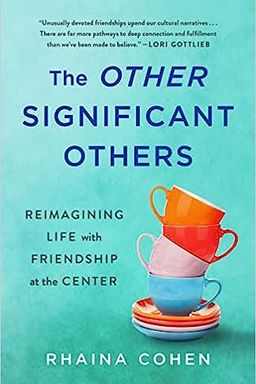
What if the deepest, most sustaining bond in your life looked like marriage—but wasn’t romantic or sexual? In Platonic, Rhaina Cohen investigates the phenomenon of people treating friendship as a central, life-organizing relationship rather than a secondary supplement to romance. Drawing from her own life with her friend M and dozens of intimate case studies, Cohen proposes that "platonic partnerships"—relationships rooted in mutual devotion, interdependence, and longevity—deserve recognition and structure equal to romantic unions. Through this lens, the book explores how culture, law, and emotion still prioritize marriage while ignoring forms of care that quietly sustain modern life.
Redefining commitment beyond sex and romance
Cohen begins with an observation many of us recognize: some friendships exceed what the word “friend” can carry. People like Andrew Bergman and Toly Rinberg, who met in high school and later co-founded a nonprofit, share homes, life choices, and emotional labor normally reserved for spouses. Cohen argues that the boundary between friendship and partnership is porous, and that our culture has been too narrow in granting adult intimacy legitimacy only through romance or sex. Borrowing from queer communities and asexual frameworks, she affirms that attachment and sexual desire run on different tracks—one built on care and continuity, the other on attraction and novelty. Passionate friendship can satisfy attachment needs without physical intimacy.
The one-stop-shopping problem of modern love
Cohen calls out what psychologists like Eli Finkel and Esther Perel describe as the “one-stop-shop” model of relationships: a romantic partner expected to fulfill every emotional, sexual, professional, and caregiving role. By redistributing those roles—what Finkel calls building “other significant others” (OSOs)—people make their social networks less fragile. The book shows how diversifying intimacy supports emotional stability and communal resilience. In a world where romance can end and family may live far away, friendship networks act as redundant systems of care.
Challenging norms and reviving lost scripts
Historically, deep same-sex or nonmarital partnerships weren’t aberrations. From medieval "adelphopoiesis" rituals to nineteenth-century Boston marriages between women such as Lucy Diggs Slowe and Mary Burrill, societies once found ways to sacralize chosen kin. Cohen recovers this lineage to argue that our current discomfort is cultural, not natural. She notes how modern masculinity, shaped by homophobic “homohysteria,” deprives men of emotional closeness that earlier generations took for granted. By restoring friendship’s legitimacy, Cohen asks readers to rebuild social permission for nonsexual love.
Why recognition and policy matter
In its second half, the book exposes how existing laws and cultural rituals fail people who live outside marriage. Thousands of rights—from hospital access to tax benefits—depend on marital status. Friends who act as caregivers must secure medical powers of attorney just to be admitted into hospital rooms. Yet models like Colorado’s designated-beneficiary agreement and France’s PACS demonstrate alternative ways to recognize nonmarital partnerships. Cohen argues that we must both reform policy and build new cultural frameworks—rituals, language, and visibility—that make such relationships legible.
A vision for interdependence
Ultimately, Platonic offers a hopeful blueprint for a future in which friendship becomes a valid architecture of adult life. Through stories of co-parents, cohabitants, and lifelong caregivers, Cohen shows that love—sexual or not—is measured in practical devotion. The question isn’t whether friendship can be serious; it’s whether society can catch up to the seriousness people already live. Her invitation is to build your life around the people who truly anchor you, with intention and public recognition, no matter how the relationship is classified.