
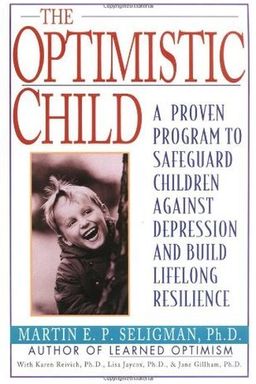
The Optimistic Child cover

The Optimistic Child

by Martin EP Seligman

The Optimistic Child by Martin EP Seligman offers parents a proven program to cultivate optimism in their children. By teaching optimism, parents can help children develop resilience, combat depression, and achieve lifelong success. This guide provides actionable insights to transform children''s mindsets, focusing on positive thinking, problem-solving, and healthy self-esteem.

Flourishing Through Well-Being: The New Psychology of Happiness

Have you ever wondered why some people seem to genuinely flourish, living lives full of meaning, engagement, and joy—while others, even when seemingly successful, feel empty and restless? In Flourish, Martin Seligman, the founder of modern positive psychology, argues that true happiness isn’t merely the fleeting feeling of pleasure or cheerfulness. Instead, it’s about cultivating well-being—a multidimensional state of thriving that goes beyond mood.

Seligman contends that psychology’s traditional focus on pathology—what goes wrong with the human mind—has neglected the equally important question of what makes life worth living. He challenges the old “happiness theory” he himself once championed, proposing a new model that defines well-being through five measurable elements: Positive emotion, Engagement, Relationships, Meaning, and Accomplishment—collectively known as PERMA. This shift reframes psychology from healing suffering to also building strengths, resilience, and flourishing.

From Happiness to Well-Being

Seligman’s journey starts with the limitations of his earlier work, Authentic Happiness. He realized that measuring happiness solely by life satisfaction or mood ignored other powerful human motivations—such as the drive for mastery, purpose, and deep connection. The book recounts a pivotal classroom conversation with one of his students, Senia Maymin, who boldly told him that his theory couldn’t be right because it neglected achievement and success. That challenge triggered Seligman’s transformation: happiness, he concluded, was too narrow a lens for understanding human flourishing.

His new Well-Being Theory replaces the single goal of “happiness” with multiple, independently measurable elements that people pursue for their own sake. You may choose pleasure for its joy, engagement for its flow, relationships for belonging, meaning for purpose, and accomplishment for mastery—and each contributes uniquely to well-being. None alone defines flourishing; all together build it.

Why Flourishing Matters

For Seligman, flourishing is not just a personal pursuit—it’s a societal goal. He argues that well-being should become the measure of national success, just as GDP measures economic growth. When schools, businesses, and governments orient toward well-being instead of wealth or performance alone, they can cultivate resilience, creativity, morality, and health. This perspective transforms therapy, education, leadership, and even public policy. As he writes, “The goal of wealth is not merely to produce more wealth; it is to engender flourishing.”

The book explores this philosophy through real-world applications—from teaching gratitude exercises to soldiers under fire to embedding positive psychology in entire school systems like Australia’s Geelong Grammar School. Across settings—from the army to classrooms to corporate boardrooms—Seligman demonstrates that well-being can be learned, measured, and built, just as physical fitness can be trained.

The Science Behind Optimism and Growth

Drawing on decades of research, Seligman explains how exercises like the “Three-Good-Things” journal and the “Gratitude Visit” produce lasting increases in happiness and reduce depression. These experiments prove that well-being can be changed—not just temporarily but permanently—with practice. Positive interventions, he argues, help people not only overcome mental illness, but also learn the skills of thriving. This idea contrasts sharply with the old “disease model” of psychology, which aimed merely to fix what was broken. Positive psychology builds what’s best.

Seligman also delves into how trauma can lead to growth rather than despair. Through resilience programs for soldiers, he shows that post-traumatic stress does not inevitably lead to pathology; it can become a crucible for strength, spirituality, and deeper appreciation of life. This perspective transforms pain into potential—echoing Nietzsche’s assertion that “what does not kill me makes me stronger.”

From Personal Change to Global Vision

In the book’s final chapters, Seligman expands his vision to politics and economics. He calls for a world where public policies are judged not by productivity alone but by how much they increase flourishing. Countries, schools, and organizations should measure well-being just as they measure wealth or test scores. His audacious “moon-shot” goal: by 2051, 51% of the world’s population will be flourishing. This ambition—both scientific and moral—makes Flourish a manifesto for redefining progress, happiness, and the purpose of human life.

“Well-being cannot exist just in your head. It is a combination of feeling good and actually having meaning, good relationships, and accomplishment.” —Martin Seligman

In essence, Flourish reimagines psychology—not as a remedy for misery but as a guide to greatness. It invites you to build the skills of gratitude, resilience, meaning, and love into your life and community. Seligman’s message is simple yet profound: the science of well-being can help you not just to feel better, but to live better.


The PERMA Model of Well-Being

At the heart of Flourish lies Seligman’s five-part formulation of well-being: Positive emotion, Engagement, Relationships, Meaning, and Accomplishment. Each component, he insists, is pursued for its own sake and is measurable, offering a scientific structure for flourishing.

Positive Emotion: The Pleasant Life

Positive emotion includes joy, comfort, enthusiasm, and serenity. It’s what most people think of when they hear “happiness.” However, Seligman warns that cheerfulness alone is too shallow to sustain well-being. True positivity results not from temporary good moods but from cultivating gratitude, optimism, and the habit of savoring life. Exercises like the “What Went Well” journal train your mind to notice everyday blessings rather than simply reacting to crises. (Barbara Fredrickson’s “Broaden and Build” theory reinforces this: positive emotions expand attention and creativity, helping us build lasting psychological resources.)

Engagement: The Flow State

Engagement is about being “in the zone”—losing yourself in challenging activities that match your strengths. When you’re deeply absorbed, time suspends, and you merge with the task. This state, originally described by psychologist Mihaly Csikszentmihalyi, is distinct from pleasure because it often consumes attention completely. The route to more engagement, Seligman explains, is to identify your signature strengths—kindness, curiosity, creativity—and use them more often. Playing music, teaching, or coding can become deeply engaging when your personal talents align with high challenge.

Relationships: Other People Matter

“Very little that is positive is solitary,” writes Seligman. Relationships are perhaps the most potent contributor to well-being. We flourish through love, friendship, teamwork, and compassion. Studies show that kindness exercises—such as doing unexpected favors—produce immediate boosts in happiness. Seligman cites George Vaillant’s research from Harvard, which found that the “capacity to be loved” predicts longevity. Helping someone else can do more for your well-being than indulging yourself.

Meaning: Belonging to Something Bigger

Meaning arises when your life connects to something greater than yourself. This could be faith, family, community, art, or a cause. Seligman shows that people often endure hardship for the sake of higher purpose, and such commitment fosters resilience. The soldier who fights for comrades, the teacher who serves her students, or the activist who advances justice—all find fulfillment in meaning. Unlike pleasure, meaning endures through adversity.

Accomplishment: Pursuing Success and Mastery

Finally, accomplishment reflects the human drive for achievement. People strive to master skills or reach goals not because it feels good, but because they value excellence itself. Seligman demonstrates this through examples from professional bridge players and entrepreneurs driven to succeed even when victory brings little pleasure. Achievement, he clarifies, is neither shallow nor selfish—it’s one of humanity’s distinct motivators. GRIT—passion and perseverance for long-term goals—plays a key role in accomplishment, as Angela Duckworth’s research at the University of Pennsylvania shows.

Together, PERMA paints a multidimensional portrait of thriving. Each pillar meets three criteria: it contributes to well-being, it’s pursued for its own sake, and it’s measurable independently of the others. You can flourish without being always happy, as long as your life is rich with engagement, purpose, achievement, and love.


Positive Psychology in Action

One of the most compelling insights from Flourish is how intentionally practicing gratitude, kindness, and optimism can rewire your mental habits. Seligman’s positive psychology exercises—tested through rigorous research—offer practical pathways to lasting well-being.

The Gratitude Visit

Imagine writing and delivering a heartfelt letter to someone who positively changed your life but whom you never properly thanked. This is the “Gratitude Visit,” an exercise found to produce a month-long spike in happiness and a steep drop in depression. It works because gratitude strengthens relationships and replaces habitual rumination with appreciation. People who delivered their letters often reported it as one of their most moving experiences. (Research by Emmons and McCullough supports this: expressing gratitude increases life satisfaction and reduces depressive symptoms.)

Three-Good-Things and Savoring

Another tool—the “Three Good Things” exercise—asks you to write down three positive events each evening along with why they happened. Over six months, participants not only reported higher happiness but also less depression. The key is not just noticing joy but analyzing its causes, creating a virtuous cycle of gratitude and mindfulness. This practice develops what psychologist Barbara Fredrickson calls “broadened awareness”—the ability to see possibilities rather than problems.

Using Signature Strengths

Seligman’s “Signature Strengths” test helps people identify their top character strengths—like curiosity, kindness, or honesty—and find new ways to use them daily. For example, someone high in creativity might start writing stories, while a person strong in love might deepen family rituals. When strengths align with activity, life becomes more engaging and meaningful. Studies across cultures show that using one’s strengths leads to lasting improvements in mood and performance.

These exercises transition psychology from curing distress to cultivating capability. Unlike temporary mood boosts, they produce durable change because they reorient attention from deficits to possibilities. Seligman’s experiments demonstrate that well-being can be taught—not just treated. Depression may be biological, but flourishing is behavioral and learnable.


Teaching Well-Being in Schools

What if children learned emotional resilience and gratitude alongside math and science? Seligman argues that education should focus not only on achievement but also on well-being. Through programs like the Penn Resiliency Program (PRP) and Positive Education, he shows how schools can teach kids to flourish.

Building Resilience

The Penn Resiliency Program teaches adolescents how to think realistically about setbacks and strengthen optimism. Using techniques from cognitive therapy, students learn to challenge catastrophic thoughts (“I failed this test, so I’m stupid”) and replace them with constructive beliefs (“I didn’t study enough this time, but I can improve”). Across 21 randomized studies involving over 3,000 students worldwide, PRP consistently reduced depression, anxiety, and conduct problems while increasing optimism and life satisfaction.

Positive Education in Practice

Seligman partnered with Geelong Grammar School in Australia to embed well-being into every part of education—academic courses, sports, chapel, and even dorm life. Teachers trained for weeks to apply positive psychology skills in their lives and classrooms. Students practiced “What Went Well,” gratitude letters, savoring beauty, and using character strengths in new ways. The outcome? Higher engagement, better grades, and remarkable morale among staff and students.

Positive education is Seligman’s vision for a “new prosperity,” where schools cultivate both success and happiness. (Sir Ken Robinson made similar arguments about creativity and real-world meaning in The Element.) Teaching optimism and resilience, Seligman argues, equips children not only to overcome adversity but also to lead purposeful, compassionate lives.


Resilience and Growth in the Military

Seligman’s partnership with the U.S. Army illustrates how positive psychology can serve in the harshest contexts—war, trauma, and loss. Through Comprehensive Soldier Fitness (CSF), his team revolutionized how the military teaches psychological resilience.

Comprehensive Soldier Fitness

The CSF initiative was designed to make soldiers as psychologically strong as they are physically fit. It introduced a Global Assessment Tool that measured emotional, social, family, and spiritual fitness, followed by online courses tailored to each domain. Over 800,000 soldiers took the test, creating one of the largest well-being databases in history. Seligman’s team found striking patterns: higher emotional fitness predicted fewer PTSD symptoms and lower healthcare costs.

Master Resilience Training

The army launched intensive courses for drill sergeants, teaching them cognitive-behavioral techniques like “Putting It in Perspective” and “Hunt the Good Stuff.” Soldiers practiced disputing catastrophic thoughts, identifying personal strengths, and improving relationships through active-constructive responding. Results were profound: sergeants rated the training nearly perfect (4.9 out of 5.0) and reported better performance, stronger families, and fewer suicides. The program demonstrated that flourishing can be systematically taught—even amidst trauma.

Post-Traumatic Growth

Beyond preventing PTSD, Seligman champions post-traumatic growth—the idea that adversity can catalyze transformation. Soldiers learn to reconstruct meaning, appreciate life, strengthen spiritual beliefs, and build deeper relationships after hardship. Brigadier General Rhonda Cornum, herself a former POW, became a symbol of this growth. Her experience—enduring capture, assault, and injury—led her to live with greater empathy, gratitude, and purpose. Seligman’s work reframes trauma not just as damage, but as the opportunity for development.


The Biology and Economics of Flourishing

Seligman argues that well-being isn’t just psychological—it’s biological and political. Positive emotion and optimism, he shows, improve physical health and may even extend life. Meanwhile, societies that prioritize well-being over mere wealth create more equitable and sustainable futures.

The Biology of Optimism

Studies led by Seligman and colleagues found that optimistic people have lower rates of cardiovascular disease and recover faster from illness. In experiments, pessimistic rats developed tumors faster, while optimistic humans healed wounds more quickly. Positive emotion reduces inflammation by lowering interleukin-6 levels and may even influence immune strength. In other words, thriving minds can produce thriving bodies.

Beyond Money: A New Measure of Prosperity

Seligman critiques economics’ obsession with GDP, noting that national happiness has remained flat for 50 years despite rising wealth. He proposes replacing GDP with measures of flourishing: how much positive emotion, meaning, and engagement citizens experience. Data from European nations show that Denmark leads in flourishing while Russia lags far behind—not because of income, but because of trust, optimism, and social connection. Public policy, Seligman urges, should aim to maximize well-being, not just productivity.

Toward a Flourishing World

Seligman’s “moon-shot” vision envisions governments, schools, and corporations tracking flourishing the same way they track GDP. His ultimate challenge: by 2051, achieve a world where more than half of humanity is flourishing. Optimism is contagious, he notes, and building well-being at scale could transform global health, education, and peace.

Dig Deeper

Get personalized prompts to apply these lessons to your life and deepen your understanding.

Go Deeper

Get the Full Experience

Download Insight Books for AI-powered reflections, quizzes, and more.