
Idea 1
The Brain’s Built-In Bias Toward Optimism
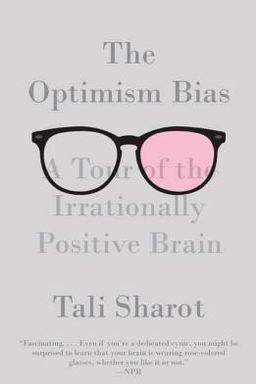
Why do you often assume things will work out fine—even when they might not? In The Optimism Bias, cognitive neuroscientist Tali Sharot reveals that this widespread tendency to expect the best is not just wishful thinking. It is a biologically ingrained feature of the human brain, one that shapes memory, emotion, and behavior. Sharot argues that people everywhere—from pilots to politicians—carry a powerful bias that colors their perception of reality through rose-tinted lenses.
Optimism Is Hardwired, Not Learned
Sharot begins with a striking observation: even when people face uncertain futures, they imagine scenes filled with achievement and joy. She discovered this effect almost by accident while studying memory formation after 9/11. Participants asked to picture routine future events—like getting a haircut—couldn’t resist transforming them into idealized, celebratory versions. This spontaneous positivity occurs whether someone is young or old, wealthy or poor. Indeed, studies show that optimism persists across cultures and ages, implying that it is a deeply rooted cognitive bias rather than a learned habit or cultural artifact.
Why It Matters: Evolution and Survival
Sharot contends that optimism evolved as an adaptive mechanism. The human capacity to imagine future scenarios—what psychologists call prospection—likely developed alongside an optimistic lens. Without it, our ancestors might never have ventured beyond safe territory or endured hardship in pursuit of long-term goals. This evolutionary link explains why optimism contributes not only to personal motivation but also to mental and physical health. It reduces stress, increases resilience, and may even lengthen lifespan. However, as Sharot warns, this same bias can blind us to risk, leading to flawed decisions in everything from marriage to military invasions.
Illusions of the Mind
Optimism is one of several cognitive illusions Sharot explores alongside perceptual examples—from visual tricks like the Checker Shadow illusion to navigational errors that caused real disasters, such as pilots suffering vertigo and believing they were flying level when fatally spinning downward. These distortions reveal a central theme: our brains construct reality, not merely record it. Just as eyes deceive us under certain conditions, our minds distort probabilities, rewards, and memories to favor hopeful interpretations. The optimism bias is thus not a form of naivety—it is an evolved way of seeing the world that guides action and sustains hope.
The Self-Fulfilling Prophecy
At its heart, Sharot’s message is paradoxical: irrational optimism can produce rational success. Believing a better future awaits inspires the behaviors that can make it real. Her examples—from basketball coach Pat Riley’s championship prediction to heart patients who lived longer because they expected recovery—illustrate how expectations reshape motivation and even biology. The human mind, she argues, is organized to try to transform predictions into reality. By anticipating good outcomes, we activate neurobiological circuits that align behavior with belief.
When Optimism Fails
The optimism bias is not universally beneficial. Sharot devotes part of her study to depression, pessimism, and genetic factors that disrupt the brain’s positive filter. When optimism circuits falter—particularly in the communication between the anterior cingulate cortex and the amygdala—people lose the ability to imagine pleasant futures. This neurological breakdown, she shows, underlies clinical depression. Similarly, excessive optimism, when unchecked, can lead to disasters like the financial crash of 2008 or Stalin’s refusal to believe his intelligence agents. The challenge is not to suppress optimism but to become aware of it, managing its power rather than denying it entirely.
The Mind’s Architecture of Hope
Throughout The Optimism Bias, Sharot walks the reader through neuroscience experiments showing that optimism is mediated by specific brain circuits, especially those involving dopamine and the frontal cortex. When people imagine the future, these regions light up as they filter information, embracing the positive and ignoring the negative. This creates a natural asymmetry in learning—one that helps maintain well-being at the expense of objectivity. Yet Sharot concludes on an encouraging note: understanding this bias lets us harness it consciously. Like pilots learning to rely on instruments rather than inner orientation, humans can balance constructive hope with informed realism.
Ultimately, Sharot’s book invites you to recognize optimism as both your greatest illusion and your greatest strength. By unpacking the neuroscience behind why the glass often looks half full, she shows that this bias—far from being foolish—is one of humanity’s most powerful engines for progress, creativity, and survival.