
Idea 1
Transforming Fear into Love through a Simple Prayer
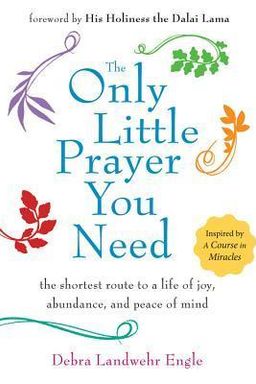
Have you ever felt stuck in an endless loop of worry, guilt, or irritation—constantly replaying the same anxious thoughts no matter how hard you try to let them go? In The Only Little Prayer You Need, Debra Landwehr Engle introduces a simple, profound spiritual tool to break free from that loop. Her argument is straightforward yet revolutionary: every problem in your life—and even the world—is rooted in fear, and the only way to heal fear is to ask for help from a higher power. The six words that changed her life—“Please heal my fear-based thoughts”—form the heart of this book.
Engle contends that this brief invocation realigns you from the ego’s fearful mindset to what A Course in Miracles calls “right-mindedness”—a state of harmony and love that naturally attracts peace and abundance. Instead of praying for circumstances to change, she invites you to ask for your perceptions to be healed, because when you change your thoughts, the world around you changes too. As Wayne Dyer famously said, “Change the way you look at things, and the things you look at change.”
A Simple Request with Miraculous Power
The book begins with a small, relatable story—Engle’s frustration over a rattling car dashboard. Her irritation spiraled into blame and self-reproach until she spontaneously uttered a request to the Holy Spirit: please heal my fear-based thoughts. Almost immediately, the rattles stopped, and her mood lifted. This small incident became the seed of her spiritual awakening. Engle realized that external “problems” are often reflections of inner turbulence. When our fearful minds heal, the external triggers lose their purpose and naturally dissolve.
From that revelation, Engle distills the prayer into a spiritual practice that can be applied to any situation—from minor irritations to deep trauma. Her thesis builds on the teachings of A Course in Miracles, which describes the ego as a noisy, fear-driven voice and the Holy Spirit as the quiet messenger of love. Every decision we make, she says, either feeds the “Fear Tree” or the “Love Tree.” The prayer helps you uproot fear at its origin: your own thoughts.
Why Fear is the Root of Everything
To understand the power of this prayer, Engle encourages readers to recognize how fear infiltrates nearly every thought—from worries about finances to judgments about other people. Fear shows up as stress, blame, control, comparison, anger, or even boastfulness—all masks hiding the same insecurity: “I don’t matter.” These thoughts obscure our inner light, like soot clouding a lantern. The prayer doesn’t fight fear but dissolves it by restoring connection to divine love—the eternal flame that burns beneath the soot.
Drawing on both psychological insight and spiritual wisdom, Engle likens fear addiction to other dependencies. We cling to fear because it makes us feel in control, but in truth, it drains our vitality and isolates us. The prayer works as a twelve-step surrender formula for everyone—not just addicts but all humans enslaved by worry and control. As she quips, “We’ve all hit bottom. We’re all addicted to fear.”
Healing Begins Within, Not Without
The most radical message of the book is that real change never comes from trying to fix external events. You don’t need to change your partner, find a new job, or manipulate outcomes. Instead, you ask that your fear-based thoughts about those things be healed. When your inner alignment shifts, so does everything else—finances stabilize, relationships soften, health improves, and peace becomes your norm.
Engle distinguishes this from conventional prayer in which we plead for something external (“Please help me find the money to pay rent”). That form of prayer may bring temporary comfort, but it often feeds the same fear cycle (“What about next month?”). Asking for your fear-based thoughts to be healed ends the cycle by addressing the root cause. When fear dissolves, love flows freely—and the circumstances around you respond accordingly.
A Guide for Daily Spiritual Practice
Engle structures the book as both a memoir and a practical manual. Through personal stories—ranging from her husband Bob’s patience to clients coping with trauma—she illustrates how the prayer transforms lives. Each chapter invites reflection: “How does fear operate in my life?” “When do I try to control instead of trust?” “Where can I let love replace fear right now?”
She also provides detailed guidance on how to say the prayer: you can address it to God, Spirit, or whatever sacred source you trust. The key, she says, is not intellectual belief but willingness. As the Dalai Lama’s blessing at the start of the book emphasizes, warm-heartedness and inner peace begin in the mind and radiate outward to families, nations, and the world. Engle aligns with that idea wholeheartedly, envisioning the prayer as both a personal and collective healing practice.
Why These Ideas Matter
We live in an age of anxiety, dominated by fear-based headlines and social comparisons. Engle’s teaching is an antidote—not through more striving or self-fixing, but through humility and surrender. The prayer is a shortcut to peace, a liberating act of remembering that love, not fear, is our natural state. As she writes in her final chapter, “Say the prayer. Say the prayer. Say the prayer.” In those six words lies a path out of chaos and into calm, from ego to grace, from fear to love. This simple act, she insists, can heal not only individual hearts but the world itself—one thought at a time.