
Idea 1
Simplifying Money to Focus on What Truly Matters
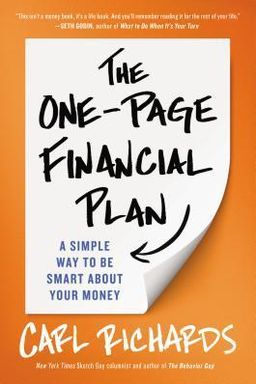
Have you ever felt completely overwhelmed when trying to figure out your finances—where to start, what to prioritize, and which expert advice to follow? In The One-Page Financial Plan, Carl Richards argues that financial planning doesn’t have to be a terrifying web of spreadsheets, jargon, and anxiety. Instead, it’s simply about aligning your money decisions with your values and goals. Richards contends that clarity—not complexity—is what creates real progress in financial life.
At the heart of the book is the deceptively simple idea of fitting your entire financial plan on a single piece of paper. Not because you’ll list every dollar or investment there, but because simplicity forces clarity. Richards discovered this firsthand when he and his wife, after years of financial confusion, used a Sharpie and a sheet of card stock to write down the three or four things that truly mattered to them: their reasons for earning and saving money, their key goals, and a few specific action steps. That simple snapshot became their compass.
The Power of “Why”
Richards begins the book with a startling question for anyone thinking about money: “Why is money important to you?” Most people stumble through vague answers—freedom, security, control—but when he presses deeper, they often uncover something more emotional and human. In one story, a highly driven ER doctor named Sara realized that her true goal wasn’t career prestige or more income—it was having time to start a family. That revelation changed her entire financial strategy. Like a therapist, Richards uses this “why” question to expose what people actually value beneath their surface ambitions. By understanding your emotional relationship to money, you can stay aligned with what matters most when life throws curveballs.
From Chaos to Clarity
Richards admits he’s made huge mistakes himself—he once lost his home by overextending during the housing boom. That failure taught him something humbling: the size of your retirement account or the shape of the market isn’t what determines success. It’s how well your money decisions reflect your personal priorities. Most of the time, people get stuck not because they’re bad at math but because they’re trapped in emotional confusion. They’re scared of making the wrong decision, or they feel guilt over past errors. The one-page plan gives them permission to start where they are and course-correct as they go.
Financial Planning as Human Behavior
Richards insists that managing money is less about technical skill than about psychology. Drawing on behavioral economics pioneer Daniel Kahneman (from Thinking, Fast and Slow), he explains that our brains are wired with biases—fear, greed, overconfidence—that lead us to make terrible financial choices. Complexity magnifies those errors. Instead of chasing perfect investments, Richards proposes setting “guardrails” that help us behave better automatically. Automating savings, writing down why we invest, or leaving your shoes by the door (his daughter’s habit that turns into an analogy) are ways to remind yourself what you truly want before emotion interferes.
Practical Simplicity
Across the book’s four parts—Discovery, Spending and Saving, Investing, and Strategies for Avoiding the Big Mistake—Richards provides step-by-step processes. You’ll learn to evaluate where you stand by creating a simple personal balance sheet. You’ll confront habits and biases through budgeting for awareness rather than guilt. You’ll see how paying down debt can be a better “investment” than chasing high returns. And finally, you’ll discover how having an investment plan and automating good behavior protects you from costly mistakes like panic selling.
A Path, Not Perfection
Ultimately, the book argues that no one’s plan will ever be perfect. Life happens—jobs are lost, children arrive, markets crash—and the point isn’t to predict these events but to prepare for them emotionally and practically. Your one-page plan isn’t an instruction manual; it’s a snapshot of what matters most right now. By knowing your “why,” having a simple strategy, and setting up systems to behave wisely, you’ll free yourself from financial paralysis and devote your time to what truly brings happiness. Richards’s approach transforms money from a source of stress into a tool for meaning, making personal finance beautifully human.