
Idea 1
Creating a Content Strategy That Actually Works
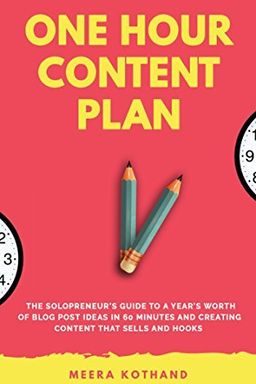
Have you ever sat down to write a blog post, only to stare hopelessly at a blank screen? In The One-Hour Content Plan, Meera Kothand argues that this paralysis doesn’t come from a lack of creativity—it comes from a lack of strategy. Her thesis is simple yet powerful: when you create content without a purpose or plan, you end up spinning your wheels instead of building momentum. But when you design a clear, systemized content strategy, you can generate a full year’s worth of ideas in just one hour—and more importantly, every single piece of content moves your readers and your business closer to meaningful results.
Kothand’s approach isn’t about quick hacks or trendy formulas; it’s about building a foundation that connects your expertise, your audience’s needs, and your business goals. She calls this intersection the E.O.G. method—Expert–Offer–Goal—and it is the beating heart of her system. Through it, you learn to align each idea with your brand’s mission, your reader’s emotional journey, and your income strategy. The book turns blogging from a guessing game into a structured creative process that still leaves room for authenticity and originality.
Why Content Strategy Matters
In the introduction, Kothand points out a harsh truth most bloggers recognize: downloading 100 blog post idea lists or Pinterest templates doesn’t fix your problem. Those are Band-Aids. What you really need is a system for generating your own ideas—content that fits your voice and goals. She compares this to learning to fish rather than being given one. Her “One-Hour Content Plan” is essentially a fishing rod for ideas.
Through her step-by-step approach, Kothand redefines content as something much bigger than weekly posts—it becomes a driver of change for both the reader and the writer. She encourages you to think in terms of transformation: how do your readers feel before they find you, and how will their lives change after engaging with your content? This lens—called the Driver of Change (DoC) model—becomes the guiding compass for everything you publish.
Building a Content GPS
Kothand calls the first phase of planning your “Content GPS.” Here, you zoom in on three foundational questions: What is your blog’s purpose? Who is your ideal reader? And what unique change will your brand create for them? By clarifying your niche, audience, and value proposition, you stop chasing trends and start creating direction. She uses practical examples—a paleo blogger targeting homeschooling moms, or a budgeting site for 30-somethings in debt—to show that specificity is power. When you narrow your focus, you actually widen your impact because you speak directly to the right people.
This section also covers the concept of content buckets—core categories that support your overall mission. Each bucket connects to your business goals and tells a cohesive story to your audience. With this structure, you always know why each piece of content exists and how it guides your reader forward.
The One-Hour Method in Action
Once your purpose is clear, the second section of the book introduces the One-Hour Content Plan itself—a tool for mapping out a year’s worth of content ideas by combining brainstorming with strategy. It’s built around the E.O.G. Method:
- Expert Content: Positions you as a guide by teaching readers the skills or mindsets they need to master specific categories.
- Offer Content: Shows how your free and paid offers solve problems at each stage of awareness, warming up readers to buy from you.
- Goal Content: Ties your communications directly to measurable business outcomes like growing your list or driving sales.
Each method builds a bridge between what you know, what your reader needs to understand, and what your business needs to achieve. In practice, it means your ideation is never random—you’re always writing content that supports transformation and results.
From Writing to Packaging
But what about creating content that actually gets read? Kothand devotes a full section to crafting irresistible blog posts and building a recognizable brand voice. She introduces the ADDE formula (Attributes, Do’s, Don’ts, Expressions) for identifying your tone and communicating consistently across platforms. Just as Seth Godin emphasizes in Tribes, this consistency builds trust—your content becomes familiar, authentic, and unmistakably yours.
She even shows how formatting, SEO, and structure affect engagement. From crafting magnetic headlines to writing “scanner-friendly” posts, Kothand shares proven techniques for keeping readers from bouncing away after ten seconds. Her writing tips mirror research-backed best practices from Copyblogger and Smart Blogger, tailored for solopreneurs who might not have editors or marketing teams to refine their message.
Promotion and Workflow
Kothand’s system doesn’t stop with writing; it extends through promotion and execution. She introduces five Promotional Pathways—Social Media, Outreach, Email, Automation, and Paid Promotion—and demystifies how to use each strategically instead of sporadically. Her advice on batching and editorial workflows (covered later in Section VI) shows that sustainable content marketing relies on systems, not stamina. Just as in baking, it’s smarter to prepare 24 muffins at once than to bake each separately. Batching saves you time and creative energy.
Finally, by creating an editorial calendar powered by the One-Hour Plan, you turn a chaotic process into a repeatable cycle. Every post, email, and promotion supports the bigger map of where your business is heading. This is where solopreneurs begin to work on their business instead of constantly slogging from one post to the next.
Why This Approach Works
At its core, The One-Hour Content Plan flips the traditional blogging model. Instead of hustling for traffic or writing to please algorithms, you focus on writing with a purpose. Every piece of content becomes a stepping stone in your reader’s transformation—and that transformation is what fuels income, loyalty, and growth. Kothand’s framework lets you create “content with consequence,” which is arguably the survival skill of the modern creator economy.
If you’ve ever felt overwhelmed by your content backlog or unsure why you’re publishing at all, Kothand’s message is liberating. With clarity, intent, and a simple system, your content can stop being a chore and start being your business’s most powerful form of strategy.