
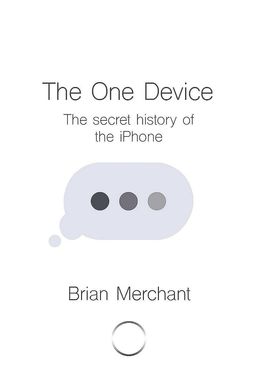
The One Device cover

The One Device

by Brian Merchant

The One Device reveals the fascinating and complex history of the iPhone, exploring the groundbreaking innovations and the unsung heroes behind its creation. Journey through the intricate web of technology, human cost, and cultural shifts that the iPhone has brought to the world.

The iPhone as a Global Creation

When Steve Jobs stood on stage in 2007 and announced, “These are not three separate devices; this is one device,” he transformed how you thought about technology. But beneath that rhetorical simplicity lies a global story—engineers, chemists, metallurgists, designers, factory workers, and software architects, all contributing invisible labor to make a single handheld possible. This book argues that the iPhone is not a solitary miracle but a concentrated history of modern innovation, extraction, and human ingenuity.

A Convergence of Histories

When you open an iPhone—as repair pioneers at iFixit often do—you find a nested set of materials and ideas that collide: from lithium drawn in Chile’s Atacama Desert to rare earths mined in Inner Mongolia, Gorilla Glass born from mid-century Corning research, and chips descended from a Cambridge prototype at ARM. It is less a product than an anthology of prior technologies stitched together. David Edgerton calls this the “collective invention” model—ideas aren’t conjured but accumulated and recombined over decades.

The Human Interface Revolution

Multitouch and the human interface transformed how you interact with technology. Apple’s ENRI team (Explore New Rich Interactions) refined work from FingerWorks and academic labs into gestures so natural that children could learn them without instruction. Bas Ording’s rubber-band bounce and Imran Chaudhri’s icon grid redefined digital tactility. Jobs looked at these gestures and said, “My God, we can build a phone out of this”—a moment that condensed decades of UI research into cultural intuition.

The Materials and Labor Behind the Magic

Each metal and mineral has its own story. Tin from Bolivia’s Cerro Rico, cobalt from Congo, neodymium from Inner Mongolia—each extracted under difficult human and environmental conditions. In Chinese factories like Foxconn and Pegatron, hundreds of thousands of workers assemble phones under demanding conditions. The iPhone’s thinness and speed rely on soldered batteries, strict design tolerances, and high pressure schedules, all invisible once you hold the finished object. (Note: this tension between sleek design and hidden labor echoes themes from books like The One Device by Brian Merchant.)

From Secrecy to Spectacle

The “Purple Project,” Apple’s highly secret internal experiment, lets you see how organizational secrecy accelerates creativity but breeds politics. Within locked rooms at Infinite Loop, engineers from the iPod, Mac OS X, and UI teams battled toward the eventual iPhone. That secrecy later became a marketing engine—launch events molded public desire through scarcity and theatricality. Apple’s retail spaces extended this psychology, turning purchasing into performance.

Security, Sustainability, and Future Lessons

Post-launch, Apple built the Secure Enclave and privacy architecture to protect user data. Siri arose from DARPA’s CALO project, not as general AI but as an approachable assistant tethered to your daily life. Yet the afterlife of devices—Shenzhen’s repair bazaars and Guiyu’s e-waste dumps—shows that the story doesn’t end at disposal. Recycling robots like Liam signal a halting attempt to reconcile convenience with responsibility.

Across these pages, you learn that the iPhone is both symbol and system: a convergence of long technological evolution, human labor networks, geopolitical extraction, and product mythology. It reminds you that behind every swipe and scroll lies a chain of people, mines, code, and decisions. Understanding that chain reveals how modern technology is made—not only by genius, but by collaboration, ambition, and cost.


From Multitouch to Natural Interaction

Every pinch, swipe, and scroll on your phone is a distillation of decades of experiments in human–machine interaction. Apple’s breakthrough wasn’t inventing multitouch—it was making it invisible. FingerWorks and researchers like Wayne Westerman built capacitive systems that could detect multiple fingers. Apple’s ENRI lab fused that academic lineage with aesthetics, animation, and fluid responsiveness. The interface became an emotional language, not a technical protocol.

The Fingers Behind the Interface

Inside Apple, Bas Ording prototyped inertial scrolling and the rubber-band “bounce.” Imran Chaudhri visualized icons and transitions that felt as responsive as physical objects. Greg Christie’s team focused on intuitive metaphors that required no manual—unlocking, tapping, scrolling. Jobs watched their demo and instantly recognized the potential. The iPhone’s UI taught billions how to touch digital content like clay: tangible, direct, forgiving.

Animation as Engineering

Core Animation, crafted by John Harper, allowed graphics hardware to render interface motions smoothly even on limited chips. The team built Jetsam, a memory manager, to keep animations at 60 frames per second. Human-interface designers and low-level engineers co-created features in real-time—a rare blend that explains why the iPhone feels more alive than its predecessors. (Note: this collaboration resembles the design philosophy behind Alan Kay’s Dynabook: computing as intuitive art.)

Today, your gestures are universal. You swipe, pinch, and zoom without thinking. The book reveals how a handful of playful experiments—in windowless labs and over hacked projectors—evolved into the first mass-market interface truly designed for human instinct.


Hardware Design and Material Alchemy

A smartphone’s beauty is physical negotiation: wires, sensors, radios, and glass contending for space. Apple’s hardware story begins with friction—materials that resist ideas and engineers who bend physics to fit vision. Tony Fadell compared the process to the Apollo Project: hundreds of unknowables coalescing under deadline.

The Glass Revolution

In 2006, Jobs held a scratched plastic prototype and demanded a glass screen. Corning’s Wendell Weeks offered Gorilla Glass—a heritage of Chemcor’s ion-exchange chemistry from the 1960s. Overnight, Corning reactivated dormant capacity and supplied ultrathin, tough glass using the fusion-draw process. That pivot redefined smartphone durability and aesthetics. Gorilla Glass remains an example of a long innovation waiting for its market moment.

Chips, Power, and Constraints

At the phone’s heart, ARM chips—descended from Sophie Wilson and Stephen Furber’s RISC design—balanced speed and battery life. Apple and Samsung accelerated development under extreme time pressure, merging ARM’s efficiency with custom silicon. Lithium-ion batteries, refined since Goodenough’s and Whittingham’s research, made portable computing feasible yet environmentally challenging. Extracting lithium from Chile’s salt flats consumes hundreds of liters of water per device’s worth of material.

Even aesthetics carried tradeoffs: aluminum shells disrupted antennas, forcing redesign; sealed batteries reduced repairability but improved reliability; proprietary screws enforced control. Every sleek edge signals constraint conquered—and compromise embraced.

Hardware in the iPhone isn’t an isolated triumph; it’s a tapestry of chemistry, electromagnetism, and industrial scaling, reminding you that progress is mostly iteration under pressure.


Extraction, Labor, and Hidden Costs

Owning an iPhone connects you—often without knowing—to mines, factories, and people across continents. The book exposes the human and ecological toll of making something so ubiquitous. When you admire the device’s sleek shell, you are holding global logistics and labor transformations in miniature.

The Planetary Supply Chain

Metals in your phone come from Cerro Rico’s tin veins, Congo’s cobalt pits, and Inner Mongolia’s rare-earth operations—each with distinct hazards: child labor, water contamination, toxic waste lakes. It takes about 34 kilograms of raw ore to extract the trace metals in one phone, producing massive ecological footprints. Efforts like Dodd–Frank and Apple’s smelter audits try to inject transparency, but complex subcontracting obscures origins.

Factories and Human Pressure

Foxconn’s massive plants achieve Apple’s required speed—sometimes waking thousands overnight to retool production. Workers assemble hundreds of iPhones daily under high quotas and tight secrecy. Reports of overtime abuse and mental health crises led to reforms, yet production intensity remains. Apple’s model—thin margins, fast iteration—relies on China’s flexible manufacturing ecosystem, the “Fox Trap” that binds rural migrants to assembly lines.

The device’s planet-spanning creation cycle turns labor and geography into invisible ingredients of design. Understanding that system reframes luxury: every tap is supported by unseen extraction and assembly networks that deserve visibility in future innovation ethics.


Security, Voice, and the Digital Self

As your phone became extension of memory and identity, Apple faced new challenges—protecting your privacy, making voice interaction natural, and defining the limits of digital autonomy. The iPhone’s software layers show a balance between technological intimacy and isolation from intrusion.

The Secure Enclave and Privacy Architecture

After early jailbreak exploits, Apple moved security into silicon. The Secure Enclave—a coprocessor isolated from the main OS—stores passcodes and biometric templates beyond reach of Apple or governments. During the 2016 FBI–Apple confrontation, this design made brute-force access technically impossible without compromising all devices. Security here is not policy—it’s architecture.

Siri’s Cognitive Roots

Siri evolved from DARPA’s CALO project (“Cognitive Assistant that Learns and Organizes”) at SRI International. Founders Adam Cheyer, Dag Kittlaus, and Tom Gruber adapted military AI into consumer dialogue systems. Gruber designed Siri’s personality—polite, curious, modest—to invite trust without pretending empathy. Voice requests split tasks between on-device recognizers and cloud parsing, creating a hybrid intelligence bound by privacy constraints.

These systems mark Apple’s philosophy: keep your data fused to your device, not exposed. They define how digital assistants can coexist with human dignity—a rare stance in an era of pervasive surveillance.


Afterlife, Markets, and Mythmaking

When your phone’s lifecycle seems complete, its story continues—in repair stalls, counterfeit markets, and marketing stages. This final arc reveals how consumption and spectacle sustain the system long after the product’s creation.

Shenzhen’s Grey Ecosystem

At Huaqiangbei, repairmen dissect phones, sell spare boards, and build refurbished units. Informal recyclers turn discarded parts into livelihoods. But further downstream, e-waste flows to Guiyu or Nairobi, where acid baths and open fires release toxins into communities. Apple’s robot “Liam” demonstrates controlled recycling, but global informal economies remain dominant and expose unequal end-of-life dynamics.

The Spectacle of Desire

Apple’s marketing weaponized secrecy. By withholding specs, creating scarcity, and staging dramatic keynotes, the company transformed anticipation into fervor. Retail stores became temples of technological sublime—wood tables, glass staircases, and ritualized purchasing. Labor tensions within these elegant spaces mirror the broader pattern: cultural awe concealing economic strain.

Ultimately, the book closes with reflection: objects like the iPhone survive because of narratives—the myth of innovation, the dream of perfection, and the global system that supports them. To understand modern technology’s power, you must look beyond the shine to its entire lifecycle—from invention to waste, from secrecy to spectacle.

Dig Deeper

Get personalized prompts to apply these lessons to your life and deepen your understanding.

Go Deeper

Get the Full Experience

Download Insight Books for AI-powered reflections, quizzes, and more.