
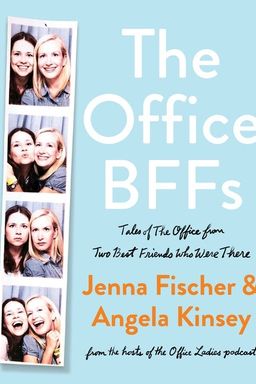
The Office BFFs cover

The Office BFFs

by Jenna Fischer & Angela Kinsey

The Office BFFs unveils the true friendship of Angela Kinsey and Jenna Fischer, stars of The Office. Dive into behind-the-scenes stories, heartfelt moments, and the duo''s journey from on-screen icons to successful podcasters, offering a unique perspective on creativity and enduring bonds.

Friendship, Creativity, and the Magic Behind The Office

What makes a workplace feel like a family and an ordinary job turn into something extraordinary? In The Office BFFs, actors Jenna Fischer and Angela Kinsey—known to millions as Pam Beesly and Angela Martin from The Office—invite you behind the scenes of one of television’s most beloved comedies. Through heartfelt storytelling, humor, and vulnerability, they reveal how deep friendship, respect, and creative collaboration transformed not just a sitcom, but their lives.

This is not just a book about how a hit show was made; it’s a story about finding connection and joy in your work, nurturing collaboration under pressure, and celebrating the humanity behind success. Fischer and Kinsey contend that the true magic of The Office lies not in its mockumentary format or brilliant writing alone, but in the authentic personal bonds that made the onscreen chemistry real. They show that the show's workplace comedy mirrored their own journey: two women navigating ambition, friendship, motherhood, and creative life in Hollywood.

A Show That Became a Home

From the pilot episode shot in an empty Los Angeles office to a nine-season run, The Office grew into a phenomenon because of its culture of collaboration. Greg Daniels, the showrunner, created an environment where everyone’s voice—from writers to background actors—mattered. Jenna Fischer recalls personalizing Pam’s desk with label makers and knickknacks, while Angela Kinsey invented her cat “Sprinkles” during a background scene, leading to a major character storyline. Each actor’s quirks found their way into the show, blending fiction and reality in ways that kept it funny but heartfelt.

Behind the camera, the atmosphere resembled an extended family: crew members, editors, and writers all co-created the show’s charm. This democratic environment nurtured creativity and loyalty. The result was not just great television but lifelong friendships that continued long after the series ended.

BFFs at Work and Beyond

For Fischer and Kinsey, their on-set partnership turned into real sisterhood. Through seasons filled with long days, inside jokes, and endless takes, their friendship blossomed from seatmates on the “Basketball” episode bench into inseparable confidants. Steve Carell, ever the wise mentor, predicted it early: “No matter what happens with the show,” he said, “you’ll always have this friendship.” He was right.

Their memoir interweaves reflections on their parallel journeys: career struggles, pregnancy on set, and life after The Office. When one was “Big Pregs,” the other was “Fake Pregs.” When one broke her back at a party, the other stayed by her hospital bed washing her hair with pineapple-scented daiquiri residue. These stories show how deep trust and humor can carry two people through every phase of life—from fame and awards to motherhood and podcasting.

Why Their Story Matters

The Office BFFs resonates far beyond television trivia. It’s about how genuine friendships sustain creative ambition, how kindness in leadership (like Steve Carell’s) sets the tone for an entire workplace, and how collaboration can transform ordinary jobs into fulfilling callings. The book becomes a workplace manual wrapped in nostalgia—a reminder that respect, trust, and humor can make any environment thrive. As Angela notes, “You take a group of strangers, you put them in a tiny office, write them amazing scripts, and it’s comedic lightning in a bottle.”

Throughout the book, Fischer and Kinsey trace how their work mirrored their lives: balancing career and motherhood, learning vulnerability, and giving back to fans through their hit podcast Office Ladies. Their message is simple but profound: when you nurture creativity through friendship, the result is magic that lasts far beyond the end credits.

In the chapters that follow, you’ll explore the culture of kindness that Steve Carell modeled, the creative collaboration behind iconic episodes like “Booze Cruise” and “Dinner Party,” the vulnerabilities of balancing motherhood and career in Hollywood, and the bittersweet emotion of saying goodbye during the final season. Through it all, The Office BFFs reminds you that the best work of your life will always be the work you do with people who make you laugh, keep you grounded, and believe in you.


The Culture of Kindness

Fischer and Kinsey describe Steve Carell’s leadership as the heart that made The Office thrive. The cast often says that the show’s tone of humility and decency began with him. He set the bar: arrive early, work hard, show gratitude, and never complain. This wasn’t just talk—Carell lived it daily. Even under immense pressure as star and producer, he remained centered. If he wasn’t complaining about call times or reshoots, no one else dared to.

The Leader Everyone Looked Up To

Fischer recalls that Steve endured hundreds of lines each week with total composure. Despite the chaos, he kept things joyful. His calmness organized the creative universe of The Office. There were “no egos on our set,” Fischer writes, “because Steve set a tone of humility and gratitude.” Kinsey adds that he was both mentor and friend—the rare star who cared more about collaboration than celebrity. On set, every actor felt seen. Even the smallest background performer had input, because Carell respected what they brought.

Off-camera, he quietly went out of his way to uplift others. When Fischer’s father retired, Carell stayed late one night to film a surprise video as Michael Scott to play at her dad’s retirement party. He advised Angela before her first appearance on Letterman: “Don’t go for the joke. Be real.” That sincerity made her interview shine. His superpower, she noted, wasn’t just comedy—it was emotional intelligence.

When Leadership Shapes Culture

The effects flowed downward. John Krasinski kept morale high with humor and energy, while actors like Oscar Núñez modeled generosity and warmth. What Greg Daniels achieved with Steve at the center resembled servant leadership (a term from Robert K. Greenleaf)—a style where empathy and collaboration drive success. By contrast, Hollywood’s stereotype of the egotistical star was obliterated at Dunder Mifflin. Steve proved that you could lead through kindness without losing authority.

In today’s terms, The Office provides a workplace case study in psychological safety: people perform best when they feel respected and included. Fischer and Kinsey remind you that the laughter you see onscreen wasn’t just acting; it was the product of a culture where everyone felt free to play. Their biggest takeaway from seven years with Carell? As Fischer writes, “We all wanted his respect because we respected him so much.” In any workplace—creative or corporate—that’s the secret sauce of success.


Creative Collaboration and Chaos

The Office was as much a social experiment as a sitcom. Greg Daniels flipped the traditional Hollywood hierarchy by inviting everyone—actors, writers, editors, even prop masters—into the creative process. This open ecosystem made the show feel real. Fischer recalls how the script for Season 1’s “Diversity Day,” written by B.J. Novak, came directly from their writers’ assistant’s real-life college experience. The show blurred fiction and truth constantly.

Turning Work into Art

The Dunder Mifflin set functioned like a real office. Actors improvised with “background business”—calculating fake spreadsheets, doodling, playing FreeCell—to give life to moments when their characters weren’t speaking. These details made the mockumentary aesthetic feel authentic. Kinsey’s doodle of her cat Sprinkles became an entire subplot. Fischer’s made-up backstory about Roy spending their wedding fund on Jet Skis inspired dialogue about Pam’s stalled engagement. Creativity didn’t just flow from the top; it bubbled up from everywhere.

Even small props carried world-building weight. Set designer Michael Gallenberg recreated Scranton’s real landmarks using photos from locals, and prop master Phil Shea built entire cultures of in-jokes—the teapot, Dwight’s bobblehead, Angela’s cat paperclip holder. These tactile details fueled the show’s documentary illusion. “It looked like a real place because it was created with real love,” Fischer writes.

Joy, Discipline, and Improv Freedom

Performers were encouraged to improvise while keeping within Daniels’s structured vision. The balance between discipline and freedom was delicate. Steve Carell’s patience allowed moments like the wind-up teeth scene or the unscripted Michael–Oscar kiss to live forever. These moments demonstrate what creativity scholar Mihaly Csikszentmihalyi calls “flow”—where structure and spontaneity intertwine perfectly.

Behind the laughter, though, lay grueling hours and physical mishaps—from seasickness on “Booze Cruise” to “Death Bus” carbon monoxide scares—each now mythology in their friendship. Still, those ordeals bonded them for life. The Office wasn’t just produced; it was lived—and its joyful messiness became its signature genius.


Motherhood and the Authentic Self

In a business that rarely accommodates women’s full lives, Fischer and Kinsey’s experiences of pregnancy on and off screen reveal both the difficulties and power of solidarity. Between real and fake pregnancies, they coined the private terms “Big Pregs, Little Pregs, and Fake Pregs.” Their shared chapter about motherhood is one of the book’s most moving sections—a raw look at identity, guilt, and the effort to stay connected when life changes everything.

Balancing Work and Family

Kinsey became the first cast member to navigate pregnancy while filming, forcing the costume team to hide her belly behind props—a copier here, a bouquet of oversized flowers there. Her coworkers rallied around her, confirming that compassion could coexist with high productivity. Still, when she returned to set as a new mother, she struggled with fatigue, guilt, and the loss of her previous rhythm. Her honesty about postpartum disconnection—and how Fischer eventually helped her reconnect—will resonate with any parent balancing professional passion and home life.

Fischer’s own turn came later, when she was pregnant for real during Season 8. Her account—pleading with wardrobe to conceal her growing belly until she was ready to announce it, buying her own replacement outfit to hide from production—is both funny and sad. Hollywood, for all its glamor, often overlooks caregiving realities. When she returned only five weeks after a C-section, anxiety and exhaustion nearly consumed her. Yet it was her best friend, Kinsey, who quietly organized pump schedules, blackout curtains for her trailer, and “Angela-size” snacks to lighten her day. Feminist readers will recognize in these stories the quiet rebellion of mutual aid—women rewriting policies with empathy when systems fail them.

Reimagining Female Friendship

These “mom years” reshaped their bond. Distance, guilt, and changing identities forced honesty, leading to one of their most powerful conversations—a backyard iced-tea summit where they apologized for drifting and reaffirmed their friendship. The scene sums up what The Office BFFs does best: shows how love, patience, and humor can turn struggle into growth. In contrast to the glossy portrayals of women in Hollywood memoirs, Fischer and Kinsey give us exhaustion and grace interwoven—proof that vulnerability doesn’t weaken friendship; it deepens it.


Lessons from Hollywood and Humility

Hollywood’s glitz and chaos offered unforgettable lessons in humility for two Midwestern women who never quite fit the “celebrity” mold. Through hilarious red-carpet debuts and wardrobe malfunctions, Fischer and Kinsey learned that authenticity always trumps image. Their account of the infamous “Paws for Style” event—where Angela layered two turquoise tank tops to walk a faux wooden red carpet for a dog fashion show—is pure comedy, but it underscores a deeper truth: self-image in fame is built through embarrassment, not perfection.

Learning to Laugh at Yourself

In story after story—like the time Fischer walked the 40-Year-Old Virgin premiere with her slip tucked into her underwear or Kinsey nearly losing her dress at the Emmys—the authors show that humor dissolves vanity. The industry expects women to project effortless glamour, yet these “failures” made them human. By laughing at themselves, they kept their values intact. This vulnerability also made their public friendship relatable to millions of fans craving authenticity in fame (a theme also seen in Amy Poehler’s Yes Please).

Behind the Glamour

Award shows became both surreal and grounding. Fischer recalls eating stolen cheese in a backstage Emmy greenroom while Laurence Fishburne looked on disapprovingly; Kinsey danced barefoot at NBC parties. They turned Hollywood spectacle into personal joy by refusing to play roles of aloof stars. When they met icons like Meryl Streep or Sally Field, they reacted not with entitlement but awe—evidence that humility can coexist with success.

Ultimately, their antics—real or staged, like faking a fight at a party to prove tabloids wrong—underscore a philosophy of creative integrity. Their fame never eclipsed their friendship. In a city built on image, they chose community, laughter, and self-respect. That’s the heart of their Hollywood wisdom: keep your feet (and your turquoise tank tops) firmly on the ground.


Saying Goodbye and Starting Again

The series finale of The Office marks the emotional high point of The Office BFFs. Fischer and Kinsey recount their last days on set like a family facing the bittersweet end of a shared era. They vividly describe the final table read attended by over a hundred people, including NBC executives and crew alumni—a gathering filled with tears, laughter, and gratitude. It wasn’t just the end of a show; it felt like graduation from the best chapter of their lives.

Goodbye, Dunder Mifflin

From the finale’s all-hands wedding of Dwight and Angela to Michael Scott’s surprise return (a secret even from NBC), the send-off encapsulated everything the show stood for: community, absurdity, and heart. Fischer remembers hugging Steve Carell in the makeup trailer and crying through every scene—especially her last talking head. Directed by Ken Kwapis, the same man who filmed the pilot, it completed a perfect circle. When Greg Daniels called “Cut—that’s a wrap,” the cast dissolved into tears, realizing their daily family was disbanding.

The symbolism was poetic. Pam took her painting of the office off the wall, mirroring Fischer taking home Pam’s watercolor prop—the one Greg secretly let her keep. Kinsey took home Dwight’s beet-farm engagement ring and Angela Martin’s cat paperclip holder. These tokens remind them, and readers, that the end of something beautiful is also the beginning of something new.

Turning Endings into Beginnings

Post-show, both faced an existential void. What do you do when your dream job ends? Their answer became Office Ladies, the wildly successful podcast built from their favorite activity: talking to each other. Starting from scratch, they built their own production company, Ramble, and learned podcasting on the fly—proving reinvention doesn’t require youth, just courage. The journey from sitcom coworkers to global podcasters and entrepreneurs completes the book’s arc: endings aren’t losses; they’re invitations to lead your own story.


What Real Friendship Creates

If The Office taught audiences that awkward humanity is lovable, The Office BFFs teaches that friendship can be transformational power. It’s the quiet force behind creativity, resilience, and joy. Fischer and Kinsey didn’t just survive Hollywood—they built a model of partnership that rejects competition and celebrates abundance. Their bond shows that success shared is success multiplied.

The Legacy of Support

Their friendship evolved from laughter to leadership. Both women now run a media company, mentor young actors, and speak openly about the myth of “having it all.” They learned that being your best means letting others shine too. As Angela writes, “Find that friend who makes you feel ten feet tall and bulletproof.” That line, like many in the book, doubles as a manifesto for creative life in a world that often pits peers against each other.

A Blueprint for Lasting Connection

By the final pages, their laughter echoes as both triumph and testimony. They remind you to cultivate gratitude, to show up for your people, and to make your workplace kinder. Whether it’s surviving the “Death Bus” or motherhood meltdowns, they prove that humor and heart outlast any obstacle. Like Pam’s mural in the finale, their book leaves you seeing “beauty in ordinary things”—especially in a friendship strong enough to weather fame, failure, exhaustion, and joy.

Dig Deeper

Get personalized prompts to apply these lessons to your life and deepen your understanding.

Go Deeper

Get the Full Experience

Download Insight Books for AI-powered reflections, quizzes, and more.