
Idea 1
Transforming Procrastination into Purposeful Action
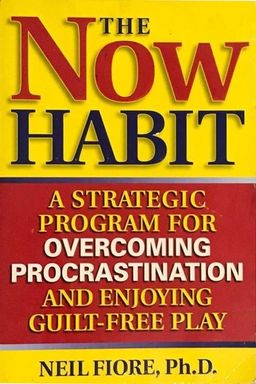
Have you ever caught yourself delaying an important task — even when you knew it would only make things worse later? In The Now Habit, psychologist Neil Fiore argues that procrastination is not a matter of laziness or poor discipline but a form of self-protection. It’s a coping mechanism your mind develops to deal with fear — fear of failure, criticism, or even success itself. What you’re really avoiding is not the work, but the feelings associated with starting or finishing it.
Fiore redefines procrastination as a mechanism for coping with anxiety rather than a character flaw. This simple redefinition shifts the focus from guilt and shame to curiosity and strategy. Instead of beating yourself up for being a procrastinator, he invites you to see procrastination as a symptom of deeper issues — perfectionism, self-doubt, work-life imbalance, or fear of judgment. Once you understand what procrastination is trying to protect you from, you can learn to replace it with healthier habits that make you both more productive and happier.
A Strategy for Guilt-Free Productivity
At the heart of Fiore’s approach is an appealing paradox: to work more effectively, you must first schedule more play. The author introduces the concept of guilt-free play and the Unschedule — a counterintuitive time management technique where you first fill your weekly calendar with rest, exercise, and social activities before adding work sessions. This unconventional strategy helps dissolve resistance toward work, because it removes the sense that work is endless and life is on hold until you finish everything. Knowing you’ve made room for play frees your energy to focus fully on each moment of work without guilt.
He encourages you to stop saying “I have to” or “I should,” which trigger feelings of victimhood and rebellion. Instead, Fiore teaches a language of choice — “I choose to” or “I will.” By restructuring your inner dialogue, you replace unconscious resistance with empowerment. Through tools such as positive self-talk, three-dimensional thinking, the reverse calendar, and short bursts of work, Fiore transforms work from something you fear into something you control.
From Procrastinator to Producer
Fiore describes a psychological journey from identifying as a “procrastinator” to seeing yourself as a “producer.” Producers focus on starting rather than finishing. They don’t demand perfection, but they take small, consistent steps that build momentum. A producer knows that starting, even in a small way, often dissolves the fear that fuels delay. Work stops being an instrument of self-judgment and becomes a field of exploration and mastery.
Throughout the book, Fiore illustrates these transformations through case studies — like Clare, who rediscovered her confidence by reprogramming her self-talk, or Larry, who overcame resentment toward his boss by reframing his sense of choice. These stories reveal how common emotional patterns — perfectionism, fear of criticism, or resentment of authority — can sabotage motivation unless consciously transformed.
The New Science of Flow and Focus
One of Fiore’s most distinctive contributions is his integration of relaxation, mindfulness, and neuroscience. Long before “flow” became a popular buzzword (through Mihaly Csikszentmihalyi’s work), Fiore recognized that peak performance requires calm focus rather than stress. His flow state exercises help you shift from anxious self-monitoring to total absorption. Simple breathing and visualization practices train you to access your creative subconscious in as little as two minutes, allowing work to feel more like play — spontaneous, calm, and rewarding.
This neurological efficiency isn’t just about productivity; it’s about self-respect. By creating safety — your psychological “net” — you allow yourself to fail, learn, and start again without self-punishment. As Fiore writes, you can’t work well if your effort feels like walking a tightrope without a net. Creating emotional safety converts fear of failure into curiosity, allowing your brain to thrive in challenging contexts.
Why It Matters Today
In a world of constant digital distractions and performance pressure, Fiore’s ideas are more relevant than ever. The Now Habit offers not just productivity techniques, but a philosophy of living and working well. It restores balance between achievement and enjoyment, helping you reconnect with your natural human drive for meaningful work and play. The outcome is not simply getting more done but living more fully — working from choice, not fear. At its core, Fiore’s message is liberating: you don’t overcome procrastination through pressure, but through compassion, structure, and freedom. When you stop punishing yourself for not being perfect, you discover that starting is easy — and even joyful.