
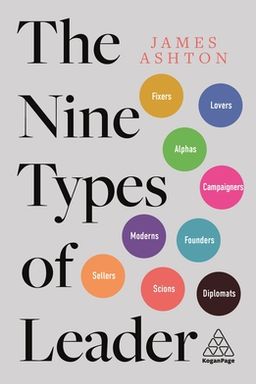
The Nine Types of Leader cover

The Nine Types of Leader

by James Ashton

The Nine Types of Leader explores the unique strengths and challenges of different leadership styles, offering insights from case studies to guide aspiring leaders. Discover how to harness your leadership potential and thrive in diverse business environments.

Understanding the Nine Types of Leaders

Have you ever wondered why some leaders inspire trust and innovation while others seem trapped in ego or bureaucracy? In The Nine Types of Leader, journalist James Ashton draws from over two decades of interviewing global CEOs to decode what truly makes leadership effective. Rather than offering one-size-fits-all advice, Ashton contends that there are nine distinct types of leaders shaping modern organizations—from the commanding Alpha to the empathetic Human—and that knowing your own type is key to leading better and adapting to change.

At its heart, the book challenges conventional wisdom about leadership. Ashton argues that no single leadership model fits today’s corporate complexity. The era of charismatic, empire-building “super CEOs” is waning; leadership now demands flexibility, authenticity, and purpose. This matters because organizations face greater scrutiny from the public, faster business cycles, and more diverse workforces than ever before. Understanding these nine archetypes lets you reflect on your style—and discover how to strengthen it as the world changes.

From Observation to Pattern

Ashton’s analysis stems from over 400 in-depth interviews with leaders ranging from Sheryl Sandberg at Facebook and Richard Branson of Virgin to Dame Marjorie Scardino of Pearson and António Horta-Osório of Lloyds Banking Group. Through these encounters, he noticed certain personality clusters—not based on job titles or education but on motivation and method. Some leaders thrive on power and vision (Alphas), some fix broken institutions (Fixers), and some merge passion with performance (Lovers and Campaigners). Each type brings distinct strengths and risks. Their stories reveal how success, personality, and circumstance interact to shape leadership outcomes.

You’re invited, as a reader, to consider: which type are you? The book isn’t prescriptive but reflective. Ashton emphasizes that recognizing one’s type doesn’t mean boxing oneself in—leaders evolve, but their core traits stay consistent. A Founder will always carry entrepreneurial DNA; a Diplomat will always seek consensus. Knowing your base type helps you deploy the right style for a given context, a skill increasingly vital in turbulent times—from financial crises to the Covid-19 pandemic that tested every leader’s resilience.

Why Leadership Needs Updating

Modern corporations, Ashton explains, face flattened hierarchies, public mistrust, and digital transparency. Leaders can no longer hide behind spreadsheets. Communication, not command, defines success. The best leaders balance purpose, authenticity, and delivery: they stand for something credible, are believable, and achieve measurable results. These three pillars underpin each leadership type. An Alpha delivers through authority, a Campaigner through conviction, and a Human through empathy and collaboration.

Ashton’s taxonomy offers a roadmap through this new terrain. The nine types—Alphas, Fixers, Sellers, Founders, Scions, Lovers, Campaigners, Diplomats, and Humans—span traditional titans and emerging, purpose-driven leaders. Rather than ranking them, he treats them as tools. In an age of stakeholder capitalism and hybrid workforces, combining traits from multiple types can build adaptive leadership. A Founder’s creativity plus a Diplomat’s inclusiveness can drive innovation that lasts. Understanding these blends helps leaders refine, not replace, their approach.

Why This Matters to You

Leadership isn’t limited to CEOs—Ashton’s insights apply to anyone guiding teams, startups, or ideas. He shows that effective leadership isn’t luck or charisma but pattern recognition, continual learning, and self-awareness. By studying examples—from Nestlé’s Peter Brabeck-Letmathe’s long-term empire building (Alpha) to Royal Mail’s Moya Greene’s crisis turnarounds (Fixer), and Unilever’s Paul Polman’s sustainability crusade (Campaigner)—you can identify the habits and mindsets that match your goals.

Today’s challenges—economic uncertainty, social responsibility, environmental urgency—demand leaders who can balance hard performance with human connection. Ashton’s book serves as both mirror and map: a reflective tool that helps you understand what kind of leader you are and where you might grow next. He closes with optimism that new “Human” leaders—curious, authentic, inclusive—will drive the future. As businesses rebuild in the post-pandemic era, these Humans embody the evolution leadership needs now.

Core Message

There is no single formula for leadership. Great leaders blend purpose, authenticity, and delivery through their unique type. By studying the nine archetypes—and your own tendencies—you can lead with greater clarity, adapt more easily, and prepare for the future shaped by trust, transparency, and humanity.


The Commanders: Alphas and Power

Ashton opens with the archetype most people imagine when they hear “CEO”: the Alpha. These empire builders wield charisma, authority, and sheer force of will to run vast organizations. They’re the traditional power brokers of corporate history. You can spot them easily—their presence dominates rooms, their decisions shape industries, and their names often become synonymous with their companies. Yet as Ashton warns, Alpha leadership is fading fast in a world demanding inclusion and agility.

Defining the Alpha

Alpha leaders exude confidence and command by personality. Their followers look up to them—or fear them. Examples abound: Peter Brabeck-Letmathe ran Nestlé like a global orchestra conductor; António Horta-Osório rebuilt Lloyds Bank through relentless focus; Dame Marjorie Scardino reinvented Pearson into an educational empire. Such leaders often stay in power for decades. They rely on long-term vision and top-down control, believing stability and scale yield performance.

But Alpha leadership is a double-edged sword. Strength can harden into stubbornness. Brabeck-Letmathe’s success at Nestlé—where he defended controversial policies—shows the risks of rigidity. As society questions corporate hierarchy, Alphas face backlash against excessive authority and opaque decision-making. (Compare this to Jim Collins’s view in Good to Great, where “Level 5 Leaders” blend humility with determination—a balance many Alphas struggle to achieve.)

The Mechanics of Power

Alphas thrive on scale and symbolism—corner offices, impressive headquarters, or public recognition. As Nestlé’s chairman made clear at the Salzburg Festival, corporate power and cultural influence go hand in hand. They shape their firms’ culture through willpower: “It’s done this way because that’s how we’ve always done it.” Many are empire builders like Stefano Pessina of Walgreens Boots Alliance, who spent decades merging businesses into a global chain.

Yet this approach creates fragility. Empires often crumble when their Alpha departs—like GEC under Lord Weinstock, which collapsed after he retired. Ashton notes how “wounded beasts” such as Jeff Immelt at General Electric or Sir Philip Green at Arcadia illustrate how the top-down model struggles in digital, fast-moving markets. Once heroes, these leaders became symbols of outdated power. The problem isn’t their intelligence but their inability to share control.

The Future of Authority

Modern leadership requires Alphas to evolve. Ashton highlights Mark Carney at the Bank of England, who combined star power with diplomacy, and tech founders like Adam Neumann of WeWork—Alphas in hoodies—who proved how charisma can implode without integrity. Technology has redefined dominance: founders like Elon Musk and Jeff Bezos rule industries but must balance innovation with accountability. The Alpha still has value but needs moderation: confidence plus empathy, vision plus collaboration.

Alpha Strengths and Weaknesses

  • Strengths: Visionary, energetic, inspiring, disciplined, decisive.
  • Weaknesses: Inflexible, slow to adapt, prone to ego and hierarchy.
  • Best Fit: Large, complex organizations with clear command structures.

Ashton’s lesson? Leadership without listening invites downfall. If you lead with authority, make room for humility. The future rewards Alphas who evolve into Humans—those equally comfortable with power and vulnerability.


Fixers and Turnaround Thinkers

When everything collapses and urgent decisions must be made, the Fixer steps in. These leaders thrive amid crisis. They don’t just manage change—they rescue failing institutions. James Ashton calls them the firefighters of leadership, the ones comfortable making unpopular decisions quickly. Fixers are not diplomats; they act first, explain later. You might not love them—but without them, many icons of business would disappear.

Facing the Burning Platform

Dame Moya Greene’s transformation of Royal Mail captures Fixer DNA. When she took over, the organization was losing cash, workers were restless, and privatization seemed impossible. Within weeks she faced disaster: there was barely enough money for payroll. Instead of panic, Greene convened suppliers, changed payment terms, and framed an emergency plan. Through speed, charm, and unyielding focus, she stabilized Royal Mail and guided it to a successful IPO. Her mantra? “If it’s not broken, I don’t waste time on it.”

Fixers move fast. They don’t rely on consensus but clarity. Tim Parker, known as the “Prince of Darkness” for ruthless job cuts at the Automobile Association, exemplifies their style: simplifying complex organizations, cutting costs, and paying the price in public criticism. Fixers measure success by results—not affection. (In contrast, John Kotter’s classic Leading Change describes transformation as slow and participatory; Fixers thrive on speed.)

The Anatomy of a Turnaround

Most Fixers follow a clear cycle: assess the damage, stabilize cash, rebuild processes, and move on. From BT’s Chris Bland calmly restructuring a £28 billion debt mountain, to Stephen Hester salvaging the wreckage of Royal Bank of Scotland, each demonstrates resilience. They balance urgency with credibility. Hester once said fixing RBS was like “a patient on the operating table”—one mistake and the company dies. Yet he slimmed the balance sheet and restored confidence before handing it over.

However, Ashton reminds you that corporate surgery can kill the patient if done too fast. After success comes fragility—Royal Mail faltered again after Greene’s exit. Fixers often leave once the crisis ends, which means long-term cultural repair can lag behind operational recovery. The challenge lies in building sustainability, not just survival.

The Fixer’s Dilemma

Fixers rarely enjoy popularity. Their approach prioritizes short-term wins over emotional harmony. Yet Ashton sees them as essential catalysts in capitalism’s cycle of boom and bust. When times are good, Fixers fade; when crisis hits, their stock rises. Leaders like Harriet Green at Thomas Cook or John McFarlane at Barclays show how bravery and decisiveness can stabilize chaos—though not always permanently.

Lesson from the Fixers

If you’re ever tasked with saving a faltering project or company, think like a Fixer: act fast, define success early, and prepare for resistance. But once stability returns, hand off to Builders and Lovers—leaders who nurture what you’ve rescued. Fixers remind us that crisis is not an end but a reset.


Builders of Identity: Founders and Scions

Where Fixers repair institutions, Founders create them. Ashton portrays Founders as deeply personal leaders whose companies are extensions of their identity. Think Richard Branson’s Virgin, Reid Hoffman’s LinkedIn, or Arianna Huffington’s Huffington Post. These entrepreneurs don’t just build brands—they embody them. Their energy flows directly into culture, innovation, and risk. Founders see opportunity everywhere; they are restless, creative, and sometimes reckless.

Being the Brand

Ashton’s vivid portrait of Branson shows how the Founder type blurs personal and corporate identity. Branson’s charisma powers Virgin’s marketing, from his costume stunts to his openness with the press. His strength lies in simplification: keeping decisions lean and delegating details to lieutenants. Even as Virgin spans airlines, finance, and space travel, his personal charm remains its gravitational center. Founders thrive on emotion—they live and breathe their brand—but must learn restraint lest the business depend entirely on them.

Different Paths to Creation

Not all Founders come from privilege. Ren Zhengfei of Huawei rose from military engineering to global telecom dominance, driven by a desire to rebuild China’s technology image. Lance Uggla created Markit from a barn after spotting inefficiencies in financial data. Surinder Arora built a hotel empire starting with renting rooms to airline crews. Ashton emphasizes that Founders often emerge from hardship or curiosity, not pedigree. Their defining feature is the courage to start—and the persistence to stay.

The Inheritance Factor: Scions

Scions represent the inheritors—the next generation of Founders who must prove their legitimacy. Sons and daughters like Jean-François Decaux at JCDecaux or Ana Botín at Banco Santander inherited firms but had to justify their leadership. They blend respect for tradition with modernization. Botín’s ascension after her father’s death at Santander demonstrated preparation and poise, even as she reshaped strategy for new times. Scions walk the fine line between preservation and progress. (In Warren Buffett’s terms, they must protect the moat, not just swim in it.)

Letting Go and Legacy

Founders struggle to relinquish control; Scions struggle to earn it. Ashton shows how Kris Gopalakrishnan at Infosys and Dame Marjorie Scardino built succession sustainably, while others like Edgar Bronfman Jr. at Seagram lost fortunes chasing reinvention. Great Founders must learn when to become mentors, not rulers. Branson’s shift from CEO to brand ambassador exemplifies how a Founder can age gracefully, turning personal charisma into collective trust.

Takeaway for Creators

If you build something from nothing—or inherit a legacy—remember: identity drives innovation, but humility sustains it. Success depends not just on vision but on knowing when to hand the reins to someone who can carry the story forward. Founders give birth to movements; Scions ensure they endure.


Sellers and the Art of Persuasion

What makes someone truly persuasive? Ashton’s Sellers types emerge from the frontlines of business—the marketing and salespeople who transform customer insight into leadership skill. They are communicators, connectors, and storytellers. They succeed by understanding what people want—then giving it to them better than anyone else. In a world increasingly shaped by branding and customer engagement, Sellers rise because they blend performance with empathy.

From Bag to Boardroom

Sidney Taurel’s career at Eli Lilly demonstrates this evolution. Starting as a “detail man” selling pharmaceuticals door-to-door, he learned persuasion through empathy: listening to doctors and adjusting his message to their concerns. Years later as CEO, he led the company globally with the same principles—clear communication, customer understanding, and trust-building. Sellers like Taurel prove that influence starts small but scales with consistency.

This theme continues with reference to companies like Procter & Gamble, which trained a generation of CEOs—Gavin Patterson at BT, Dame Helena Morrissey’s contemporaries in finance, and others. P&G’s young hires learned to treat brand management as entrepreneurship. Their mantra: “We’ll teach you to run a business at 25.” Patterson’s journey from shampoo marketing to leading telecoms illustrates how grounding in consumer psychology enhances strategic leadership. (Daniel Pink’s To Sell Is Human echoes Ashton’s view: everyone, from CEO to employee, sells ideas daily.)

Selling Beyond Products

Today’s Sellers aren’t just pushing goods; they sell values. Dave Lewis at Tesco revitalized the grocer not only through operations but by rebuilding trust with suppliers and customers. Stevie Spring at the British Council leveraged storytelling to champion British culture abroad. These leaders prove that persuasion can carry social resonance, turning marketing into mission.

Strengths and Shadows

While Sellers excel in connection, Ashton warns they may lack depth in finance or strategy. Many feel compelled to prove they’re more than marketers. The challenge for you, if you identify as a Seller, is to pair emotional intelligence with operational rigor. Learn from Paul Geddes at Direct Line, who orchestrated a complex spin-off from RBS while maintaining clear consumer focus. Selling is an art—but sustained leadership demands systems thinking.

If You’re a Seller

Master persuasion without manipulation. Translate empathy into execution. When you can sell an idea that improves life—whether it's trust, innovation, or purpose—you move beyond marketing into true leadership.


Lovers and the Power of Passion

What happens when leaders genuinely love their work? Ashton’s Lovers category celebrates passion as a driver of authenticity. These are leaders who unite purpose with pleasure—they live their industry, not just lead it. Lovers remind you that enthusiasm is contagious and that credibility grows when leaders practice what they preach.

Leading With Heart

Consider Joey Gonzalez of Barry’s Bootcamp, who began as a fitness instructor before becoming CEO. He leads classes personally each weekend, embodying the brand’s energy. His authenticity—fasting, training, and connecting personally—turns business culture into community. Similarly, James Daunt revived Waterstones not through spreadsheets but by rekindling love for books, empowering staff to curate stores as creative spaces. For Lovers, belief precedes action; passion drives profit.

Transforming Industries Through Love

Ashton points to Lovers like Mark Cutifani at Anglo American, who brought empathy to mining by focusing on worker welfare and sustainability—proving even heavy industry benefits from human connection. Dame Cilla Snowball at Abbott Mead Vickers (AMV) sustained decades-long client loyalty in advertising by prioritizing trust and enthusiasm over jargon. Passion, Ashton writes, “is the rarest measurable metric—but the one most likely to inspire performance.” Passion transforms business from task into craft.

Risks of the Romantic Leader

Of course, passion without discipline can blind leaders. The Lover who cannot make tough calls risks burnout or bias. Balance passion with strategy. Authenticity works only when supported by results—Dame Cilla retired as the UK’s top advertiser having turned passion into data-led excellence. And Beccy Speight at the RSPB shows how altruistic love for nature can scale responsibly, focusing emotion through disciplined action.

The Lesson of the Lovers

Passion builds trust—and trust builds longevity. If you lead with heart, pair it with clarity. Love what you do, but remember that leadership means guiding others to love it too.


Campaigners and Purpose-Driven Leadership

If Lovers ignite passion, Campaigners turn it into purpose. Ashton’s Campaigners champion causes bigger than profit: sustainability, equality, or social impact. They believe business can change the world—and have the courage to try. Campaigners blend moral conviction with commercial savvy, a delicate balance between activism and execution.

Turning Vision Into Action

Ajay Banga at Mastercard exemplifies this trait. Having experienced financial exclusion firsthand upon moving to the US, he mobilized his company to connect half a billion unbanked people to financial systems. His initiative wasn’t charity—it was sustainable business aligning growth with inclusion. Likewise, Paul Polman at Unilever transformed corporate purpose through the Sustainable Living Plan, setting targets for environmental responsibility and equitable growth. His approach reflected Drucker’s philosophy of management as social stewardship.

Business Meets Mission

Campaigners like Jochen Zeitz integrated environmental accounting at Puma, quantifying ecological costs as rigorously as financial profit. Others, such as Dame Helena Morrissey of the 30% Club, turned gender balance into a corporate movement. These leaders show that corporate influence can serve social good. The paradox? Doing good must still deliver financial health. Campaigners thrive only when their mission strengthens the business, not distracts from it. (Simon Sinek’s Start With Why parallels Ashton’s claim: purpose anchors leadership momentum.)

Risks of Crusading CEOs

Polman faced backlash for appearing too idealistic; Zeitz’s sustainability push seemed utopian before proving profitable years later. Campaigners can alienate traditional investors who equate purpose with distraction. Ashton urges you to ground ambition in measurable outcomes—profits should fund progress. The secret lies in courage balanced with competence.

Campaigner’s Motto

Lead with a mission, not a slogan. When your purpose enriches both society and shareholders, you prove that leadership is the ultimate campaign—a movement that reshapes business and humanity alike.


Diplomats and the Art of Consensus

In a polarized world, the Diplomat thrives by leading through inclusion. Ashton describes Diplomats as consensus builders who manage complex organizations where decisions depend on collaboration rather than command. They are steady hands—leaders of partnerships, trusts, and professional firms where teamwork outweighs ego.

Stewardship as Strategy

Dame Helen Ghosh of the National Trust embodies this archetype. Skilled in civil service diplomacy, she balanced tradition with modernization as she guided the preservation of Britain’s heritage. Her calm persistence weathered criticism over modernization—she understood that heritage requires dialogue, not decree. Diplomats like Ghosh lead by listening, aligning stakeholders, and evolving slowly but surely.

Managing Complex Communities

Professional partnerships such as Deloitte and PwC illustrate corporate diplomacy. Leaders like David Sproul and Kevin Ellis balance thousands of partners’ interests across global boundaries. They lead “white-collar armies,” where ownership is shared and consensus rules. Their success depends on clarity and communication—qualities the Diplomat masters through transparency rather than authority.

Evolution, Not Revolution

Diplomats don’t chase disruption; they steward stability. Mark Price at the John Lewis Partnership exemplifies this ethos—leading with fairness and inclusivity in employee ownership. Robin Mortimer at the Port of London Authority brought civil-service strategic thinking to public stewardship. Diplomats build trust over time; their power lies in patience. Yet Ashton warns of complacency: insular cultures can stifle innovation if consensus becomes caution.

Diplomat’s Wisdom

True diplomacy in leadership means making progress with empathy. If you navigate complex politics, build bridges, and speak for many voices, you shape not just outcomes but relationships—the invisible currency of lasting success.


Humans and the Future of Leadership

Ashton crowns his taxonomy with the most future-focused type: the Human. These leaders redefine power through empathy, transparency, and collaboration. In contrast to Alphas’ command-and-control approach, Humans create decentralized, authentic cultures that reflect society’s values. They aren’t softer; they’re smarter—using inclusivity and purpose as instruments of innovation.

A New Era of Empathy

Isabelle Kocher at Engie personifies this shift. She led one of France’s largest energy firms through a transition toward low-carbon sustainability, consulting employees and stakeholders in shaping strategy. Her belief that “no leader has wisdom alone” represents a key Human trait: democratizing insight. Though eventually ousted amid political conflicts, Kocher proved that empathy-driven leadership can transform large organizations.

Flat, Flexible, and Fearless

Ashton expands the Human model through Zhang Ruimin at Haier, who dismantled hierarchy by empowering 2,000 micro-teams to act as entrepreneurs. He rejected traditional management—“management without leadership”—and rewarded innovation through self-determination. Humans like Zhang prove that freedom, not bureaucracy, drives performance.

In smaller contexts, Nick Pearson of Parkrun shows how Humans lead movements through trust rather than control. With minimal resources, volunteers, and zero fees, Parkrun thrives on shared purpose. Leadership becomes collective. Likewise, Charlie Jacobs at Linklaters and Clare Gilmartin at Trainline demonstrate closeness to workforce, blending performance with well-being.

Humans in Practice

Humans don’t eliminate authority—they decentralize it. Peter Jackson at Flutter Entertainment defines direction but lets teams own execution, trusting them to innovate. Haier’s own model mirrors Drucker’s belief that the leader’s role is “to orchestrate the energy of those around you.” Ashton closes the book noting Covid-19 accelerated the need for such leadership: remote work and global crises demand empathy, adaptability, and purpose.

The Human Horizon

Human leaders are the evolution of all previous types—blending Alpha confidence, Diplomat consensus, Lover passion, and Campaigner purpose. They are multidimensional, responsive, and humane. The future belongs to those who lead not from above, but beside.

Dig Deeper

Get personalized prompts to apply these lessons to your life and deepen your understanding.

Go Deeper

Get the Full Experience

Download Insight Books for AI-powered reflections, quizzes, and more.