
Idea 1
The Democratization of Digital Ownership
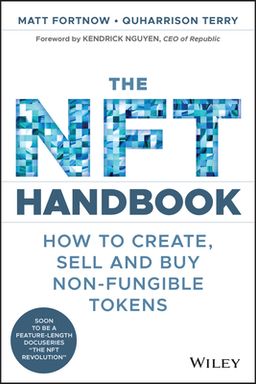
What if everything you owned online—your art, your game items, your virtual land—could be verified, traded, and monetized as easily as your favorite collectible in real life? In The NFT Handbook: How to Create, Sell and Buy Non-Fungible Tokens, Matt Fortnow and QuHarrison Terry argue that NFTs represent a seismic shift in how we define ownership, creativity, and value in the digital age. They contend that non-fungible tokens (NFTs) are more than a speculative trend—they’re the foundational layer of a new creator economy that dissolves traditional power dynamics between artists, collectors, and intermediaries.
The authors—one a veteran entertainment lawyer and the other a digital strategist—take readers through the journey of understanding NFTs from scratch: what they are, why they matter, how to create and trade them, and what legal and ethical complexities surround their evolution. Fortnow and Terry believe that NFTs allow creators to reclaim control—bypassing galleries, record labels, and brokers—while ensuring that provenance, authenticity, and royalties are hard-coded into digital assets. This new reality, they argue, will permanently transform art, gaming, commerce, and even identity itself.
The Promise of True Digital Ownership
Digital ownership has long been an illusion. A song on iTunes, a Fortnite skin, or even an e-book isn’t really yours—it’s licensed. NFTs flip that equation. They create a mechanism for verifiable, scarce, and tradable ownership within the blockchain—a decentralized system that verifies transactions without centralized gatekeepers. This means you can own a digital artwork or collectible in the same way you own a physical painting—complete with a certificate of authenticity and the ability to resell it freely.
As Fortnow and Terry explain, scarcity is the cornerstone of the collector’s psyche. Whether it’s Beanie Babies in the 1990s or baseball cards in the early 20th century, people collect because rarity breeds value. NFTs tap into that same psychology but apply it to a limitless array of digital forms—from Beeple’s million-dollar digital collages to NBA Top Shot highlight reels.
Demystifying the Jargon
The authors bring clarity to blockchain’s often dense terminology. A blockchain is like a decentralized ledger—each transaction is recorded permanently and publicly, eliminating the need for a centralized authority. Fungible means interchangeable, as in dollars or Bitcoin; non-fungible means unique, like a signed baseball—no two are exactly alike. Most NFTs exist on the Ethereum blockchain, using smart contracts that encode ownership and royalties for creators in perpetuity.
Through step-by-step guidance, Fortnow and Terry show how anyone—from a hobbyist to an established artist—can create, mint, and sell an NFT. They use concrete examples such as the Three Stooges and Rob Gronkowski’s NFT drops to illustrate the process and marketing strategy behind successful collections.
A New Creative Economy
A major argument of the book is that NFTs eliminate the intermediaries who historically exploited creative talent. Like the story of Taylor Swift’s lost music masters, Fortnow and Terry show how traditional systems strip artists of control. NFTs, they argue, reintroduce fairness by embedding royalties into every sale—ensuring that artists collect earnings not just once, but every time their work changes hands.
More profoundly, NFTs allow for community-driven creativity. Fans become stakeholders: early buyers of a musician’s NFT album or a digital painter’s first drop share in future appreciation. Ownership, participation, and fandom merge into one circular economy. As Kendrick Nguyen writes in the book’s foreword, we’re witnessing the disintermediation of the creative world—the same shift that decentralized finance (DeFi) brought to banking.
The Road Ahead
Throughout the book, the authors balance enthusiasm with realism. They acknowledge volatility, scams, and the environmental footprint of proof-of-work systems but remain confident that innovation—such as Ethereum’s move to proof-of-stake—will solve these issues. In their view, today’s NFT scene is where the early internet was in the 1990s: full of hype and chaos, yet poised to define the next few decades of digital culture.
Ultimately, The NFT Handbook isn’t just a manual for making profit—it’s a manifesto for participation in the next digital revolution. If the internet democratized information, NFTs are democratizing value. The book calls on creators, collectors, and technologists alike to learn, experiment, and collaborate to build the foundation of an ownership-based web—a metaverse where creativity and economics coexist. As the authors write, “You’re not late. You’re early.”