
Idea 1
Strategic Selling in the Complex Sale
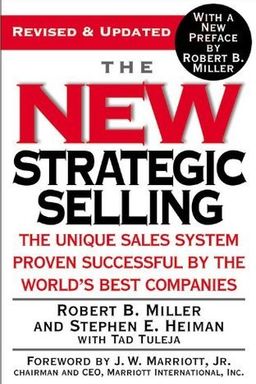
Selling to large organizations isn’t a test of charisma—it’s a test of structure. In The New Strategic Selling, Robert Miller and Stephen Heiman introduce a method that replaces sales luck with repeatable discipline. The book’s central argument is simple but transformative: strategy must come before tactics. In complex, multi-person decisions, charm, product knowledge, and persistence are secondary to positioning yourself correctly within the buying organization.
Strategic Selling redefines what “a sale” actually means. It’s not about pushing product—it’s about coordinating with multiple “Buying Influences,” aligning each person’s personal win with a measurable business result, and creating a mutual Win-Win outcome. By shifting from persuasion to alignment, you stop chasing chance deals and start building predictable success.
The Complex Sale Environment
The authors define a Complex Sale as one in which more than one person influences the decision—and that’s most major business-to-business sales today. Every large account hides an intricate decision network: economic approvers, technical screeners, users, and insiders who can coach you. Winning requires diagnosing who plays which role and what drives each person’s behavior. Traditional selling that assumes “the boss decides” is naïve and dangerous.
The story of Ray, who lost to Greg despite having a CEO contact, illustrates the flaw. Greg used a strategic approach learned in Strategic Selling: he found an outside consultant named Jeff who turned out to be the real key—a Coach who got Greg introduced to the true Economic Buyer. Ray’s reactive, charm-based style lost to Greg’s systematic mapping of influences.
From Tactical Charm to Strategic Discipline
To move from reactive to proactive selling, the book defines a structured process: assess your position, identify Red Flags, use your strengths as leverage, understand buyer response modes, and align Win-Results (the intersection of measurable business outcomes and personal motivation). This process turns uncertainty into a visible roadmap.
Each step reinforces strategic awareness. Strategy starts with a Single Sales Objective—a precisely defined, measurable goal for one account at one time. From there, you map the buying network, test for missing information, and design an Action Plan that systematically improves your position. In this logic, preparation is not optional—it’s the engine of predictability.
Why Win-Win is Practical, Not Just Ethical
Strategic Selling’s moral heart is the Win-Win philosophy: every good sale must leave all participants feeling like winners. This isn’t feel-good rhetoric; it’s functional insurance. A sale that leaves one party resentful or diminished invites what the authors call Buyer’s Revenge—refunds, cancellations, or long-term avoidance. By contrast, when you craft solutions that deliver both measurable results and visible personal wins for each Buying Influence, you build durable trust and repeat business.
In this way, Strategic Selling anticipates the relational, consultative approach later popularized in books like SPIN Selling by Neil Rackham and The Challenger Sale. It teaches that selling is less about closing techniques and more about consistent system thinking in dynamic human systems.
How the System Works Together
Across its framework, the book ties together analytical tools (Buying Influences Chart, Win-Results Matrix, Response Modes Grid, Red Flags/Strength Worksheet) and execution tools (Ideal Customer Profile, Sales Funnel, Action Plan). The result is a full-cycle method that integrates strategy, psychology, and process management.
First, you identify the right accounts to pursue—the Ideal Customer Fit. Then, when inside, you assess your position using Red Flags, Strengths, and Response Modes. You craft Win-Results for each influence, build Coaches to fill information gaps, and step through the Funnel to convert abstract opportunity into revenue. Finally, you maintain a consistent routine for planning and review so your pipeline stays stable and predictable.
The system makes you think like a strategist, not a salesperson. It teaches you to map complexity, forecast resistance, and deliberately align human motivations with business outcomes. In the authors’ words, the goal is not to “sell harder” but to sell smarter—to create predictable success in unpredictable environments.
By combining analytic clarity with ethical reciprocity, Strategic Selling transformed sales management from an art into a process. What emerges is both a mindset and a method: strategy first, tactics second, every time.