
Idea 1
The Rise of the Asian Century and the New Silk Roads
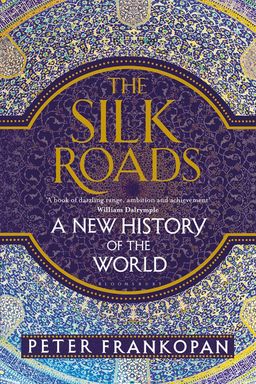
What if the world you knew—where the West was the dominant force shaping global affairs—was slipping away right before your eyes? In The New Silk Roads, historian Peter Frankopan argues that the twenty-first century marks a decisive turning point: global power, wealth, and influence are shifting eastward along the ancient routes linking the Mediterranean to the Pacific. The Silk Roads, once arteries of trade and exchange connecting civilizations, are now re-emerging—not as a nostalgic echo of history, but as the living framework of a new world order.
Frankopan contends that the rise of Asia—anchored by China’s Belt and Road Initiative, India’s rapid expansion, and resource-rich Central Asia—represents not just economic revival but a rebalancing of geopolitical power. He examines how nations across Eurasia, the Middle East, and Africa are weaving themselves together through trade, technology, and infrastructure, creating new alliances and rivalries that will define our century. At the same time, while the East is consolidating influence, the West faces fragmentation—from Brexit and U.S. isolationism to internal divisions within the EU and the decline of trust in democratic institutions.
From History to Modern Network
Frankopan opens by reminding readers that the Silk Roads have always been central to world history. The routes described by the German geographer Ferdinand von Richthofen were never just about silk—they connected cultures, religions, and economies across continents. Today, that same geography—stretching from Istanbul to Beijing—has become the axis around which modern geopolitics turns. Research from satellite imagery and archaeology in China, Iran, and Afghanistan reveals both how connected ancient societies were and how modern collaboration mirrors those patterns of exchange.
The Reversal of Global Power
Since The Silk Roads (2015), events have accelerated. Frankopan emphasizes how tangible this transformation now is: energy pipelines, railways, and trade networks are reshaping continents, while Asian economies capture a rising share of global GDP. He cites forecasts that by 2050 Asia could account for more than half of global gross domestic product—restoring a dominance unseen since before the Industrial Revolution. China’s Belt and Road Initiative, valued at over $1 trillion, exemplifies this ambition, knitting countries from Africa to Eastern Europe into Beijing’s economic orbit.
The Crisis of the West
Meanwhile, Frankopan paints the West as beset by inward-looking politics. Brexit represents “fiddling while Rome burns”—a Europe so consumed by its own identity crises that it overlooks transformations elsewhere. In the U.S., the election of Donald Trump marked a retreat from global cooperation, symbolized by withdrawals from the Paris Climate Accord and the Iran nuclear deal. Frankopan shows how these decisions have weakened Western influence and emboldened Eastern powers like Russia and China to reassert leadership in global decision-making.
Why This Shift Matters to You
Frankopan writes for readers who want to understand why headlines—from trade wars to Middle Eastern realignments—are symptoms of a larger historical moment. He argues that we are already living in the “Asian century,” where economic growth, resource control, and technological innovation in the East will dictate the future of global politics, economics, and even culture. This interconnected world doesn’t simply challenge Western dominance—it invites a new model of shared development, cooperation, and sometimes uneasy competition across borders.
Ultimately, The New Silk Roads is a call to recognize that the world's center of gravity has shifted for good. The road to understanding the future, Frankopan insists, runs through the heart of Asia. The old world is giving way to the new—woven together by the threads of connectivity, ambition, and transformation that span the modern Silk Roads.