
Idea 1
Designing a Modern Career
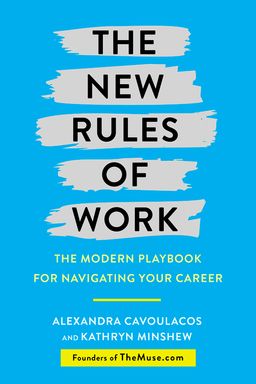
How do you build a meaningful career when jobs, skills, and industries evolve faster than ever? In The Muse Method by Kathryn Minshew and Alex Cavoulacos, the authors argue that traditional career formulas—choose a path once and climb a lifelong ladder—no longer work. The new game requires iterative design: crafting your career in experiments, two-to-five-year plans, and purposeful pivots guided by self-reflection and evidence.
They propose an actionable framework built on three R’s—Reflect, Research, and Refine—leading into practical chapters about branding, networking, job hunting, interviewing, and negotiation. The book functions as both manual and mindset shift: you stop seeing your career as a linear staircase and start viewing it as an evolving prototype. Each short-term step you take should teach you something about your values, strengths, and market fit.
Why Old Rules Fail
For much of the twentieth century, “stability” was the career ideal—get a single degree, pick one employer, and retire decades later. In contrast, today’s digital world is volatile and borderless. Fields like UX, data science, and social media didn’t exist a generation ago. The authors illustrate this shift through their own stories: Kathryn left the foreign service when she realized she wanted faster, tech-driven impact; Alex pivoted from genetics research into product development and eventually entrepreneurship. Their detours weren’t mistakes—they were data points in an evolving path.
In this environment, you must stop asking, “What do I want to do forever?” and instead ask, “What do I want to learn next?” You gain resilience by seeing careers not as ladders but lattices—full of lateral moves, loops, and forks. (Note: the UV light metaphor in the book vividly shows this idea—once you illuminate the landscape, you see dozens of hidden routes between where you are and where you might go.)
Design Mindset and Two-to-Five-Year Horizons
The core premise is design thinking applied to career planning. Instead of betting your future on one grand, irreversible decision, you plan in short, meaningful chapters of two to five years. This horizon is tangible enough to build concrete goals—learning Python, leading a project, or shifting industries—but flexible enough to adapt. Each career chapter functions as a miniature research cycle: test, evaluate, learn, and iterate.
The authors encourage you to formalize this commitment with a written contract to yourself—a visible, daily pledge listing what you’ll learn, the obstacles you expect, and tactics to overcome them. This act converts vague aspirations into a behavioral plan, leveraging accountability psychology to combat fear and drift. Kathryn and Alex used similar contracts when founding The Muse, blending ambition with risk planning.
The Muse Method: Three R Framework
The Three R Method—Reflect, Research, Refine—drives the book’s narrative progression. Reflection establishes self-knowledge: your values, emotional readiness, and external feedback. Research converts this insight into structured investigation through the Muse Grid—a visual map matching your top values to possible functions and industries. Refinement moves hypotheses into small-scale tests, from shadowing professionals to freelancing projects, producing real evidence before committing to a full career pivot.
Each R builds on the last. Reflection ensures your choices align with what matters to you; Research exposes how those values play out across roles; Refinement gives tangible proof-of-fit. This methodology turns anxiety into agency—it lets you learn through experience, rather than rely on guesswork or outdated advice.
From Identity to Impact
Beyond tactical planning, the book reframes identity. You’re not confined by job titles; you are a collection of skills, stories, and values that evolve. This flexible identity forms the foundation for later chapters—personal branding, networking, and negotiation. A strong brand communicates continuity: “I’m a consensus builder with keen people skills,” or “a data-driven marketer with creative storytelling chops.” Consistency allows recruiters and peers to recognize your value amid change.
By building networks through reciprocity, crafting evidence-based stories for interviews, and negotiating for total value (not just salary), you transition from reactive job-seeker to self-directed professional. The authors close by linking all parts back to lifelong learning: revisiting your plan every few years, expanding skills, and treating your career as ongoing experimentation.
Core insight
The modern world rewards learners, not loyalists. When you treat every job as a designed experiment—anchored in reflection, researched with data, and refined through real-world tests—you build a career that’s resilient, authentic, and future-proof.
The Muse Method merges psychology, design thinking, and career strategy into one unified system. Its ultimate promise: you can craft a fulfilling career not by prediction or luck, but by iteration and intention.