
Idea 1
Economic Empire: How Debt Replaced Conquest
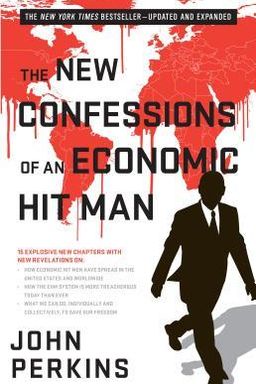
How do modern empires expand without armies? In Confessions of an Economic Hit Man, John Perkins argues that the United States built an empire not through direct occupation but through financial and corporate domination. He calls this machinery the corporatocracy—an alliance of governments, multinational companies, and international lenders that use debt, contracts, and development projects to control nations. These tools replace the traditional weapons of conquest but achieve the same result: dependency and obedience.
You see this empire at work when a country like Ecuador borrows millions to build infrastructure that seems beneficial, only to discover that most of the funds return to U.S. firms and that debt payments consume its national budget. The workers of Bechtel, Halliburton, MAIN, and other corporate giants become the shock troops of this subtle colonization. The illusion of development disguises a deeper pattern of extraction, both economic and political.
From Idealism to Manipulation
Perkins begins as a Peace Corps volunteer, an idealist who wants to serve developing nations. Yet his path through Chas. T. Main (MAIN), an engineering consultancy, reveals how intelligence agencies and corporations recruit people like him into morally ambiguous roles. His mentor Claudine trains him to become an economic hit man (EHMs or AEs)—professionals who justify huge loans by crafting inflated economic forecasts. These loans appear beneficial but are designed to enslave nations to perpetual repayment.
His work involves seduction through numbers and spreadsheets. By predicting 17–20% economic growth rather than a realistic 6–9%, he justifies megaprojects: dams, electrification networks, ports, and pipelines. When those numbers translate into unaffordable loans, governments must comply with U.S. demands—support at the UN, military basing rights, or favorable oil contracts. (Note: This model extends from the culture of IMF structural adjustments famously critiqued by Joseph Stiglitz and Naomi Klein.)
Debt as a Weapon
The logic behind the AE system is consistent: create dependency through debt, then translate financial control into political leverage. A typical project—like Ecuador’s oil expansion or Indonesia’s electrification—follows a three-step formula. First, forecasts justify large loans. Second, U.S. engineering firms receive the contracts, recycling the money back to American hands. Third, debtor nations must pay the loans and interest using their natural resources or political alignment. Each stage deepens dependency and limits sovereignty.
The human face of this system is sobering. In Ecuador, oil profits flow outward while public services wither. In Indonesia, luxury compounds contrast with slums outside their gates. In Panama, a nationalist leader like Omar Torrijos is celebrated by his people yet dies mysteriously after resisting corporate pressure. These examples show how the AE system merges economics with geopolitics, using loans instead of bullets to achieve domination.
The Corporatocracy and Its Self‑Sustaining Logic
Perkins describes a revolving-door system connecting power brokers like Robert McNamara (Ford Motor Company, U.S. Defense Department, World Bank) and corporations such as Bechtel, Halliburton, and Brown & Root. The corporatocracy’s hallmark is fluidity: private capital, public policy, and military security are woven into one operating structure. Development rhetoric provides moral cover for what is essentially a global subsidy for corporate profit.
The 1973 oil crisis exposes this integration. To manage the crisis, U.S. policymakers and Wall Street institutions design the U.S.–Saudi partnership through SAMA and JECOR, recycling petrodollars into U.S. contracts. The technique—channeling foreign wealth through American securities to fund U.S. contractors—becomes a cornerstone for modern global capitalism. Perkins calls it both elegant and exploitative: the Saudis modernize their cities, but accountability evaporates as power bypasses democratic oversight.
Moral Awakening and Redemption
The second part of the book tracks Perkins’s disillusionment. His encounters in Colombia with Paula, whose brother joins guerrillas after corporate displacement, and his friendship with Torrijos stir his conscience. The deaths of Torrijos and Jaime Roldós—both reformist leaders opposing U.S. corporate domination—convince him that resistance has high stakes. His moral crisis peaks in St. John, where he physically rebels against his past by smashing a plantation wall, symbolically breaking free from the empire of debt.
Perkins eventually leaves MAIN and later founds the Independent Power Systems company and activist organizations like Dream Change. Yet his exit is complicated: nondisclosure payments and new consulting roles threaten his silence. Only after 9/11 does he decide to publish his confession, transforming guilt into civic activism. The act of writing becomes his form of redemption and an invitation to readers to examine their complicity.
The Ethic of Resistance
The book closes with a challenge: recognize the moral fault line between the American republic’s founding ideals and the corporatocracy’s imperial agenda. Perkins asks you to choose whether to perpetuate a system built on debt, oil, and extraction or to align with leaders who stand for justice and self-determination. Through indigenous wisdom, ecological respect, and civic action—reducing consumption, demanding transparency, supporting equitable trade—you can begin to shift the world away from conquest by contract toward genuine prosperity. If you take this message seriously, you see that empire’s tools are not inevitable; they depend on your consent. The antidote begins with awareness and honest confession.