
Idea 1
Rethinking Robots Through the Lens of Animals
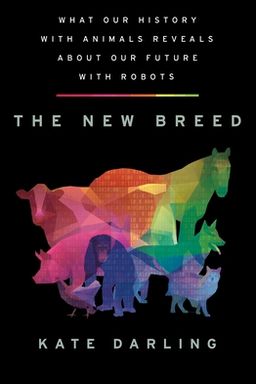
When you think about robots, you probably picture humanlike figures—machines with faces, voices, and personalities. Kate Darling, in The New Breed, challenges that reflex. Her central claim is simple but radical: you should compare robots to animals, not to humans. This reframing matters because it helps you make sense of robots’ real capabilities, social roles, and ethical challenges without falling into false hopes or dystopian fears.
Why the Human Analogy Misleads
When you think of robots as miniature people, you expect them to think, feel, and share moral intuitions. In reality, most robots and AI systems are narrow tools designed for specific contexts: a bomb-defusal unit, a warehouse picker, a self-driving truck. They perceive and act in ways alien to humans. This mismatch between humanlike appearance and limited capacity creates public confusion and moral panic—the Frankenstein or Terminator narrative that distorts public policy and design decisions. Darling argues that it’s more accurate and productive to think of robots as animals: nonhuman agents that extend human capacity, require management, and integrate into society through practical adaptation rather than moral equivalence.
Animals as Models for Understanding Robots
Claude Lévi-Strauss once wrote that “animals are good to think with.” Darling adopts that dictum to show how humans have historically coexisted with nonhuman partners—from oxen that plowed fields to homing pigeons guiding messages and honeyguide birds leading people to hives. These relationships work because they harness different strengths. Robots fit the same mold: like animals, they are specialized allies that supplement rather than supplant human intelligence and dexterity. The animal analogy lets you see governance problems more clearly. Just as societies created licenses, fencing rules, or insurance funds to manage animal risks, they can craft policies for robot safety, ownership, and accountability.
Complementary Intelligences and the Limits of AI
You often hear promises of artificial intelligence rivaling the human mind. Darling cautions that today’s AI is still astonishingly narrow. Neural networks excel at pattern recognition—spotting corn dogs in images or playing chess—but lack common sense, context, or genuine understanding. Like animals with unique but contained abilities, robots can excel in specific tasks but falter outside their training. Recognizing this prevents overtrust and disappointment and encourages designs where human and machine strengths complement each other: humans handle judgment and adaptation, machines handle precision and scale.
Social, Legal, and Emotional Parallels
Because embodied machines move, respond, and evoke empathy, people treat them as social companions. Experiments with robot dogs (Sony AIBO), Furbies, and Pleos show that humans hesitate to harm even simple robots. Darling connects this empathy to the animal world and to law. Societies never granted oxen moral personhood, yet they developed complex rules for responsibility—owners, not animals, bore liability. This legacy offers lessons for modern robotics: instead of granting robots “electronic personhood,” focus on human accountability, design safety, and fair risk distribution. (Note: similar reasoning drives Madeleine Elish’s concept of the “moral crumple zone,” where humans absorb blame for system failures.)
Ethics, Emotion, and Power
The emotional pull of social robots brings both promise and peril. Robots can serve in therapy, education, and elder care, much as animals do—but commercial interests can exploit attachment, turning affection into a subscription model. Darling asks you to “look to the puppet master rather than the puppet”: analyze the corporate and policy structures that shape how robots enter daily life. Emotional design, persuasive interfaces, and cloud-based control give companies unprecedented leverage over human feelings. Protecting users requires consumer safeguards, transparent data policies, and ethical design standards that prevent emotional coercion.
The Book’s Broader Promise
Throughout The New Breed, Darling merges anthropology, robotics, and law to paint a compelling vision: robots are not replacements for people but new forms of social technology akin to domestic animals. By adopting the animal lens, you can see robots’ diversity, their dependence on human context, and your own responsibility as designer, policymaker, or citizen. The future she envisions is not one of autonomous overlords or enslaved tools, but of cooperative coexistence—if you choose to build and govern with humility, imagination, and ethical foresight.