
Idea 1
Mercy as the Heartbeat of God and Humanity
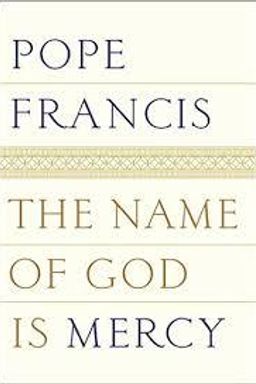
When was the last time you truly forgave someone—not with words, but with compassion that touched your heart? Pope Francis, in his profound and deeply human reflection The Name of God Is Mercy, asks every reader to look inward and see their need for mercy. He argues that mercy isn’t a distant theological concept reserved for the divine; it’s God's very identity and the most transformative power available to humanity. Mercy, Francis contends, changes everything—our relationship with God, our relationship with others, and even how we see our own wounds. To understand mercy, he insists, is to understand the core of Christianity itself.
The Church as a Field Hospital
Pope Francis often describes the Church as a “field hospital” after battle: a place that heals wounds before preaching rules. This image sets the tone for his vision. Instead of a Church that regulates and judges, Francis envisions one that bends toward suffering—resembling Christ himself, who forgave the adulteress, defended sinners, and taught compassion over condemnation. His words echo through stories and parables, like the one of the Pharisee and the tax collector, where genuine humility wins divine favor while pride closes the heart. For Francis, mercy is not weakness—it’s God's ultimate strength and invitation to healing.
Mercy’s Revolutionary Simplicity
Francis sees mercy as accessible to all: it begins when you admit your need for it. He repeats that God never tires of forgiving; we tire of asking for forgiveness. This paradox defines the entire book. You don’t need to be perfect or even fully repentant to begin transformation—just the desire to change can open grace’s door. He recalls the line from Bruce Marshall’s novel To Every Man a Penny, in which a sinner cannot repent but says, “I am sorry that I am not sorry.” That sliver of remorse, Francis says, is enough to awaken divine mercy. Even the smallest spark of longing for goodness activates God’s boundless compassion.
A Pope Who Calls Himself a Sinner
Throughout the book, Francis speaks with startling humility. He calls himself “a sinner who has been forgiven many times,” stressing that leadership in faith begins with awareness of one’s own fragility. He recounts his first experience of divine mercy at age seventeen, when a priest in Buenos Aires treated him not as a case but as a soul in need of love. That priest’s gentle acceptance changed his life and became the seed of his motto: miserando atque eligendo, or “having mercy and choosing.” For Francis, each act of mercy is both a healing embrace and a calling—it restores and redeems while drawing one deeper into God’s purpose.
Why Mercy Matters Now
Francis situates mercy not only in spiritual life but also as medicine for a wounded world. He observes that humanity today feels fractured—trapped by judgment, greed, and disillusionment. Many people, he notes, have lost the sense of sin and thus the sense of healing. Some believe they are irredeemable. Others simply deflect blame. In both cases, mercy becomes the lost art of looking at oneself truthfully and being embraced anyway. His call for the Holy Year of Mercy was born from this conviction: the world needs tenderness more than ever. Mercy is not mere sentiment—it’s the structure of hope, the bridge between despair and renewal.
A Journey Through Confession and Compassion
The book unfolds through conversations that explore mercy in action—through confession, forgiveness, compassion, and justice. Francis distinguishes mercy from indulgence: it heals rather than excuses, and it demands empathy but not naivety. He teaches that priests must be “shepherds, not scholars of the law,” extending God’s embrace instead of interrogation. He speaks about confession not as a dry ritual but as a “caress” from God. Mercy, for Francis, moves through physical gesture and presence: the priest putting his stole around the penitent’s shoulders, Jesus bending to touch the leper, or simply someone refusing to turn away from another’s suffering.
From Individual Healing to Global Renewal
Finally, Francis expands mercy beyond personal piety into social reconciliation. Mercy transforms justice, redeeming systems otherwise driven by punishment and revenge. He cites figures like Cottolengo, Saint John Paul II, and Mother Teresa as saints of mercy who brought compassion into social action. He warns about corruption—the opposite of mercy—a condition that numbs conscience and turns sin into habit. Against that backdrop, mercy reawakens humility. It teaches us to embrace, not discard, the suffering and marginalized. For Francis, “The name of God is mercy” means that every act of compassion echoes the divine. In a world obsessed with judgment, the book is a call to rediscover the radical tenderness that lies at the root of faith itself.