
Idea 1
The Psychology of Real Happiness
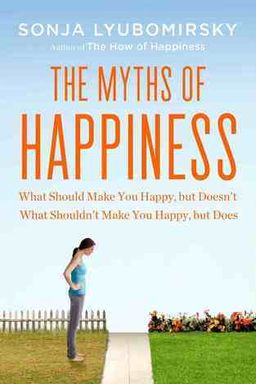
How can you make vital life choices—about marriage, money, work, or health—without being misled by emotion and cultural myth? In The Myths of Happiness, psychologist Sonja Lyubomirsky argues that much of our unhappiness stems not from events themselves but from false beliefs about how those events will feel. The promise “I’ll be happy when ___” and the warning “I can’t be happy when ___” drive our biggest decisions, yet both miss how our minds adapt. This book blends science, case studies, and practical exercises to show that happiness depends less on circumstances and more on mental habits of attention, interpretation, and action.
Two Core Myths and Why They Mislead
Lyubomirsky opens with the two pervasive myths: conditional optimism (“I’ll be happy when I marry, get promoted, or buy a house”) and conditional despair (“I can’t be happy when I’m divorced, single, or ill”). Each distorts reality because people overestimate both the intensity and duration of emotional reactions to major events. You picture bliss lasting forever after a raise or ruin after a breakup—but research by Dan Gilbert and Tim Wilson shows that adaptation and psychological defenses moderate those feelings quickly. As the book phrases it, “nothing in life is as important as you think it is while you are thinking about it.”
Hedonic Adaptation and the Immune System of the Mind
Central to this argument is hedonic adaptation—the mind’s tendency to return toward a baseline of happiness after gains and losses. Within weeks or months, novelty fades; the new job or the heartbreak both become familiar. The parallel mechanism, your “psychological immune system,” helps you reframe and recover from setbacks. Gilbert’s experiments reveal that people neglect this inner resilience in their forecasts. Understanding adaptation liberates you from the illusion that external change will secure lasting happiness. Instead, Lyubomirsky teaches you to design experiences—dynamic, effortful, and social—that slow adaptation and sustain joy.
The Prepared Mind: Think, Don't Blink
The antidote to these errors is what Lyubomirsky calls the “prepared mind.” When you face crossroads—career shifts, marriage doubts, financial decisions—pause and engage deliberate thought instead of impulsive reaction. Drawing on Daniel Kahneman’s dual-system theory, she contrasts fast, intuitive System 1 with slower, reflective System 2. She urges you to capture your gut response, then test it through evidence and counterfactual thinking (“What if I did the opposite?”). This approach preserves intuition’s insight but filters it through reason. Decisions that seem urgent often require time, perspective, and multiple viewpoints to mature.
Common Life Arenas of Misjudgment
Each subsequent section of the book explores myths across life domains. In marriage and relationships, the myth “I’ll be happy when I find someone new” or “I can’t be happy if I lose this” gives way to research on appreciation, novelty, and approach goals that can reignite existing bonds. At work, the myth of endless satisfaction after a promotion dissolves into studies showing quick adaptation and rising aspirations. Parenthood, aging, and even illness are reevaluated through the same lens—revealing that meaning and mental framing outweigh circumstances in sustaining well-being.
Science Meets Practice
Lyubomirsky’s approach is empirical yet actionable. Through controlled experiments and longitudinal data, she merges hedonic psychology with everyday tools: gratitude journaling, expressive writing, savoring, social support, and intentional reframing. She connects Barbara Fredrickson’s broaden-and-build theory (small positives compound into resilience) to practical advice—schedule variety, give to others, and design dynamic experiences. Her tone is optimistic but realistic; she reminds readers that biology, personality, and circumstance set boundaries, yet within those boundaries habits of thought create vast freedom.
The Core Promise
Across chapters, one principle repeats: happiness depends on what you attend to, how you interpret what happens, and whether you act with awareness instead of illusion. You cannot control every external event, but you can direct attention, cultivate gratitude, and create conditions in which joy renews itself. By dismantling myths of happiness, learning how adaptation works, and practicing conscious decision-making, you develop not a permanent bliss but an agile, resilient mind—one that thrives through change rather than fears it.