
Idea 1
Finding Meaning in an Absurd World
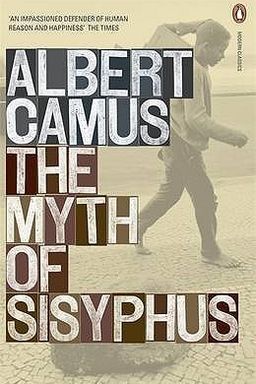
Can life be worth living in a world stripped of meaning, faith, and eternal truths? This is the haunting question Albert Camus poses in The Myth of Sisyphus. Writing amidst the despair of war-torn Europe, Camus asks whether, in the absence of God or ultimate purpose, suicide is the only rational response. His answer—not only a firm refusal but an invitation to live fully within the absurd—remains one of the twentieth century’s most enduring humanist statements.
Camus defines the absurd as the tension between our longing for order, meaning, and clarity, and the universe’s silent indifference to those desires. He calls this confrontation a divorce—a break between the mind that craves understanding and the world that offers none. The absurd is not within us or the world but in the meeting point of the two.
The Absurd Condition: Between Desire and Silence
Camus describes the human condition as one of constant search and constant disappointment. We want coherence, yet all we find are fragments. Science describes atoms; religion offers myths; philosophy builds systems—but none truly makes sense of existence. We are left confronting the limits of reason. Camus writes, “The absurd is born of this confrontation between the human need and the unreasonable silence of the world.”
Faced with this, two temptations emerge: suicide and hope. Suicide ends the search; hope cheats it. Philosophers like Kierkegaard and Dostoevsky, Camus argues, leap into faith when confronted with despair. But that leap, he says, is a kind of philosophical suicide—an escape from lucidity. Camus insists we must resist both impulses: do not kill yourself, and do not lie to yourself with comforting illusions.
Revolt, Freedom, and Passion
If existence is absurd, what follows? Camus’s answer is astonishing in its defiance: continue. To live without appeal and without hope—this is to live absurdly. The absurd person does not seek meaning beyond the world. Instead, they accept its limits and embrace life itself. Camus calls this attitude revolt: a constant confrontation with the absurd, a refusal to give up thinking or to seek false comfort.
“There is no fate that cannot be surmounted by scorn.”
—Albert Camus, The Myth of Sisyphus
This revolt gives rise to a peculiar form of freedom. If nothing has ultimate meaning, then everything is permitted—not in the sense of moral chaos, but in the sense that you are free to create your own values. You no longer live in the shadow of eternity but in the immediacy of the moment. Camus’s “absurd man” chooses to live passionately, expanding experience rather than seeking immortality.
Sisyphus as Modern Hero
Camus’s mythological exemplar, Sisyphus, embodies the absurd condition. Condemned by the gods to forever push a boulder up a mountain only to watch it roll back down, Sisyphus represents humankind’s endless labor. Yet Camus imagines him smiling. In full awareness of his futile task, Sisyphus owns his fate. “The struggle itself,” Camus writes, “is enough to fill a man’s heart.” His joy, though tragic, lies in that clear-eyed acceptance.
Through Sisyphus, Camus dramatizes his central message: even in a universe without meaning, life can be lived meaningfully. To be human is not to find answers but to continue asking. The moment Sisyphus descends the mountain is the moment of consciousness, and consciousness is victory. To imagine him happy is an act of rebellion against despair itself.
Why Camus Still Matters
Camus’s ideas remain urgent because modern life—filled with mechanized routines, hollow ideologies, and spiritual crises—continually invites the question he began with: is life worth living? His answer, grounded neither in theology nor in nihilism, refuses simplifications. Rather than offering salvation, he offers lucidity. Happiness, he tells us, is found not in escaping the absurd but in living bravely within it. His call—“We must imagine Sisyphus happy”—is ultimately a call to courage, freedom, and creative endurance.
Across the essays in this book—from the philosophical meditations of “An Absurd Reasoning” to the lyrical reflections of “Summer in Algiers” and “Return to Tipasa”—Camus constructs a unified vision: that to be human is to live without final answers, yet to live joyfully all the same. The absurd, when embraced, becomes not despair but liberation. And in that liberation, he finds the measure of human dignity.