
Idea 1
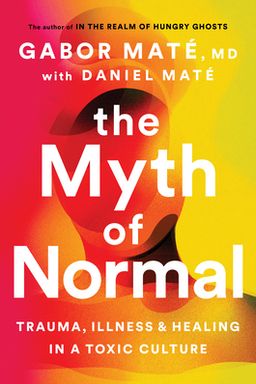
The Myth of Normal: Culture, Trauma, and Health
Why are so many people suffering from chronic illness, stress, and disconnection, even in affluent societies? Gabor Maté’s The Myth of Normal argues that what many cultures call 'normal' is, in fact, profoundly unhealthy. Modern society—especially its capitalist, competitive, and isolating structures—creates conditions of chronic stress that our biology and psyche were never designed to endure. Maté’s central claim is that disease, mental illness, and addiction are not random misfortunes but inevitable responses to a toxic social environment that prizes productivity and control over authenticity and connection.
Across the book, Maté and co-writer Daniel Maté weave personal narrative, clinical observation, and interdisciplinary science to unpack how culture, trauma, and biology intertwine. They explore how stress and emotional suppression damage the body (psychoneuroimmunology), how children's developmental needs are neglected, and how cultural systems amplify inequality, alienation, and shame. The book culminates with strategies for both personal and collective healing, urging a trauma-informed society grounded in compassion, authenticity, and social justice.
Challenging the Cultural Illusion
Maté starts by challenging the belief that our social 'normal' is healthy. Societies steeped in consumerism, workaholism, and disconnection normalize anxiety, addiction, and burnout. In the U.S., for instance, over 60% of adults live with at least one chronic illness and nearly 70% take prescription drugs. Yet this mass suffering has been medicalized rather than contextualized: medicine tends to treat symptoms biologically, ignoring the psychosocial roots of disease. Maté’s metaphor of the toxic culture as a 'lab broth' illustrates that if the environment itself is contaminated, disease becomes the expected outcome, not the exception.
He critiques the reductionist lens of modern medicine that separates mind from body and self from environment. While he recognizes medicine’s life-saving power, he argues that its ideological attachment to mechanistic thinking blinds practitioners to mind-body unity and social causation. The result: patients are often treated as malfunctioning machines rather than wounded individuals embedded in unhealthy social systems.
Trauma as a Core Mechanism
For Maté, trauma is the key to understanding this crisis. It is not limited to catastrophic events but refers to what happens inside you when you lose connection to your authentic self in response to pain or neglect. A child who learns to suppress emotion to preserve attachment or safety grows into an adult constrained by those same defenses. Trauma, therefore, is both adaptive and limiting—a survival mechanism that freezes flexibility. Culturally, this dynamic repeats at scale: societies that privilege performance over feeling trap citizens in collective dissociation. Trauma hides in plain sight as normal behavior: numbing through work, perfectionism, addictions, or emotional detachment.
Scientific findings like the ACE (Adverse Childhood Experiences) study show how early trauma predicts lifelong health outcomes—autoimmune diseases, addictions, heart conditions, and depression. Trauma thus bridges psychology and biology: it changes how genes express, how the brain perceives threat, and how the immune system functions.
The Bodymind Connection
Central to Maté’s argument is that mind and body are inseparable. Emotion directly modulates physiology through hormonal, nervous, and immunological pathways. Chronic suppression of emotion—especially anger and grief—creates sustained stress responses that over time undermine immune regulation. He draws on psychoneuroimmunology research by Candace Pert and others to show that feelings are biochemical events distributed across the organism. Emotional repression, he notes, correlates with cancer and autoimmune disorders, while social connection and authenticity protect cellular health.
The implication is revolutionary: health depends not just on medical care but on the capacity to feel safely, speak authentically, and live connectedly. Every distorted belief or forced self-suppression registers biologically. In this sense, the 'myth of normal' is the false conviction that one can thrive while disconnected from authenticity or belonging.
Toward Healing and Systemic Renewal
Maté’s remedy begins with compassionate awareness—toward oneself, others, and the systems that shape suffering. He helps readers and clinicians identify trauma’s hiding places and re-examine their assumptions about disease, personality, and resilience. Healing, he emphasizes, is not the absence of pain but the restoration of wholeness—the ability to live truthfully in one’s own body and relationships.
Yet Maté expands healing beyond the individual. He envisions a trauma-conscious society: one that aligns education, medicine, law, and economics with human developmental needs. Such a shift would treat health as a collective outcome, not a private achievement. Ultimately, The Myth of Normal calls for an integration of science, compassion, and authenticity that redefines what it means to be well—personally and culturally.
Core assertion
“Chronic illness is to a large extent a function of the way things are, not a glitch.” Maté’s message: normality itself may be the disease, and healing begins with seeing through the myth.