
Idea 1
Rethinking American Prosperity
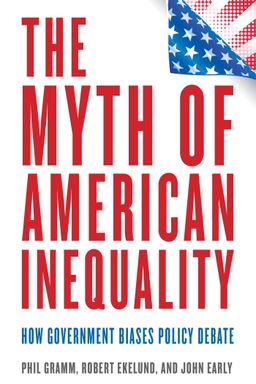
How can you know whether America is truly prospering? In this book, the authors argue that official statistics—especially those produced by the U.S. Census—systematically understate national well-being and overstate inequality. They show that for decades, statistical conventions have excluded huge portions of real household resources, mismeasured inflation, and ignored how taxes and transfers redistribute income. The result is a distorted picture of stagnation and division, when the underlying reality is much more dynamic and broadly prosperous.
What official data miss
The Census Bureau’s concept of “money income,” developed in 1947, originally made sense when nearly all compensation came in cash. But as government transfers and employer benefits expanded—through Social Security, Medicare, Medicaid, SNAP, refundable tax credits, and noncash benefits—this definition grew obsolete. These major resources to households are still excluded from official income, while taxes, which reduce disposable income, are ignored. When you correctly include all transfers and subtract taxes, inequality measures shift dramatically: the top 20 percent’s income advantage over the bottom 20 percent falls from 16.7:1 to about 4:1 by 2017.
The difference between income produced and income consumed
The book distinguishes between income earned by production and the resources a household actually consumes. Many Americans in the lower quintiles report modest earned income but receive large transfers—averaging tens of thousands per household—that substantially raise their real living standards. When measured by consumption, the bottom fifth of Americans spend around $26,000 annually, compared with only $13,000 in earned income. After accounting for taxes and transfers, their standard of living approximates that of a near-middle-class household.
Correcting inflation bias
Inflation measurement compounds the misunderstanding. Official CPI-U indexes overstate inflation because they ignore substitution (consumers switching to cheaper goods) and new-product gains (smartphones, medical advances, air conditioning). Adjusting for these biases using the Chained CPI or Personal Consumption Expenditures Price Index shows that real incomes and purchasing power have grown substantially since 1967—far more than the myth of “wage stagnation” suggests. With improved price measures, the share of 2017 households with real incomes equivalent to the 1967 top quintile climbs from 66% to over 90%.
A truer picture of poverty and inequality
When you incorporate those corrections, the narrative of unrelenting poverty dissolves. Official Census figures reported 12.3% of Americans poor in 2017, but when all transfers are counted, poverty falls to 2.5%. Adding more accurate inflation adjustment reduces this to roughly 1%. In material terms—housing quality, food security, and goods ownership—the poor live better today than the middle class of earlier generations. Independent studies by Bruce Meyer and James Sullivan confirm similar results using consumption data.
Why the mismeasurement matters
Because policy debates depend on statistics, these measurement choices shape public perception. Statements like “middle-class stagnation,” “inequality crisis,” or “poverty hasn’t budged since the 1960s” all stem from incomplete accounting. The book argues you can’t design effective policy with inaccurate diagnostics. Correct the accounting, and the U.S. narrative changes—from decline and despair to progress and opportunity, tempered by real but targeted challenges in education, work participation, and opportunity barriers.
The core claim
The book’s overarching message is empirical, not ideological: measure well-being the way households experience it—through disposable income, consumption, and inflation-adjusted living standards—and you see broad postwar improvement. Inequality and poverty remain concerns, but they look fundamentally different once all resources are counted. The implication is profound: rather than expanding transfer spending blindly, reform efforts should strengthen education, work incentives, and mobility, ensuring people can rise through capability rather than dependency.
Core insight
The United States is far more equal and prosperous than official statistics suggest. When you measure real lived resources—transfers, after-tax income, consumption, and inflation-corrected progress—the myth of widespread decline gives way to evidence of continuing, though uneven, advance.