
Idea 1
The Strange and Fascinating History of Medicine’s Bizarre Past
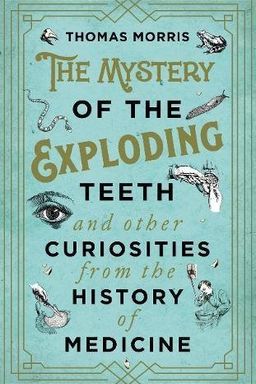
Have you ever wondered how people survived before antibiotics, anesthesia, and modern surgical techniques? In The Mystery of the Exploding Teeth and Other Curiosities from the History of Medicine, Thomas Morris invites you to marvel — and sometimes cringe — at the extraordinary misadventures of doctors and patients from centuries past. This is not a conventional history of progress; rather, it's a collection of jaw-dropping, hilarious, and occasionally horrifying case studies that capture humanity's endless experimentation with health, healing, and the body.
Morris, a former BBC producer turned historical researcher, explores medicine’s less glamorous moments through hundreds of reports from old journals, hospitals, and letters. Within these stories you’ll meet people who swallowed knives for fun, surgeons who operated on wide-awake patients without anesthesia, and physicians who tried to revive the dead with tobacco smoke enemas. By weaving humor, historical context, and empathy, Morris showcases both the folly and the ingenuity of early medicine.
Medicine as Experiment—and Entertainment
Morris argues that pre-modern medicine was as much an act of theater as it was science. Physicians of the seventeenth through nineteenth centuries mixed equal parts guesswork and bravado, confident in their leeches, syringes, and bloodletting bowls. They worked within the framework of Galen’s humoral theory—that health depended on a balance between blood, phlegm, black bile, and yellow bile—and interpreted disease as an imbalance to be drained, purged, or smoked away. Before germ theory, many believed illness was caused by miasmas (bad air) or divine punishment. Yet amid the tragedy and absurdity, Morris uncovers startling breakthroughs made by accident or desperation.
These doctors lived in an age when surgery meant agony and experimentation meant courage—or madness. Each case reveals larger truths about what it meant to be both healer and human when the lines between faith, science, and superstition blurred. The result is an anthology that feels both grotesque and humbling: the story of how medicine stumbled, bled, and smoked its way toward modern understanding.
A Cabaret of Cases: From Forks to Fireworks
Morris organizes his book thematically rather than chronologically, leading readers through seven categories of medical curiosity: Unfortunate Predicaments, Mysterious Illnesses, Dubious Remedies, Horrifying Operations, Remarkable Recoveries, Tall Tales, and Hidden Dangers. This structure mimics the variety found in historical medical journals, where case reports veered from tragedy to miracle to absurdity in a single issue. Each chapter reads like a cabinet of curiosities, balancing humor with horror to show not just what doctors believed—but what they were willing to try.
In “Unfortunate Predicaments,” we meet patients like the man who got his penis trapped in a glass bottle, the boy who swallowed knives, and another whose intestines literally dropped into his scrotum after a cart accident. “Dubious Remedies” explores treatments that defy belief: mercury cigarettes, port-wine enemas, and the infamous “pigeon’s rump cure,” where a child’s convulsions were treated by placing a dove’s anus against its body. “Horrifying Operations” pulls back the curtain on pre-anesthetic surgery, whether it’s reconstructing a chest wall by sawing through ribs or French surgeons extracting enormous tumors while their patients screamed—and sometimes chatted—throughout.
By contrast, in “Remarkable Recoveries,” human resilience takes center stage. We see sailors survive being impaled by masts, soldiers with musket balls lodged in their hearts, and farmers missing half their brains who live to tell the tale. “Tall Tales” reminds us that even in the early scientific age, myth and medicine danced together: patients who spent seven weeks under water supposedly rose again, or women who caught fire through spontaneous human combustion. Finally, “Hidden Dangers” turns the focus on medicine’s obsession with risk—from cycling-induced heart disease to children’s hats that allegedly caused idiocy.
Why These Stories Matter Today
Behind the laughter and shock lies a profound recognition: our modern medical confidence rests on centuries of trial and error, compassion and cruelty. Every blundered amputation and melted tooth filling represents a stepping stone on the path toward evidence-based medicine. By resurrecting these long-forgotten “case histories,” Morris celebrates the curiosity that drives scientific progress while cautioning against arrogance. After all, today’s medical certainties may look just as absurd to future generations.
Reading these tales forces you to question how far we’ve truly come and how fragile the border is between genuine innovation and folly. Much like Mary Roach’s Stiff or Atul Gawande’s Complications, Morris humanizes the bizarre, showing that the same impulses—to experiment, to heal, to understand—link us to our ancestors wielding knives in candlelit operating rooms. In exposing the raw and ridiculous, he rekindles awe for how humans, armed only with curiosity and courage, learned to conquer their own frailty.
Ultimately, The Mystery of the Exploding Teeth asks you to laugh at medicine’s madness—but also to respect its madness as the birthplace of progress. From exploding molars to self-surgery in the Antarctic, Morris transforms grotesque misadventures into testaments of resilience and discovery. You emerge entertained, humbled, and strangely grateful that your next doctor’s tool is a stethoscope, not a toasting fork.