
Idea 1
Transforming Self-Sabotage Into Self-Mastery
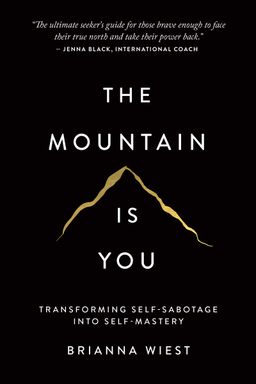
Have you ever wondered why you keep standing in your own way—why you repeat the same patterns that block your happiness, even when you know better? In The Mountain Is You, Brianna Wiest invites you to recognize that the obstacle you keep facing isn’t outside of you—it is you. The mountain is a metaphor for the inner challenges, fears, and self-defeating habits that hold you back from becoming the person you’re meant to be. Wiest argues that every form of self-sabotage is simply a misguided attempt to keep yourself safe, a coping mechanism built on unhealed emotions and outdated beliefs. To transform your life, you must stop fighting the mountain and learn to climb it.
At its core, Wiest’s message is one of radical responsibility. We can only master life when we master ourselves. The process she outlines mirrors a psychological hero’s journey: first confronting your unconscious fears, then learning emotional intelligence, releasing the past, rebuilding new mental and emotional foundations, and ultimately transforming pain into purpose. Like nature’s cycles of growth through fire and renewal, she explains that the human spirit expands through breakdowns that precede breakthroughs.
Self-Sabotage as a Hidden Form of Self-Protection
According to Wiest, self-sabotage isn’t malicious. It’s an unconscious bargain between two conflicting parts of you: one that wants to grow and another that wants to stay safe. Each time you procrastinate, settle, or resist change, you’re trying to avoid an emotion you believe would be unbearable—fear, rejection, shame, or loss. But paradoxically, this avoidance keeps you stuck in exactly the discomfort you’re trying to escape. The first task, Wiest notes, is awareness. You must ask yourself, What need am I secretly meeting by staying stuck? This opens the doorway to healing rather than shame.
(In a similar vein, psychologist Carl Jung described neuroses as a substitute for legitimate suffering—a concept Wiest revisits to show that repressed pain becomes self-defeat when left unaddressed.)
The Mountain as a Metaphor for Inner Growth
Wiest’s imagery is rooted in nature: forest fires that renew ecosystems, volcanoes that create fertile ground, stars that collapse into supernovas. Growth, she writes, always involves destruction of what no longer serves us. The mountain symbolizes the tension between your potential and your fear. Climbing it means undertaking the inward journey of healing, re-parenting your inner child, and shedding old identities. You cannot bypass this process—you must feel what you have avoided, learn to trust yourself again, and rebuild a new foundation based on conscious choice rather than unconscious reaction.
Why Transformation Feels Like Breaking Down
For most people, change begins not with inspiration but despair. Rock bottom, Wiest argues, is not a punishment but a portal. When avoiding your emotions becomes more painful than facing them, the mind forces you to wake up. Anxiety, depression, and resistance are not random malfunctions; they are signs that you’ve outgrown an old way of being. Healing requires honesty about where you really are—and the willingness to stop blaming others. She calls this the moment when you scream, “I’m not going to live like this anymore.” From that raw awareness, transformation begins.
Change, however, is rarely an epiphany. It is a series of microshifts: tiny daily decisions to choose differently, to feel rather than avoid, to act even when afraid. Like Stephen Covey’s principle-based living or James Clear’s Atomic Habits, Wiest emphasizes consistency over intensity. Your mountain is climbed one honest step at a time.
From Self-Sabotage to Self-Mastery
Ultimately, self-mastery isn’t about controlling life—it’s about mastering your mind, emotions, and responses. Wiest draws upon Buddhist non-attachment, cognitive psychology, and spiritual philosophy to show that inner peace comes not from changing the external world but from regulating how you relate to it. When you stop reacting from fear and start responding with awareness, you begin creating your life intentionally. She describes this as moving from suppression to control—recognizing every emotion but choosing your response consciously.
In later chapters, Wiest provides concrete pathways: learning emotional intelligence (understanding what your emotions are communicating), releasing old trauma through embodiment practices, building new mental habits, and reconnecting to your “inner peace”—that invincible calm beneath life’s chaos. When practiced consistently, these become the foundation of mental strength and genuine self-trust.
Why This Matters
In a world obsessed with surface-level happiness and positive thinking, The Mountain Is You is a call to face the shadow self—the unconscious part of you shaping your choices. Wiest suggests that true freedom comes not from perfection but integration. Every fear, every disappointment, even every mistake can be composted into wisdom. As she writes, the mountain isn’t here to hurt you but to show you your strength. By climbing it—by confronting yourself—you don’t just change your circumstances. You change who you are.
“One day, the mountain that was in front of you will be so far behind you, it will barely be visible in the distance. But who you become in learning to climb it—that will stay with you forever.” — Brianna Wiest