
Idea 1
The Journey That Created Che: From Road Trip to Revolution
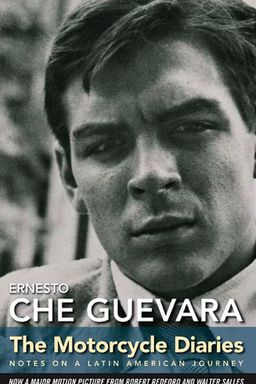
How does a youthful road trip transform an ordinary medical student into one of the most recognizable revolutionaries of the twentieth century? In The Motorcycle Diaries, Ernesto Che Guevara traces that metamorphosis. At twenty-three, alongside his friend Alberto Granado, he sets out from Buenos Aires on a rundown motorcycle with the dream of crossing South America. What begins as an escapade fueled by curiosity and wanderlust evolves into a profound moral awakening—a recognition of a continent’s suffering and a realization that empathy must be translated into action.
Guevara doesn’t simply record landscapes and people; he documents the gradual tearing away of youthful illusions. The journey through Argentina, Chile, Peru, Colombia, and Venezuela opens his eyes to poverty, injustice, and the lingering scars of colonial exploitation. This book captures not only scenes from dusty roads and rain-soaked villages but also the interior evolution of a man confronting the contradictions of his society and of himself.
Discovery, Disillusionment, and Self-Redefinition
In Argentina, Guevara still writes with the exuberance of youth: he revels in poetry, friendship, and romance. His letters home are lighthearted, even playful. But the further north he travels, the more the tone changes. In Chile, witnessing the illness of a poor woman in Valparaíso, he writes one of his first truly political reflections—condemning a social system that forces workers to die without dignity or care. Later, in the Chilean mines of Chuquicamata, he meets exploited workers whose stories embody the continent’s suffering. From these encounters emerges his understanding that suffering is not incidental but systemic—rooted in economic dependence and foreign domination.
In Peru, the journey reaches its emotional climax. Confronting the remnants of the Incan world—the temples of Cuzco, Machu Picchu, and the sacred Lake Titicaca—Guevara feels the grandeur of civilizations destroyed by greed. At the leper colony of San Pablo in the Amazon basin, he and Granado live among people shunned by society. For the first time, Guevara experiences complete solidarity with the marginalized. When he gives a toast on his twenty-fourth birthday to a united Latin America, it is clear the transformation is complete: a youthful explorer has become a social idealist.
Why This Journey Matters
The diary is more than autobiography—it’s an argument for empathy as revolution’s starting point. Guevara shows that intellectual ideals mean little until they intersect with human suffering. His medical training initially makes him want to heal bodies, but travel teaches him that the continent’s wound is moral and structural. He learns that true healing requires a collective act—a revolution against injustice. (Note: In contemporary philosophy, thinkers such as Paulo Freire later echoed this idea, arguing that awareness or “conscientização” precedes liberation.)
The narrative also questions privilege. Guevara’s encounters with indigenous peoples—Aymaras, Quechuas, and mestizos—reveal what he calls the “defeated race.” He realizes how Latin America’s hierarchies perpetuate colonial patterns: the poor see themselves as inferior, and the rich imitate Europe. In experiencing these contradictions, Guevara finds a new identity—not Argentine, not merely Latin American, but human, allied with the oppressed everywhere.
A Vision That Echoes Beyond the Road
Nearly seven decades later, The Motorcycle Diaries remains relevant as a meditation on the ethics of awareness. While modern travelers chase adventure, Guevara reminds you that journeying is not about consumption but transformation. Each mile reveals not only beauty but complicity: the recognition that comfort is built on injustice and that love of humanity demands sacrifice. That belief, first born on a dilapidated motorcycle named La Poderosa, became the moral compass guiding Che through the Cuban Revolution and his later struggles in Congo and Bolivia. His daughter Aleida Guevara, in her foreword, calls these notes 'a love letter to Latin America'—a continent still waiting for the justice he envisioned.
Ultimately, The Motorcycle Diaries is a story about waking up—to other people, to history, and to the possibility that your own life can become an instrument of change. Guevara’s diary invites you to ask: when faced with inequality, will you remain a tourist of suffering—or will you, like him, allow empathy to remake your path?