
Idea 1
War, Sport, and the Measure of Loss
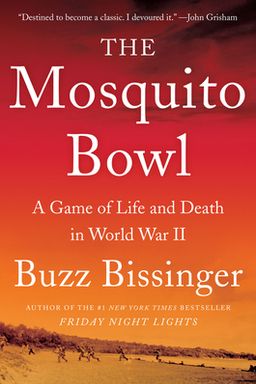
How can a single football game illuminate the moral and human costs of war? In The Mosquito Bowl: A Game of Life and Death in World War II, Buzz Bissinger transforms two hours of play on Guadalcanal into a lens for viewing the intersection of American identity, athletic idealism, and catastrophic warfare. He argues that the Mosquito Bowl—played on Christmas Eve 1944 by Marines of the 4th and 29th Regiments—was both a fleeting reprieve and a prophetic microcosm of the generation’s sacrifice. For two hours, men who would soon land on Okinawa reclaimed their youth; within months, more than half would be dead or wounded. The game becomes an allegory for a nation caught between triumphal stories of courage and the unspoken arithmetic of loss.
From College Glory to Combat Reality
Bissinger builds his narrative on the biographies of collegiate football stars whose fame once lit the sports pages. Dave Schreiner of Wisconsin, Tony Butkovich of Purdue, John McLaughry of Brown, and George Murphy of Notre Dame carried with them the virtues learned from the gridiron—discipline, teamwork, stoicism—that the military glorified as perfect traits for leadership. The Marines, through programs like the Navy’s V-12 officer training, deliberately recruited such men. Football, to the institution, was proof of character as much as athleticism. Yet Bissinger reveals the gulf between this mythology and its battlefield translation: the same traits that bred confidence now placed these men in situations where courage meant walking into machine-gun crossfire.
Doctrine, Bureaucracy, and Segregation
Behind individual heroism lies a portrait of bureaucratic confusion and bigotry. Training systems were inconsistent, deferment policies were arbitrary, and the services fought over doctrine more vehemently than they sometimes fought the enemy. John McLaughry’s washout from the Army Air Corps symbolizes administrative waste and personal humiliation redeemed only through his later Marine service. Meanwhile, his stint at Montford Point exposes another face of America’s war—segregated facilities, inadequate resources, and Black Marines forced to fight for the right to fight. By juxtaposing McLaughry’s privilege with the endurance of Black recruits, Bissinger turns the book into a study of how national ideals of equality fractured under pressure.
The War’s Landscape: From Tarawa to Okinawa
The narrative expands from the personal to the strategic. The Marines’ amphibious doctrine, born from the foresight of figures like Earl Ellis and tested at Tarawa, evolves through tragedy: tides misread, landing craft stranded, LVTs too few, and overconfidence unmasked by coral reefs. Those lessons lead to refinements that culminate in Okinawa, the largest amphibious operation of the Pacific war. But as Bissinger shows, logistical triumph cannot mask human catastrophe. In caves, sugar-loaf ridges, and kamikaze seas, theoretical progress met physical annihilation. The same meticulous planning that produced victorious landings could not shield men from the randomness of shrapnel or the collapse of command.
Private Wars: Letters, Love, and Memory
Intercut with official battles are the intimate wars fought in letters and living rooms. Schreiner writes tenderly to his fiancée Odette Hendrickson, sending promises of roses and postwar farming dreams. His mother’s 'Sunday Sheet' anchors him to small-town Wisconsin ordinary life. Tony Butkovich exchanges letters with a nine-year-old boy from Indiana. These correspondences keep humanity alive even as death closes in. When letters later return stamped 'Undeliverable,' they become symbols of a nation’s grief as much as personal heartbreak. (Comparable to With the Old Breed or Unbroken, Bissinger’s voice keeps the focus on the civilians who wait.)
Okinawa, Aftermath, and the Meaning of Waste
The Mosquito Bowl players’ fate unfurls amid Okinawa’s infernal terrain: Sugar Loaf, Horseshoe, and Half Moon ridges turn into killing grounds; kamikaze waves burn ships at sea; civilians die by the tens of thousands. Leadership disputes between General Buckner and naval commanders reveal how pride slowed operations and magnified suffering. When Buckner dies within sight of victory, the moment epitomizes leadership’s paradox—presence as both virtue and fatal flaw. Ultimately, Bissinger gathers the names, grave numbers, and letters of fallen players, returning to his thesis: courage and preparation cannot redeem the moral arithmetic of slaughter. By the time families receive dog tags or telegraphed regrets, the grand strategies of history have collapsed into the personal task of mourning. What endures, the book suggests, is not the illusion of heroism but the painful dignity of remembering waste—and insisting that such waste be seen, named, and mourned.
The Mosquito Bowl, Bissinger shows, is not just a forgotten football game but a parable of America itself—a nation that unites around competition and optimism, even as its best sons vanish into the undertow of history.