
Idea 1
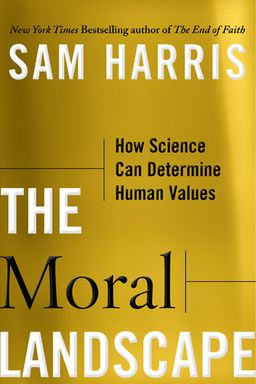
The Moral Landscape: Science as a Guide to Human Flourishing
What if moral truth could be discovered the way you discover physical truth — by observation, reasoning, and evidence? In The Moral Landscape, Sam Harris proposes that questions of right and wrong are questions about the well-being of conscious creatures. Morality, he argues, isn’t a mysterious realm beyond science but a landscape of possible human experiences, with real peaks and valleys — flourishing and suffering — that can be mapped and measured. Understanding this landscape lets you move from abstract philosophy to practical moral science.
From ‘Is’ and ‘Ought’ to Facts and Well-being
Philosophers since David Hume have warned that you cannot derive an ought from an is — that facts alone can’t tell you what you should value. G. E. Moore added that defining "good" in natural terms leads to an infinite regress of open questions. Harris agrees that confusion exists but argues the supposed divide rests on a false picture. If you accept that all values relate to the experience of conscious beings, moral truths become factual claims about what increases or decreases well-being. The notion of “good” simply refers to states of flourishing that minds can recognize. When you clarify your goals — to reduce suffering and enhance thriving — science helps show how to get there.
Consciousness as the Anchor of Value
Every moral question traces back to consciousness. If something cannot experience pleasure, pain, or meaning, it falls outside the moral landscape. Harris asks you to imagine a box containing an entity with no awareness — it becomes clear there is nothing to value inside. This focus yields practical clarity: questions of social justice, law, or personal ethics always reduce to how they affect conscious experience. From the trauma of neglected children to the peace of creative engagement, these experiences are measurable in brain and behavior.
A Map with Multiple Peaks, Not Moral Relativism
The “moral landscape” allows multiple routes to flourishing. Different cultures may find distinct peaks — Scandinavia’s secular welfare states, or small cooperative communities — yet not all valleys are equal. Chronic warfare, discrimination, or abuse produce measurable suffering. Harris uses examples like Albania’s blood-feud tradition and U.S. corporal punishment to show that cultural practices can be evaluated empirically by their outcomes, not shielded by relativism. Just as many diets can be healthy while others cause disease, moral pluralism fits within objective moral science.
The Bridge Between Mind and Policy
Science doesn’t replace moral inquiry; it gives it traction. You can track how education policies, poverty reduction, or equal-rights laws affect health, trust, and happiness. Neuroscience shows that empathy, attachment, and cooperation depend on brain circuits shaped by early experience — proof that social design literally sculpts human well-being. Harris invites you to treat morality as you treat medicine: as a domain where clear goals (reduce suffering, promote flourishing) align with an open-ended project of discovery.
Human Progress as Evidence
For Harris, moral progress — the decline of slavery, torture, and violent intolerance — is evidence that objective improvement exists. The shift from public lynchings to human-rights norms isn’t a change in taste; it reflects societies learning how to raise more people onto higher peaks of well-being. Recognizing this allows moral confidence without moral arrogance: disagreement doesn’t mean morality is subjective; it shows that not everyone has equal access to relevant facts or reasoning capacities.
The Central Aim
The heart of The Moral Landscape is simple but radical: moral truth exists wherever the well-being of conscious creatures can be improved or diminished. The challenge is empirical, not theological — understanding minds, societies, and conditions that move people toward genuine flourishing. Once you accept consciousness as moral bedrock, you can evaluate every tradition, policy, or belief system by one overriding question: does it increase or decrease the well-being of conscious beings? That shift transforms ethics into a cumulative, evidence-driven project that belongs to everyone.