
Idea 1
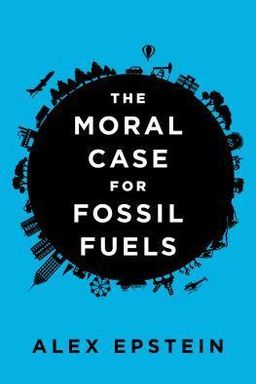
The Moral Case for Fossil Fuels
What if everything you’ve been told about fossil fuels—their danger, their pollution, their threat to the planet—is fundamentally wrong? In The Moral Case for Fossil Fuels, Alex Epstein issues a provocative challenge to conventional wisdom. He argues that instead of being a destructive addiction, our use of coal, oil, and natural gas has been the foundation of human progress—and that dramatically reducing fossil fuel consumption would lead to mass suffering and death. According to Epstein, cheap, plentiful, reliable energy from fossil fuels has empowered humanity to overcome nature’s dangers, extend life expectancy, and create healthier, wealthier societies. His question for readers is simple: if energy is the ability to do work and improve life, shouldn’t we want more of it, not less?
Epstein contends that humanity’s moral standard for environmental decisions should be what promotes human flourishing, not what minimizes impact on nature. He introduces three key effects of fossil fuels to prove this point: the greenhouse effect, the fertilizer effect, and the energy effect. The greenhouse effect, he argues, is real but not catastrophic; the fertilizer effect shows how CO2 enhances plant growth; and the energy effect demonstrates how fossil fuels make climates safer and more livable through technology and development. These are not abstract theory for Epstein—they’re measurable realities backed by data showing a decline in climate-related deaths by 98% over the past century and skyrocketing global life expectancy.
Why Energy Is Central to Human Flourishing
Epstein begins by redefining energy as “machine calories”—the fuel that powers civilization much like food powers our bodies. Just as human calories enable motion and thought, “machine calories” enable refrigerators, cars, hospitals, and clean water systems. Without them, we revert to a world of scarcity and suffering. When he recounts a story from The Gambia about a baby who died because the hospital lacked electricity for an ultrasound and incubator, it’s a visceral reminder that access to energy is not a luxury; it’s a life-or-death necessity. You begin to see energy not as a technical topic but as the foundation of comfort, safety, and opportunity.
The Misguided War on Energy
For over thirty years, Epstein points out, experts predicted catastrophe: resource depletion, rampant pollution, and runaway global warming. Yet history tells a different story. As fossil fuel use nearly doubled since 1980, life expectancy rose, air and water quality improved, food production expanded, and climate-related deaths plummeted. To Epstein, this isn’t paradoxical—it’s proof that fossil fuels empower us to manage nature’s hazards rather than be victims of them. He contrasts these results with failed predictions from figures like Paul Ehrlich and John Holdren, who forecasted famine and collapse. (“By the year 2000,” Ehrlich claimed, “England will not exist.” It’s still very much there.)
A Human Standard of Value
Underlying Epstein’s entire argument is the philosophical question: by what standard do we decide right and wrong? Environmentalists often operate on a “nonimpact” standard—the idea that the moral ideal is to minimize human effect on nature. Epstein flips this. He insists that our standard must be human flourishing. We should thank the fossil fuel industry for building a world of comfort and longevity, not blame it for empowering our survival. He quotes Ayn Rand’s Atlas Shrugged to capture this idea: civilization is not man’s war against nature—it’s his victory over it.
What This Book Ultimately Offers
Across nine chapters, Epstein develops a logical case for why fossil fuels are not only sustainable but morally necessary for human progress. He explores the superiority of fossil fuel energy compared to alternatives like solar and wind (which he calls unreliable parasites), the role of technology in transforming dangerous climates into livable ones, and how development powered by fossil fuels has eradicated disease, reduced pollution, and increased safety. He ends with a rallying call: to reject the Green movement’s moral prejudice against human impact and replace it with a philosophy of Industrial Progress—the belief that transforming nature through energy and technology is virtuous, not evil. If humanity’s success is measured by the quality of life we create, then the moral act, Epstein concludes, is to produce more energy for everyone.
“We don’t take a safe climate and make it dangerous,” Epstein writes. “We take a dangerous climate and make it safe. High-energy civilization, not a stable climate, is the driver of climate livability.”
This overarching idea transforms the entire conversation about the environment. Fossil fuels aren’t humanity’s curse—they’re our greatest tool for survival and progress. Instead of asking how we can have less impact, Epstein wants you to ask: How can we use energy to create a better world for human life?