
Idea 1
Uncovering the Hidden Origins of Monopoly
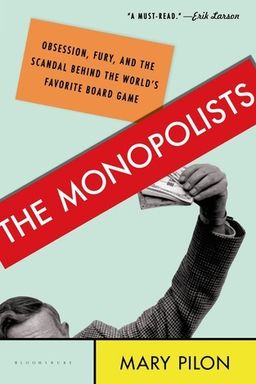
What if one of the world’s most beloved games—the one that fills your family gatherings with laughter and rivalry—was built on a lie? In The Monopolists, journalist Mary Pilon investigates the secret history behind Monopoly, revealing that its true origins are far from the rags-to-riches myth Parker Brothers sold to millions. Instead of being the genius brainchild of an out-of-work salesman named Charles Darrow, the game was initially designed three decades earlier by a progressive woman named Lizzie Magie as a warning against the harms of monopolistic power.
Pilon presents a gripping narrative of invention, suppression, and rediscovery—a story that not only upends what you thought you knew about Monopoly but also sheds light on how corporate storytelling shapes history itself. The core argument running through The Monopolists is that what we celebrate as entrepreneurial success often hides a deeper chain of forgotten innovators, cultural influences, and social ideologies. Monopoly, in this view, becomes a mirror of American capitalism—both its corruptions and its imaginative resilience.
From Anti-Monopoly to Monopoly
At the heart of the book is Ralph Anspach, a 1970s economics professor who, appalled by the monopolistic practices of oil cartels during the energy crisis, decided to create a board game called Anti-Monopoly. That decision led him into a decade-long legal and moral war with Parker Brothers and its parent company, General Mills. Seeking to defend his right to the game’s title, Anspach stumbled upon buried evidence that Monopoly’s official origin story was false. His obsession with uncovering the truth turned into both a legal crusade and a historical detective story that exposed the suppressed legacy of Lizzie Magie and the “folk evolution” of the game.
Lizzie Magie and the Forgotten Feminist Vision
Pilon brings to life Lizzie Magie, an inventor and feminist who devised The Landlord’s Game in 1904. Drawing inspiration from economist Henry George and his single-tax movement, she used her game to teach players about the destructive effects of land monopolies and economic inequality. Magie even designed two sets of rules: one that rewarded cooperation and one that rewarded monopolization, to demonstrate how different systems shape behavior. Yet her moral message would later be stripped away as the game was transformed into the capitalist fantasy we know today.
Corporate Myth-Making and Cultural Memory
When Parker Brothers bought Magie’s patent decades later, they buried her contribution behind the more marketable story of Charles Darrow—the unemployed tinkerer turned millionaire. Their decision was not just business strategy; it was myth-making. As Pilon shows, this rewriting of history exemplifies how corporations monopolize not just markets but also narratives. The tale of the “American dreamer” inventor conveniently aligned with Depression-era ideals of individual perseverance, whereas Magie’s socialist-inspired critique of capitalism did not.
Why This Story Matters Today
Pilon’s investigation isn’t just about a board game—it’s about ownership of ideas, gender bias in innovation, and the blurred boundaries between culture and commerce. Her book reveals how control over intellectual property can determine who gets remembered and who gets erased. Moreover, the story reflects broader struggles in American life: between monopoly and freedom, capital and morality, truth and marketing. As you move through the chapters, you’ll see how the journey from The Landlord’s Game to Anti-Monopoly encapsulates an entire century of economic ethics and power dynamics.
Throughout this summary, you’ll explore the intertwined lives of Lizzie Magie, Charles Darrow, Ralph Anspach, and the Parker family empire. You’ll also encounter vibrant settings—from utopian communities like Arden, Delaware, to corporate showrooms in Depression-era Manhattan—and meet the thinkers who fought to redefine fairness and competition. By the end, you’ll see Monopoly not as a simple pastime but as a case study in how history itself can be bought, sold, and rewritten.