
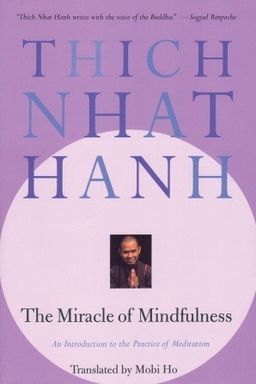
The Miracle of Mindfulness cover

The Miracle of Mindfulness

by Thích Nhất Hạnh

The Miracle of Mindfulness by Thích Nhất Hạnh reveals how the practice of mindfulness can enrich our lives. Through meditation techniques and everyday examples, this guide teaches us to embrace the present moment, appreciate life''s miracles, and achieve lasting well-being. Rediscover simplicity and tranquility, and transform your daily routine into a mindful journey.

Blooming as a Lotus: The Path of Mindfulness and Inner Transformation

When was the last time you felt truly present in your life—not distracted by worries, regrets, or constant busyness, but wholeheartedly aware of the moment as it unfolds? In The Blooming of a Lotus: Guided Meditations for Achieving the Miracle of Mindfulness, the revered Zen master Thich Nhat Hanh invites you to rediscover that presence. He argues that mindfulness is not merely a technique—it is the energy that animates meditation, heals suffering, and awakens our innate capacity for joy. Through guided meditations drawn from Buddhist teachings, Nhat Hanh shows that every breath can become a gateway to freedom and compassion.

The Core of Mindful Transformation

Thich Nhat Hanh’s core argument is that mindfulness generates insight, and insight transforms suffering into peace. Meditation is not a withdrawal from life but a deep engagement with it. When mindfulness illuminates our thoughts and emotions, we see their true nature—impermanence, interdependence, and emptiness—and thus we release our clinging, fear, and anger. The act of “looking deeply,” a recurring phrase in the book, means observing reality with the clear light of awareness until illusions dissolve and compassion naturally arises. This process, he writes, liberates the practitioner just as the lotus flower rises unstained from the mud. In his poetic metaphor, each of us is a buddha-to-be, a human flower preparing to bloom.

The Purpose of Guided Meditation

Unlike free-form contemplation, guided meditation helps practitioners step systematically into awareness. Nhat Hanh organizes his teachings into progressive chapters—from mindfulness of the body to feelings, mind, and finally the very nature of reality. Each guided exercise uses simple yet profound mantras such as “Breathing in, I calm my body. Breathing out, I smile.” Instead of abstract philosophies, he offers images—mountains, flowers, waves—that engage not only the intellect but the stored consciousness, the deep intuitive mind. This combination of breathing, imagery, and recited guidance creates a rhythm that grounds awareness in both body and Earth, making the practice accessible for beginners and enriching for advanced meditators.

Healing Through the Sangha

Thich Nhat Hanh emphasizes that meditation is more effective when practiced in community—called the Sangha. The collective mindfulness of others amplifies individual awareness, offering strength and support for inner transformation. He recommends practicing with a teacher and peers, but also reassures solitary practitioners that the Buddha, Dharma, and Sangha—the three jewels of Buddhism—already reside within the heart. The book itself can serve as a “mediator” between the individual and the living Sangha, a bridge to spiritual companionship through guided practice. This insight aligns with modern neuroscience findings about social meditation groups enhancing empathy and emotional stability (similar to works by Jon Kabat-Zinn and Daniel Goleman).

Meditation as Nourishment and Joy

Central to the book is the idea that mindfulness nourishes like food. In the Buddhist Dhyana school, meditation is called “the food of joy.” Every act of awareness feeds the spirit. Through conscious breathing, smiling, and mindful consumption, we restore balance between body and mind. Exercises in the opening chapters guide readers to calm the body, smile to each organ, and dwell happily in the present. This meditative nourishment is the antidote to modern life’s fragmentation and tension. Nhat Hanh reminds us that to truly live, we must be present; peace exists only in the present moment, not in past regrets or future anxieties.

Mindfulness as Ethical Practice

Later in the book, Nhat Hanh extends meditation into social ethics through the Five Mindfulness Trainings: nonviolence, generosity, responsible sexuality, loving speech, and mindful consumption. These are not prohibitions but expressions of love that protect happiness. By practicing them, you become a source of peace for yourself and your community. His vision of Engaged Buddhism connects personal awakening with ecological and social responsibility. Each breath and mindful act reduces violence and nurtures harmony in the world. This integration of inner and outer mindfulness resonates with ecological spirituality (as in Joanna Macy’s work on “The Work That Reconnects”).

From Body to Cosmos: The Path Expands

As the book progresses, meditations move from the individual body to all phenomena. Practicing mindfulness of the six elements—earth, water, fire, air, space, and consciousness—reveals the interdependent nature of life. What you eat, breathe, and touch belongs to the universe, and vice versa. The boundary between “I” and “not-I” disappears; fear of death dissolves into understanding that the whole cosmos sustains you. These insights culminate in the profound teachings on impermanence, interbeing, and no-self. You learn to see the world as a web of mutual transformation—flowers turn into garbage and garbage into flowers, showing that every form of decay is also renewal. This approach harmonizes both the scientific view of ecological cycles and the experiential wisdom of meditation.

A Living Practice of Compassion

Ultimately, The Blooming of a Lotus is a manual for living mindfully through all circumstances—shaking off anger, facing death, forgiving parents, and realizing your Buddha nature. Each meditation reconnects you with compassion, whether by smiling to your body or visualizing your parents as children to heal ancestral wounds. Nhat Hanh’s language is tender and poetic yet anchored in rigorous Buddhist psychology. He invites you to experience awakening not as an abstract attainment but as a lived reality—each inhalation, each smile, each moment of peace is enlightenment in action. As he writes, to sit mindfully is already to bloom like a lotus rising from the mud, fresh and free.

The relevance of this practice today cannot be overstated. In an age of stress and ecological crisis, mindfulness offers both refuge and rebirth. Thich Nhat Hanh’s meditations teach that awakening is not an escape but a return—a return to the body, the Earth, and the radiant interconnectedness of all life. Through this blooming, you become both practitioner and world-healer, embodying the miracle of mindfulness in every breath.


Mindfulness of the Body: Returning to Presence

Thich Nhat Hanh begins the book’s guided meditations with the most essential practice: mindfulness of the body. He explains that the body is not an obstacle to enlightenment—it is the very doorway to it. When you breathe consciously, smile gently, and dwell in the present moment, body and mind reunite. Through systematic exercises such as “Breathing in, I calm my body; breathing out, I smile,” he helps you experience simplicity and joy without effort.

Breathing as a Bridge

Breathing is the bridge that connects body and mind. When you become aware of the breath’s rhythm—in, out, deep, slow—the breath naturally slows, and tranquility follows. Nhat Hanh compares this to drinking cool water on a hot day: the entire body feels refreshed. He guides practitioners through stages of awareness—calming, caring, smiling, and releasing tension—until breathing itself becomes nourishment. The exercise “Joy of Meditation as Nourishment” shows that mindful breathing removes anxiety about the past and future, anchoring us in the present, which he calls the “wonderful moment.”

Smiling to the Body

In a strikingly tender practice, you are invited to smile to each part of your body—the heart, lungs, liver, eyes, even the toes. This loving attention restores respect and care for the body, transforming it from a vessel of stress into a field of compassion. Thich Nhat Hanh calls this “love meditation toward the body.” He notes that many people mistreat their organs through unmindful living—poor diet, emotional strain, or lack of gratitude. By smiling, we communicate kindness to every cell, and the body heals. The book likens this to the Avatamsaka Sutra’s vision of interdependence: every hair or cell contains the entire universe.

Elements and Interbeing

Through meditating on the six elements—earth, water, fire, air, space, and consciousness—you learn to identify the body as part of the universe. The earth element is in our bones; water flows in our blood; air circulates in every breath. Recognizing this unity dissolves fear and separation. As Nhat Hanh explains, our body is not an isolated thing—it is the forest, the river, and the air. When we see our bodies as part of the cosmos, birth and death lose their sting, replaced by peaceful belonging. The ultimate realization: our body is the universe uplifted into awareness.


Guided Imagery and Emotional Transformation

In Chapter II, Thich Nhat Hanh introduces the power of imagery to reach the stored consciousness—the deep subconscious mind where emotional healing occurs. Instead of reasoning abstractly, he encourages practitioners to visualize concrete images like flowers, mountains, still water, and vast space. These gentle visuals stabilize emotions and reveal the mind’s capacity for transformation.

Flower and Mountain: Stability and Freshness

Through verses such as “Breathing in, I see myself as a flower. Breathing out, I feel fresh” and “Breathing in, I see myself as a mountain. Breathing out, I feel solid,” you learn to cultivate freshness and stability. When emotions like fear or despair arise, you withdraw awareness from the brain’s stormy thoughts down to the abdomen—the “base of the mountain.” This stabilizes attention, preventing emotional overwhelm. With daily practice, even strong emotions become passing clouds over a solid mountain of peace.

Still Water and Space: Clarity and Freedom

The imagery of “still water” represents the mind that reflects truth without distortion. When our thoughts churn like waves, perceptions become false, breeding confusion and suffering. Mindful breathing calms these waves until the mind mirrors reality clearly. The image of “space” invites us to let go of possessions, status, and worries—making room for peace. Nhat Hanh recalls the Buddha’s teaching to monks who rejoiced in having “no cows to lose”—meaning no clinging. Letting go of excess attachments creates inner freedom.

Touching and Healing the World

Later exercises expand this image practice to the outer world—touching air, water, trees, children, and seasons through imagination. Each visualization reawakens sensory aliveness and ecological awareness. By being “in touch,” you dissolve numbness and rediscover the world’s beauty. This practice even integrates mindfulness into environmental consciousness, connecting with elements like pure mountain air and melting arctic ice fields to remind us of impermanence and responsibility. Thich Nhat Hanh’s use of imagery bridges emotional healing and ecological compassion, a union rare in meditation manuals.


Mindful Consumption: Ethics as Daily Practice

Thich Nhat Hanh treats consumption—of food, media, and emotions—as an ethical and spiritual act. In Chapter III, he combines the Five Mindfulness Trainings and the Sutra of the Four Nutriments into meditation exercises that awaken awareness of what we take into body and mind. He teaches that mindful eating and mindful thinking are inseparable from compassion and sustainability.

The Five Trainings

The trainings—non-killing, generosity, responsible sexuality, loving speech, and mindful consumption—protect our happiness and others’. They are not commandments but living practices of love. For example, by consuming “wholesome elements” instead of toxic ones—like violent media or harmful foods—you naturally nurture peace. To recite the trainings is an act of mindfulness itself, reminding you to be awake to the consequences of each action. In modern terms, these trainings reflect sustainable living and social emotional intelligence (Daniel Goleman’s concept of ecological awareness echoes this integration).

The Four Nutriments

Based on canonical Buddhist teachings, Nhat Hanh explains four kinds of food that nourish us: edible food, sense impressions, volition (intentions), and consciousness. Everything we consume—what we eat, read, and watch—waters particular seeds in our mind. Consuming violence breeds fear; consuming compassion breeds love. He urges adopting a vegan or simple diet to reduce suffering, noting how meat production contributes to deforestation and climate change. Similarly, we must choose conversations and thoughts that heal rather than poison consciousness. In practicing this, consumption becomes a spiritual ritual of care for self and planet.


Transforming Emotions and Internal Formations

In the chapters on feelings and mind, Thich Nhat Hanh provides detailed exercises to heal emotional pain and transform negative mental formations like anger, fear, and jealousy. He calls these formations "fetters" or "knots" that bind us in suffering. The goal is not to suppress emotions but to embrace them with mindfulness until their essence is seen clearly.

Acknowledging and Smiling

Rather than fleeing pain, Nhat Hanh teaches to “smile to our pain.” By acknowledging feelings through conscious breathing—“Experiencing the pain in my mind, I breathe in. Smiling to the pain, I breathe out.”—you recognize that the emotion is not your enemy but an energy needing care. He compares mindfulness to a mother cradling her crying child. Acceptance reduces intensity, and insight reveals roots of suffering such as misunderstanding or attachment.

Understanding Anger and Fear

The meditation on anger is particularly profound. You learn that anger burns everything good and makes us “look ugly”—a phrase the Buddha used. Through breathing and compassion, even toward those who cause us pain, anger transforms into understanding. Recognizing that others act from suffering frees you from blame. Similarly, confronting latent fears—called anusaya, or “sleeping tendencies”—prevents them from silently governing your life. When you invite fear in, smiling to it as a friend, it loses power and slowly dissolves.

Healing the Past

Exercises on forgiveness and transformation of the past integrate ethical healing. You visualize your mistakes, acknowledge ignorance at the time, and vow to act mindfully in the present. Nhat Hanh assures that transforming the present transforms the past, since time and consciousness interare. This psychological insight aligns with trauma healing practices found in modern mindfulness therapy (compare to Tara Brach’s “Radical Acceptance”).


Impermanence and No-Self: Freedom from Fear

Impermanence, selflessness, and interdependence form the philosophical heart of Thich Nhat Hanh’s teachings. He guides readers through meditations on the body, loved ones, and even those who cause suffering, to realize that everything changes and nothing exists in isolation. Far from being bleak, impermanence becomes the source of freedom.

Meditating on Death

Exercises such as visualizing one’s corpse turning to bones and dust may sound morbid, but their purpose is compassion. By facing mortality, fear dissolves. When you accept death’s inevitability, life becomes vivid. You let go of petty worries and act lovingly now. Thich Nhat Hanh calls this “transforming latent tendencies”—the hidden anxieties about aging and dying that shape behavior unconsciously. Acceptance brings serenity and courage to act wisely.

Interbeing and Dependent Origination

Through meditations like “In touch with the flower, I breathe in; in touch with the garbage, I breathe out,” you experience interbeing—the teaching that opposites (beauty and decay) are one. Flowers depend on garbage to grow; garbage transforms into flowers. This poetic insight reveals that suffering and happiness are not separate. Similarly, every phenomenon arises from conditions; nothing has self-existence. Realizing this dissolves fear and loneliness.

No-Birth, No-Death

Advanced exercises explore ultimate reality: nothing truly comes or goes. A breath does not travel from somewhere nor disappear into nothing; it manifests when conditions permit. Seeing this, you transcend dualistic notions of being/non-being, birth/death. Nhat Hanh compares the wave and water—waves rise and fall, but water remains. Understanding that we are water, not the wave, ends our fear of dying. This teaching echoes the Buddha’s Udāna verses on nirvana as the “ending of all sorrow.”


Awakening the Buddha Within

In later chapters, Thich Nhat Hanh turns inward to the concept of Buddha-nature—the innate awakened capacity in each person. He decouples “Buddha” from religious form, portraying it as the energy of mindfulness and compassion that can manifest in everyone. Through meditations like “Breathing in, I let the Buddha sit,” you practice surrendering control and allowing your inherent awakening to guide action.

Merging with Awareness

At first, you may imagine Buddha as separate, but gradually the boundary dissolves. You and Buddha become one in the act of sitting, breathing, or relaxing. In the exercise “Mindfulness of the Buddha Nature,” the agent merges with the action—there is no sitter, no breather, only sitting and breathing. This realization mirrors Zen teachings on non-duality (as expressed in Dogen’s “just sitting”).

Respect and Equality

Thich Nhat Hanh includes ancient meditations on bowing before the Buddha, emphasizing that the one who bows and the one bowed to are emptiness itself—perfectly connected. Paying homage thus becomes an act of equality and mutual awakening, unlike hierarchical religiosity. In modern terms, this insight invites you to honor every being as a manifestation of Buddha nature. Awareness of interbeing between self and awakened mind restores confidence and humility simultaneously.

Relaxation as Enlightenment

Even simple relaxation—breathing gently or lying down mindfully—is portrayed as true meditation. When you rest without striving, Buddha rests in you. This gentle approach invites ordinary people into spiritual realization through daily acts. The chapter closes by expanding homage across the universe: countless Buddhas in all directions, each reflecting your image. This vision expresses the Avatamsaka Sutra’s jewel-net of Indra, where each being mirrors all others—a cosmic image of interconnected awakening.


Healing Generations: My Parents, Myself

The final chapter grounds lofty teachings in family healing. Thich Nhat Hanh applies the no-self doctrine to our relationships with parents, showing that we are continuations of them. Recognizing this dissolves resentment and restores love. He encourages visualizing oneself and one’s parents as vulnerable children to cultivate compassion.

Seeing Parents in Ourselves

Meditating on your mother and father as five-year-old children reveals their suffering long before they became adults. When you see your father’s fear in his childhood or your mother’s pain in hers, compassion arises naturally. You realize their limitations came from suffering, not malice. This perspective transforms anger into understanding. Thich Nhat Hanh recounts how many practitioners, after visualizing their parents tenderly, felt waves of forgiveness and peace. The practice aligns with his famous teaching: “Understanding is love’s other name.”

Interbeing Across Generations

You also meditate on breathing with your parents—discovering that every cell carries their presence. Even those who never met their parents can find them within sensations, habits, and feelings. When you meditate peacefully, your parents and ancestors meditate through you. This recognition heals lineage wounds and cultivates gratitude. The insight that “you are your parents” merges mysticism and genetics, harmonizing science and spirituality. Recognizing interbeing across generations grounds mindfulness in real human continuity, turning it into a practice of collective healing.

Dig Deeper

Get personalized prompts to apply these lessons to your life and deepen your understanding.

Go Deeper

Get the Full Experience

Download Insight Books for AI-powered reflections, quizzes, and more.