
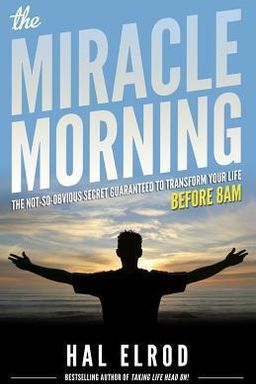
The Miracle Morning cover

The Miracle Morning

by Hal Elrod

In ''The Miracle Morning,'' Hal Elrod reveals six transformative habits to start your day right and achieve the life you desire. Discover how to harness the power of mornings to improve your mindset, reduce stress, and increase productivity. This book offers practical steps to help you live with purpose and achieve lasting success.

The Miracle of Morning Transformation

Have you ever wondered why most days begin with stress instead of satisfaction? In The Miracle Morning, Hal Elrod proposes that the way you start your morning determines how you spend your entire day—and ultimately, how you live your life. He argues that success is not reserved for the lucky few; instead, it is cultivated through disciplined personal development that starts before the world wakes up. Elrod contends that you can transform any area of your life by intentionally shaping your mornings into a ritual of growth, clarity, and purpose.

The book’s core message is simple but radical: if you want to live what he calls a “Level 10 Life”—marked by fulfillment, success, and happiness—you must first become a “Level 10 person.” You do that by rising above mediocrity, taking responsibility for your development, and using each morning as a launchpad for becoming the person you need to be. Every chapter builds on this idea, teaching practical systems for waking up energized, constructing empowering habits, and cultivating the mindset of high achievers.

From Rock Bottom to Ritual

Elrod’s philosophy is born from brutal life experiences. At 20, he was pronounced dead for six minutes after being hit head-on by a drunk driver. Later, he faced crippling depression and financial collapse. Those experiences taught him that external success follows internal transformation. When everything fell apart, he turned to personal development and created a structured morning routine combining six proven practices—Silence, Affirmations, Visualization, Exercise, Reading, and Scribing—known as the Life S.A.V.E.R.S. model. Within two months, Elrod climbed out of debt and reclaimed his motivation, proving that deliberate change in the first hour of the day can redirect the course of one’s life.

He noticed that when he devoted time to inner growth before the world demanded his attention, he felt clearer, calmer, and more capable. That daily commitment sparked what would become an international movement, with thousands adopting The Miracle Morning to change careers, relationships, and health. In his words, “How you wake up each day and your morning routine dramatically affects your levels of success in every area of your life.”

Why Morning Matters

Mornings are not just a time of day—they are psychological leverage. Elrod draws from behavioral psychology and success studies (similar to those by Robin Sharma or Stephen Covey) showing that willpower and mental clarity peak early in the day. By investing that energy into personal development rather than immediate work demands, you prepare your body and mind to perform at their highest levels. It’s about turning the first hour into an intentional space of mastery, rather than a blur of alarms, emails, and coffee.

He identifies a widespread “morning malaise”: hitting snooze, rushing through routines, and starting the day with resistance instead of purpose. According to Elrod, every time you delay waking up, you send a psychological signal that says you would rather remain unconscious than consciously create your life. His antidote is conscious awakening—a practice of excited engagement with life from the moment you open your eyes. Using visualization and affirmations, he reframes mornings into something people anticipate, not dread.

Living on the Right Side of Your Potential

Much of the book studies what Elrod terms “The Potential Gap,” the space between who you are and who you could be. Most people live on the wrong side of this gap, knowing they are capable of more but feeling stuck. The Miracle Morning closes that distance by developing the P.I.E.S. of life—Physical, Intellectual, Emotional, and Spiritual dimensions. By nurturing these daily, your outer world naturally starts mirroring the improvements of your inner world.

This connection reinforces Jim Rohn’s principle that success rarely exceeds your personal development because “success is something you attract by the person you become.” Elrod pushes further: you don’t wait to feel ready or inspired—you act first, using “discipline over emotion.” When you consistently awaken with purpose, you begin to feel powerful not because life gets easier, but because you’ve learned to direct it.

Why This Matters Now

Elrod’s message stands out in an era of distraction and burnout. He urges readers to reject the “95% Reality Check,” a sobering statistic showing that most people settle for mediocrity due to procrastination, fear, and lack of purpose. The Miracle Morning offers a method to join the top 5% of achievers—those who consistently make their development non-negotiable. Through small, consistent morning actions, anyone can cultivate energy, focus, and optimism that ripple across every domain of life.

Ultimately, this book isn’t just about mornings; it’s about conscious living. The Miracle Morning helps you design your days instead of reacting to them, build habits instead of relying on sporadic motivation, and rewrite your life story from the inside out. Elrods challenge to you is simple yet profound: draw your line in the sand today. Wake up tomorrow as the person who chooses growth over comfort, and watch your life begin to feel miraculous—one morning at a time.


The 95% Reality Check

Hal Elrod begins with a powerful revelation: 95% of people will spend their lives settling for less than they want, not because they lack potential, but because they never commit to change their thinking and habits. This “95% Reality Check” challenges you to recognize how easily the majority sleepwalk through life—reacting to circumstances instead of creating them.

Recognizing Mediocrity

Elrod cites a study from the Social Security Administration: out of 100 people, only one becomes wealthy, four are comfortable, five must keep working, 36 die, and the remaining 54 end up broke or dependent. These sobering numbers show how many live reactively, pulled down by mediocrity in health, finances, emotions, and relationships. Most don’t plan to struggle—it happens gradually, one compromise at a time.

The Seven Causes of Mediocrity

  • Rearview Mirror Syndrome: Living based on past failures limits future potential. You keep checking your history before acting, forgetting that your past does not equal your future.
  • Lack of Purpose: Without a clear “why,” motivation fades. Elrod argues that purpose must be created, not found—a concept echoed by Viktor Frankl’s Man’s Search for Meaning.
  • Isolating Incidents: Thinking small actions don’t matter (like skipping workouts or hitting snooze) erodes integrity and discipline. “How you do anything is how you do everything.”
  • Lack of Accountability: Success thrives when someone holds you responsible. Elrod urges finding an accountability partner to mirror the adult oversight we had as children.
  • Mediocre Circle of Influence: You become the average of the five people you spend the most time with. Surround yourself with positive achievers, not complainers.
  • Lack of Personal Development: Success follows self-improvement. Without daily growth—reading, reflecting, exercising—results stall. Jim Rohn’s principle again resonates here.
  • Lack of Urgency: “Someday” thinking delays personal evolution. Elrod proclaims: Now matters more than any other time, because who you’re becoming today determines your future.

Drawing Your Line in the Sand

To escape mediocrity, Elrod asks you to make a conscious choice—to draw your line in the sand today. That act signifies an unshakable decision: you will think, act, and live differently from the 95%. Extraordinary success is simply the result of continuous personal growth. Mediocrity means staying the same; greatness means growing daily.

As author Robin Sharma wrote, “One of the saddest things in life is to get to the end and look back in regret.” Elrod’s message aligns with that: life begins when you reject average. Once you recognize these patterns, you can intentionally rise above them—and The Miracle Morning becomes the mechanism that keeps you in the top 5% every single day.


The Life S.A.V.E.R.S. Formula

At the heart of The Miracle Morning is Elrod’s Life S.A.V.E.R.S. formula—a set of six practices designed to elevate your life from mediocre mornings to mastery-level days. Each technique develops one of the four facets of your inner world—the Physical, Intellectual, Emotional, and Spiritual (P.I.E.S.)—so your external success reflects a balanced internal foundation.

Silence

Purposeful silence isn’t laziness—it’s alignment. Through meditation or prayer, you start your day calmly rather than chaotically. Oprah and Steve Jobs have famously credited morning silence for mental clarity. Elrod’s method includes deep breathing, gratitude, and presence. Even one minute of stillness can reduce stress and prepare you to respond intentionally rather than react impulsively.

Affirmations

Affirmations reshape your beliefs by rewriting your internal script. Quoting Muhammad Ali—“It’s the repetition of affirmations that leads to belief”—Elrod teaches creating statements that define what you want, why you want it, and who you commit to becoming. His own breakthrough came from repeating, “My memory is miraculous,” after brain injury; within two months, improvement proved the power of self-talk. (Authors like Louise Hay and Tony Robbins echo this technique as foundational to mindset change.)

Visualization

Visualization enables you to mentally rehearse success before living it. Elrod cites Jim Carrey writing himself a $10 million check and Tiger Woods visualizing every swing before hitting. You imagine your perfect day, involving all senses—seeing, hearing, and feeling success—until excitement replaces procrastination. Visualization turns abstract goals into emotional reality.

Exercise

Physical movement fuels energy. Just a few minutes of yoga, push-ups, or running in place activate your body’s chemistry for focus and joy. Quoting Robin Sharma’s insight that “If you don’t make time for exercise, you’ll have to make time for illness,” Elrod stresses that morning workouts protect both health and optimism.

Reading

Reading is mental nourishment. Elrod compares books to mentors—direct access to humanity’s greatest minds. Reading 10 pages a day equals 18 books a year. He reminds you that success leaves clues; learn from those who have already achieved what you desire. Mark Twain’s quote leads this section: “A person who won’t read has no advantage over one who can’t read.”

Scribing

Scribing—journaling—captures ideas and growth over time. By writing daily, you build clarity and accountability. Elrod discovered that reviewing his yearly journals revealed lessons that accelerated personal maturity. He distinguishes between “gap focus,” which fixates on what’s missing, and “gratitude focus,” which celebrates progress. Writing daily transforms reflection into momentum.

Together, these six practices form a holistic discipline. Whether you spend an hour or just six minutes cycling through them, the Life S.A.V.E.R.S. act like mental, physical, and emotional training—ensuring each day builds the extraordinary life you’re capable of living.


The 5-Step Snooze-Proof Strategy

Every transformation begins with waking up. Elrod offers his “5-Step Snooze-Proof Wake-Up Strategy”—a practical system to help even lifelong night owls rise early. It replaces “I’m not a morning person” with eager anticipation and forms the bridge between intention and action.

Step 1: Set Intentions Before Bed

Your first thought each morning mirrors your last thought before sleep. Instead of dreading early wake-ups, consciously end each night excited about tomorrow. Use Elrod’s bedtime affirmation: express gratitude and visualize energizing rest. (Sleep studies underline this mindset effect—expecting fatigue creates fatigue.)

Step 2: Move the Alarm Clock Across the Room

Distance creates discipline. When the alarm is out of reach, you must physically rise to turn it off, breaking inertia and elevating your “Wake-Up Motivation Level” (WUML). Motion generates energy—once you stand, momentum builds.

Step 3: Brush Your Teeth and Splash Water

A simple but powerful reset. Sensory activity shifts you out of sleep fog. Fresh breath plus cold water signals alertness, raising WUML from two to four.

Step 4: Drink a Full Glass of Water

After six to eight hours of dehydration, your body confuses thirst with fatigue. Hydration restores clarity and energy faster than caffeine. Elrod recommends preparing the glass the night before to remove excuses.

Step 5: Dress in Exercise Clothes

Physical readiness reinforces mental readiness. When dressed to move, you’re psychologically committed to action. Elrod likens it to “earning your shower.” Starting the day with sweat primes the brain’s reward system for confidence and alertness.

These five steps turn waking up from wishful thinking into predictable behavior. Applied consistently, they transform the dreaded alarm into the beginning of a miracle day. Add bonus tricks like automatic lights or morning music, and you’ll soon look forward to mornings the way children look forward to holidays.


Breaking the Habit Barrier

The most powerful insight of The Miracle Morning is the “30-Day Habit Mastery Strategy.” Elrod dismantles the myth that it takes only 21 days to form a habit, showing that true transformation develops across three distinct emotional phases—each demanding awareness and persistence.

Phase 1: Unbearable (Days 1–10)

Initial resistance is universal. Whether starting early mornings or beginning a workout, the first ten days are painful. Your old comfort habits rebel. Elrod warns that most people quit here, misinterpreting temporary discomfort as permanent reality. Instead, he reframes it as proof of progress—ten days of friction prepare you for freedom.

Phase 2: Uncomfortable (Days 11–20)

By the second stage, resistance weakens. You begin to adapt, but discipline is still required. “Do what’s right, not what’s easy,” he reminds. The habit begins forming neurological pathways yet isn’t automatic. Sleep-in temptation persists, but confidence starts to build.

Phase 3: Unstoppable (Days 21–30)

The final 10 days cement identity change. Your brain associates pleasure with the new habit—waking up early becomes who you are. Elrod warns against premature celebration at day twenty-one; skipping days before this phase risks relapse. By day thirty, the habit feels natural, enjoyable, and essential.

A Real-World Example

Hal’s story of training to run a marathon illustrates the process. Once convinced he “wasn’t a runner,” he committed to daily practice. The first ten days were agony. By day twenty he felt neutral, and by day thirty he enjoyed running. Eventually, he completed a 52-mile ultramarathon. The lesson: consistency transforms impossible into identity.

Habits, Elrod concludes, are creation tools—they shape who you are and what life becomes. With every repeated behavior, you're building the person capable of living your Level 10 life. Master your habits, and you master your destiny.


Aligning Morning with Purpose

Once habits form, purpose sustains them. Elrod teaches aligning your Miracle Morning with core goals and dreams—turning daily rituals into direct steps toward your bigger vision.

Goal-Based Affirmations and Visualization

Affirmations and visualization become tools for focus rather than fantasy. He advises writing affirmations that connect identity (“I am committed to…”) with outcome (“…writing my book to inspire readers”). Visualization should involve all senses—see, hear, feel, and even smell success to make desire visceral. This sensory immersion triggers motivation and behavioral alignment.

Eating and Energy Rituals

Elrod adds practical advice about morning nutrition: eat after your Miracle Morning or choose light, energizing foods like fruit or his “Superfood Smoothie.” Digestion should follow mental clarity, not compete with it. He also recommends hydrating immediately upon waking—step four of his Wake-Up Strategy—to maximize alertness.

Weekend Evolution and Variety

Unlike rigid routines, The Miracle Morning evolves. Elrod suggests experimenting on weekends when time expands. Variety combats boredom; new exercises, fresh affirmations, or updated vision boards keep excitement alive. “Humans need variety,” he writes—making fun a strategy, not a distraction.

Purposeful Consistency

The ultimate goal is consistency with purpose. When your mornings reflect your aspirations, the rest of your day becomes a continuation of intention. Oprah Winfrey’s quote that “Waking early on Saturday gives me an edge” reinforces Elrod’s philosophy: productivity and peace co-exist when your start is deliberate. Mornings become not just habit—but strategy, alignment, and personal meaning.


The Email That Will Change Your Life

Beyond morning rituals, Elrod adds a daring exercise for self-awareness—writing what he calls “The Email That Will Change Your Life.” It’s a tool for radical feedback and growth in communication, aligned with his coaching philosophy that honesty accelerates transformation.

Seeking Constructive Feedback

At a moment of frustration, Hal emailed 23 people—friends, family, bosses, even ex-girlfriends—asking for brutal honesty about his biggest areas for improvement. The responses were uncomfortable but eye-opening. He realized that self-perception is often inaccurate; others see blind spots we ignore. By compiling feedback into commitments (“Call Mom weekly,” “Listen more before speaking”), he transformed vulnerability into growth.

Breaking Feedback Avoidance

Most avoid criticism because it hurts the ego. Elrod redefines feedback as data, not judgment. The exercise teaches courage and humility—qualities essential for Level 10 success. He recommends sending similar emails to people who know you from different contexts, placing their addresses in BCC for privacy. The email’s simple prompt: “Please tell me my top 2–3 areas for improvement and strengths.”

Why It Works

Feedback recalibrates your self-image, aligning it with how others experience you. It’s the mirror that exposes unconscious behaviors holding you back. Elrod and his coaching clients found this practice accelerated authenticity, confidence, and effectiveness. In his words: “Growth begins when we stop pretending we already have it all figured out.” Combined with The Miracle Morning, this act of self-honesty ensures that your personal evolution is both intentional and relational.

Dig Deeper

Get personalized prompts to apply these lessons to your life and deepen your understanding.

Go Deeper

Get the Full Experience

Download Insight Books for AI-powered reflections, quizzes, and more.