
Idea 1
Living Each Moment with Mindfulness and Joy
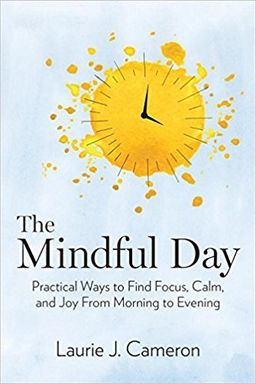
How often do you rush through your day without truly noticing what’s around you? Laurie J. Cameron’s The Mindful Day: Practical Ways to Find Focus, Calm, and Joy from Morning to Evening asks this question to remind you that every ordinary moment—making coffee, commuting, working, connecting—can be transformed through awareness. Her central argument is that mindfulness isn’t reserved for monks in meditation halls; it is a skill everyone can cultivate amid the chaos of modern life. By training your attention to rest in the present moment, you can move from anxiety and autopilot living to a richer experience filled with calm, compassion, and authenticity.
Cameron contends that mindfulness is both an art and a science. Drawing on her years teaching at Google’s Search Inside Yourself Leadership Institute, and on wisdom from Zen master Thich Nhat Hanh, she frames mindfulness as mental training that strengthens focus, emotional regulation, and joy. But it also broadens the heart: when you see clearly and nonjudgmentally, you respond to life with compassion rather than reactivity. The book’s structure mirrors the rhythm of a typical day—starting with morning routines, then addressing mindful work, leisure, and relationships, before closing with evening reflection and rest. She invites you not to escape daily responsibilities, but to infuse them with purpose and presence.
Mindfulness as Skill and Way of Being
At its core, mindfulness trains you to pay attention deliberately, in the moment, and without judgment. It’s about noticing thoughts, emotions, and sensations as they arise and learning to respond wisely rather than react impulsively. As Cameron puts it, this awareness helps you live consciously rather than habitually. Studies she cites from universities such as Harvard, Stanford, and Wisconsin show how repeated mindfulness practice can literally reshape the brain—a phenomenon known as neuroplasticity. Each time you redirect your wandering mind back to the present, you’re strengthening circuits for focus and peace.
Mindfulness also cultivates qualities that become guiding principles for living. Cameron outlines attitudes such as acceptance (embracing things as they are without resistance), Beginner’s Mind (seeing with curiosity and openness), impermanence (acknowledging constant change), equanimity (staying calm amid chaos), and interconnection (recognizing how we’re linked with others). These principles reorient you toward compassion, gratitude, and joy—qualities that redefine success and happiness beyond external achievements.
Science Meets Practical Wisdom
Cameron bridges ancient practice with modern science, explaining that our nervous systems are wired for survival and anxiety. The brain constantly scans for threats, which results in chronic stress in contemporary life. Mindfulness helps calm this evolutionary alarm system. Through mindful breathing and body awareness, the prefrontal cortex—the rational, reflective part of the brain—regains control over the amygdala, the fight-or-flight center. Neuroscientists like Richard Davidson and Daniel Goleman, whom she references, affirm that meditation builds emotional intelligence and resilience by cultivating clarity over chaos.
But Cameron doesn’t stop at scientific validation. She reminds you that mindfulness is experiential: it’s about living with intention through choices that honor what matters most. In her own life, she recounts the transformation that began after learning mindful breathing from a colleague in a San Francisco conference room. That simple practice evolved into the ability to face illness, grief, motherhood, and professional challenges with grace.
A Mindful Blueprint for Everyday Life
The book unfolds as a comprehensive day. In the morning, you learn to “wake up to joy,” breathe, journal, and set intentions that align with your values. At work, mindfulness becomes a lens for deeper focus, emotional stability, and empathy—whether in meetings or moments of conflict. Afternoon chapters invite play, creativity, and engagement with nature to cultivate wonder. The evening practices help slow down, clear your space, and nurture relationships through presence, forgiveness, and generosity. Before bed, you reflect in gratitude and ease into sleep with meditation, completing a full circle of aware living.
This structure makes mindfulness accessible as a lifestyle rather than a detached philosophy. Cameron’s tone is gentle yet practical: she knows the reader’s days are busy and distracted, so she distills mindfulness into micro-moments—three breaths, one mindful bite, a quiet acknowledgment of another person. These daily acts of awareness accumulate, gradually shifting your default state from stress to serenity. Ultimately, The Mindful Day argues that reclaiming attention and kindness is the path to joy. It’s not about perfection, but about presence. As Buddhist teacher Jack Kornfield, whom Cameron quotes, wrote, “The point of mindfulness is not to perfect yourself; it is to perfect your love.” To live a mindful day is to practice love in its most practical form: moment by moment awareness of being alive.