
Idea 1
Mastering the Inner Game: The Mindful Path to Peak Performance
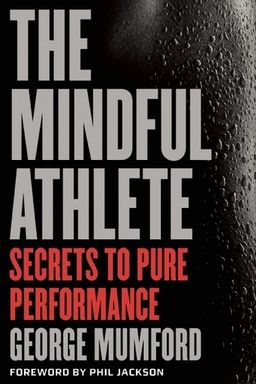
What makes the difference between an athlete who performs beautifully under pressure and one who crumbles? Is it raw talent or something deeper—a mastery of the mind itself? In The Mindful Athlete, George Mumford, a pioneering mindfulness teacher who coached the likes of Michael Jordan, Kobe Bryant, and countless others, argues that true excellence emerges not from sheer physical power but from mental clarity and inner peace. He contends that being in the Zone—what many call flow—is not luck or magic. It’s the natural result of deliberate mental training rooted in mindfulness, self-awareness, and compassion.
Drawing from both Buddhist wisdom and decades of working with elite performers, Mumford teaches that the mind can be our greatest ally or our greatest enemy. Through the Five Spiritual Superpowers—Mindfulness, Concentration, Insight, Right Effort, and Trust—you learn to align body, mind, and spirit so that performance becomes effortless. When these faculties are balanced, you can, as Bruce Lee said, “be like water”—adaptable, calm, and unstoppable.
The Power of Presence and the Birth of Flow
Mumford opens with a vivid image familiar to any sports fan: Michael Jordan’s iconic last shot in the 1998 NBA Finals. In that moment, time slowed to a crawl. The crowd, the pressure, and the noise disappeared; only awareness remained. Jordan later said, “The crowd gets quiet, and the moment starts to become the moment for me.” That, says Mumford, is the essence of mindfulness—full presence in this very moment, free from mental noise. Mindfulness tunes your attention so finely that performance feels effortless because the mind, body, and will move as one. It’s what Mumford calls the “eye of the hurricane,” the calm center within chaos.
But mindfulness isn’t limited to basketball. It’s a way of life—a training of the mind to notice, to pause between stimulus and response, and to choose wisely rather than react impulsively. Drawing from psychologist Viktor Frankl and Zen teacher Thich Nhat Hanh, Mumford explains that this moment of space holds your freedom. It’s where you decide whether to explode in frustration or respond with calm precision.
From Suffering to Self-Knowledge
Mumford’s own journey gives this philosophy its depth. A former athlete turned addict, he hit rock bottom before finding mindfulness through recovery. His personal mantra became “ass on fire”—the moment when suffering burns hot enough that you commit to change. Drawing from Buddhism’s Four Noble Truths, he teaches that everyone suffers, but suffering itself can be a door to wisdom if approached mindfully. The courage to face pain instead of running from it is the first step toward mastery. “The only way out,” he writes, “is through.”
That path inward reveals what Mumford calls your “emotional blueprint”—the habits, fears, and conditioned beliefs built since childhood. Many of us, he says, are trapped by invisible stories: “I’m not enough,” “I’ll believe it when I see it,” or “I can’t fail.” But as Wayne Dyer famously rephrased, “You’ll see it when you believe it.” Reality begins with belief; your inner narrative shapes your performance. Awareness of these underlying patterns—whether of fear, anger, or craving—is the foundation of transformation.
The Five Spiritual Superpowers
To cultivate this awareness, Mumford distills ancient Buddhist teachings into five practical superpowers:
- Mindfulness – Awareness of the present moment, observing thoughts and sensations without judgment.
- Concentration – Sustaining focus on purpose, like an athlete locked in at the free-throw line.
- Insight – Understanding the root causes of one’s behaviors and emotions.
- Right Effort – Channeling energy wisely—not forcing or fighting, but flowing, like Bruce Lee’s “art of fighting without fighting.”
- Trust – Belief in your training, your intuition, and the greater flow of life—what Mumford calls a leap of faith.
Each superpower supports the others. Mindfulness sharpens concentration; concentration deepens insight; insight guides right effort; and right effort nurtures trust. Together they create what athletes describe as the Zone—the state of “effortless excellence.” But in Mumford’s view, the Zone isn’t magic or mystery; it’s simply the mind aligned with the moment.
Why This Matters Beyond Sports
While The Mindful Athlete draws on professional sports, Mumford’s message extends to everything you do. Whether you’re leading a team, dealing with stress at work, or facing personal hardship, mindfulness turns obstacles into opportunities. Emotional resilience—what he calls “stress hardiness”—comes from knowing yourself deeply and feeding the right “wolves” within: joy, peace, love, and compassion instead of anger, greed, or fear. The same mental game that helps an NBA champion thrive helps anyone live with wisdom and purpose.
“The mind can free us or trip us up,” Mumford warns. “Everything starts with what’s in your head.”
Ultimately, George Mumford’s creed is as spiritual as it is pragmatic: awareness transforms performance. Whether you’re shooting a free throw or navigating life’s chaos, real mastery begins by turning inward, calming the storm, and rediscovering that quiet center inside—the space between stimulus and response—where true freedom, clarity, and greatness reside.