
Idea 1
Leading for Extraordinary Results Through the Mind
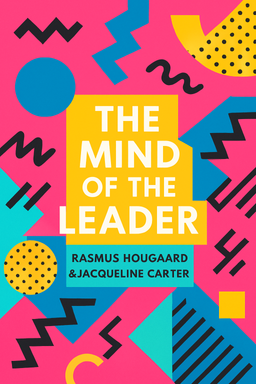
Have you ever noticed how even the smartest leaders sometimes fail to inspire their teams? In The Mind of the Leader, Rasmus Hougaard and Jacqueline Carter argue that traditional leadership models have missed a crucial truth: leadership begins not in strategy or systems, but in the mind. They contend that to lead others effectively—and to build organizations that thrive—you must first learn to lead yourself.
Drawing on research with more than 30,000 leaders across 100 countries, and interviews with executives at companies like Accenture, Microsoft, LEGO, and Marriott, Hougaard and Carter reveal that great leadership now demands mastery of three mental qualities: Mindfulness, Selflessness, and Compassion—the book’s central framework known as MSC Leadership. These qualities form the foundation of a new kind of people-centered leadership built not around authority, but awareness. The authors argue that in an era when 82% of employees say their leaders are uninspiring, these traits are more urgent than ever.
A Broken Model of Leadership
The book begins by explaining a paradox. Organizations spend $46 billion annually on leadership training, yet global engagement remains abysmally low—only 13% of employees are fully engaged, according to Gallup. Most corporate training focuses on management mechanics: planning, budgeting, execution. But these programs start with the wrong end of the problem. As Peter Drucker famously said, “You cannot manage other people unless you manage yourself first.” Hougaard and Carter expand this idea into a method for leading self, people, and organization—from the inside out.
Through neuroscience, psychology, and years of corporate application, they show that leadership effectiveness hinges on what they call mental effectiveness—the ability to manage one’s attention, ego, and emotions. Everything else—the culture you shape, the decisions you make, the trust you build—flows from that.
The Core Qualities of a Modern Leader
Mindfulness (M) means paying attention, intentionally, in the present moment, and doing so with clarity and calm. This sharpens focus, reduces stress, and improves cognitive control. Selflessness (S) is not weakness, but the confidence to set aside ego and serve a larger purpose. Leaders like Arne Sorenson of Marriott frame their entire philosophy around service to others—"putting people first." Compassion (C) is empathy in action—the intention to alleviate others’ suffering and promote their growth. Combined, these qualities help leaders create a culture where people feel seen, valued, and inspired.
These qualities aren’t innate; they can be cultivated like muscles through mindfulness training. The book offers a roadmap for doing exactly that—starting with self-leadership, extending to leading your team, and culminating in leading your organization. Each level builds on the preceding one, creating what the authors call a “fully human hierarchy of leadership.”
Why Mindfulness Matters Now
In a world of perpetual digital distraction and burnout, mindfulness isn’t a luxury—it’s a survival skill. Hougaard and Carter describe the predicament of leaders at Carlsberg and Accenture, who found themselves drowning in emails and meetings. Training their minds for presence and focus made not only their teams calmer but their organizations more productive. Focused attention, when practiced across teams, multiplies into collective clarity—a concept they call organizational mindfulness.
But mindfulness alone is not enough. When combined with selflessness, it prevents the mind from being hijacked by ego. When joined with compassion, it prevents mindfulness from devolving into cold detachment. That integration of clarity, humility, and care is what distinguishes a mindful manager from a mindful leader.
From Self to System
The book’s structure mirrors the inward-outward journey of leadership development: Part One (Lead Yourself) explores mindfulness, selflessness, and compassion in self-management—how to direct your mind, navigate your ego, and treat yourself with care. Part Two (Lead Your People) applies these principles to relationships: listening deeply, making unbiased decisions, and cultivating trust. Part Three (Lead Your Organization) scales these ideas into culture: creating mindful meetings, selfless systems, and compassionate policies that treat people as human beings, not headcount.
This framework reflects a quiet revolution in workplaces like Accenture, Marriott, and LinkedIn, where executives are actively embedding mindfulness into leadership programs. The authors call this a return to “human leadership”—the movement away from command-and-control toward connection and care.
“Leadership today is about unlearning management and relearning being human,” notes Javier Pladevall, CEO of Audi Volkswagen Spain—a quote Hougaard and Carter proudly echo throughout the book.
In sum, The Mind of the Leader is a compelling synthesis of neuroscience, philosophy, and business pragmatism. It teaches that extraordinary results aren’t achieved by pushing people harder, but by cultivating the internal clarity and compassion that let them thrive. Unless we start leading from the inside out—beginning with our own mind—the crisis of disengagement will persist. The book’s ultimate message: managing minds, not metrics, is the highest art of leadership.