
Idea 1
Perceiving Minds and Moral Boundaries
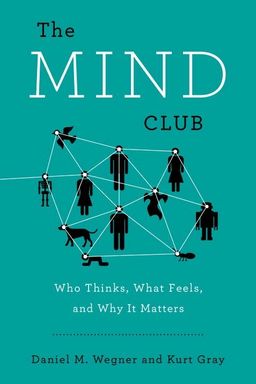
You move through life surrounded by beings that look, move, and speak in ways that make you wonder: which of them truly have minds? This question lies at the heart of The Mind Club by Daniel Wegner and Kurt Gray, a sweeping exploration of how you decide who counts as a conscious being—and how those decisions shape morality, empathy, and society itself.
The authors argue that mind perception is not an objective reading of reality but a psychological act of ascription. You perceive minds into existence based on cues such as behavior, eyes, motion, and context. Once you grant something a mind, you treat it differently: it gains moral rights, responsibilities, and emotional weight. When you deny it mind, it becomes a thing to use, ignore, or harm without guilt.
The Problem of Other Minds
Philosophers have long puzzled over the problem of other minds: you can never directly experience another’s consciousness. Wegner and Gray transform this abstract dilemma into a moral and psychological one. Every day, you face miniature versions of the puzzle—deciding whether an infant truly "understands," whether your dog feels guilt, or whether an artificial assistant deserves respect. Those judgments determine compassion, punishment, and policy.
As the authors illustrate with the chilling contrast between murderer Dennis Nilsen’s affection for his dog Bleep and his cruelty toward his victims, mind perception draws the lines of moral inclusion and exclusion. Nilsen treated Bleep as a minded being and the victims as mindless. The decisions of whom you see as thinking and feeling determine who receives empathy and who faces neglect.
The Mind Club and Its Gatekeepers
Wegner and Gray use the metaphor of a Mind Club whose invisible bouncer admits only beings you perceive as possessing minds. You and those like you are obviously members; turnips, rocks, and tools are not. But ambiguous entities—robots, fetuses, patients in comas, corporations, gods, or the dead—create contention at the threshold. Admission to the Mind Club has profound consequences: members receive moral protection; nonmembers can be used or discarded.
To study how people actually draw those boundaries, the authors conducted an online survey of thousands of participants who rated various targets (a baby, a family dog, a robot, God) across mental abilities such as hunger, planning, and joy. Statistical analysis revealed that people do not think of minds as existing on a single scale but rather on two separate dimensions that map to distinct moral roles.
Two Dimensions: Experience and Agency
The two axes of mind perception are experience—the capacity to feel—and agency—the capacity to act. You perceive an adult human as high on both, a baby as high in experience but low in agency, and a corporation as high in agency but low in experience. These two dimensions produce a moral dynamic: you protect feelers and blame doers.
This framework explains countless paradoxes of moral judgment. You save the baby over the robot (the baby can suffer), but you blame the robot if both cause harm (you see it as a responsible agent). Using this dyadic moral model—Agency plus Experience—you can predict who gets compassion and who gets punishment in social life.
The Moral Map of Minds
The rest of the book explores the “neighborhoods” of this moral map: animals, machines, patients, enemies, the silent, groups, gods, and the dead. In each case, perception of mind creates or erodes moral concern. You endow house pets with rich experience and spare them from suffering but treat livestock as unfeeling; you curse a malfunctioning robot as if it had ill intentions but dismiss the same machine’s distress as impossible.
The authors’ key message is that mind perception drives morality. It is the lens behind empathy, prejudice, religion, and your concepts of life and death. Every culture, law, and ethical code depends on who is admitted into the Mind Club and who remains outside. Recognizing that these boundaries are perceptual rather than objective is the first step toward a more compassionate and self-aware moral worldview.
Core insight
Minds are not discovered—they are granted. The moral worth of others (and yourself) depends less on absolute consciousness than on perception, context, and emotion. When you change how you see minds, you change how you treat the world.