
Idea 1
Fire Your Boss and Reclaim Your Life
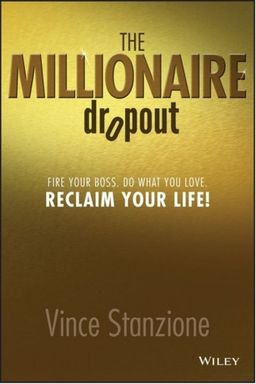
Are you truly living the life you want—or just existing from paycheck to paycheck, waiting for something to change? In The Millionaire Dropout, Vince Stanzione argues that anyone can achieve financial freedom and personal satisfaction without needing fancy degrees, luck, or privilege. His core claim is simple yet radical: wealth, happiness, and success come from taking control of your mindset, your goals, and your actions, not from relying on employers, governments, or fate. To change your life, you must stop being a passive observer and start living as the architect of your future.
The book begins with a stark reality—you only live once, and most people are wasting that life stuck in comfort zones and mediocre routines. Stanzione’s advice combines self-development principles, entrepreneurial strategies, and practical financial tactics, all built around one idea: become the driver of your own train rather than staying in the station with the 95% who wait for life to happen.
Building the Foundations of Success
Before discussing money, Stanzione insists you focus on the foundation—your mind, health, and attitude. He believes success begins internally, with the thoughts you allow yourself to believe and the goals you set. Drawing on psychology, he explains how your subconscious mind is like a computer memory stick—it records everything, both good and bad, and replaying negative messages from childhood or past failure can sabotage adult success. To reprogram this internal software, you must feed it with positive declarations such as “I am confident” or “I own a successful business,” written and spoken daily as if already achieved. (This echo of Napoleon Hill’s approach in Think and Grow Rich demonstrates how visualization and repetition build mental momentum.)
A positive mindset, though, isn’t fluff. Stanzione grounds it in action—get up early, set goals in writing, plan your day, and avoid the trap of oversleeping or waiting for motivation. Through these simple habits, you turn visualization into tangible results. Each day becomes a small step toward the life you're designing, rather than drifting unconsciously through routine.
Breaking Free from the Comfort Zone
The author contends that most people spend life imprisoned by fear and familiarity. We stay in jobs we dislike, relationships that drain us, or habits that weaken us because change feels risky. Stanzione quotes Benjamin Franklin’s famous observation that many people “die at 25 but aren’t buried until 70”—a metaphor for mentally dead lives lived without growth. Breaking free requires courage and action—doing something small every day that stretches your comfort zone. He challenges you to trade the safety of the crowd for the adventure of self-defined success. “When you reach for the stars,” he writes, “you may not get one, but you won’t come up with a handful of mud either.”
He emphasizes that success is rarely sudden. It comes from compounding small steps, steady effort, and persistence. Like investing, confidence and skill grow over time. Comparing life to architecture, Stanzione says you must build strong foundations—mental, emotional, and physical—before attempting skyscrapers of wealth. Without those foundations, your efforts collapse under pressure.
Becoming a Player, Not a Spectator
One of Stanzione’s major arguments is that life rewards players, not watchers. He cites Tommy Lasorda’s quote, “There are those who watch things happen, those who wonder what happened, and those who make things happen.” The book is written for those ready to enter the field. He dismantles the idea of luck, citing researcher Richard Wiseman’s work showing that “lucky” people simply create more opportunities through effort, optimism, and awareness. In this worldview, luck isn’t random; it’s the product of taking consistent action and believing that you can influence outcomes.
His own story exemplifies this. From failing school and almost going bankrupt after the 1987 market crash, Stanzione rebuilt his life by starting small businesses and working “14 hours a day” until, as he jokes, “luck miraculously found me.” Through each setback—sleeping in a van, losing money, being rejected—he treated failure as a lesson, echoing Edison’s mindset that discovering what doesn’t work is simply progress toward what does.
The Roadmap: Making and Saving Money
Once mindset and goals are firm, the book transitions into real-world strategy. You’ll learn how to increase income immediately (by adding more value and asking for raises), launch a home-based business, manage money intelligently, and master saving. His model centers on mail order and Internet entrepreneurship—a business anyone can start from a kitchen table. He proves that you don’t need massive capital, only a willingness to act, learn, and persist. The same principles apply to saving: it’s not about living frugally, but about spending smartly, negotiating, and getting maximum value from every dollar or pound. Whether buying travel, designer clothes, or insurance, the “millionaire dropout” learns how to get quality at the lowest price.
Ultimately, The Millionaire Dropout is both practical and philosophical—a guide to designing the life you actually want rather than accepting the one handed to you. It teaches that wealth is not a number, but a state of being built on independence, awareness, and proactive choice. By combining mental reprogramming with entrepreneurial action and smart money habits, Stanzione promises that anyone can join “the five percent driving their trains toward amazing places.”
Key Message: You can have the freedom, money, and time to enjoy life fully—but only when you stop waiting for someone else to fix things and start taking ownership of your journey. The million-mile adventure begins with one step.